Thursday / October 8. 2026
menu-logo menu-logo
brand-logo
Subscribe
Subscribe
Thursday / October 8. 2026
  • Read
    • Daily News
      • Financial
      • Insights
      • U.S.
      • International
    • Digital Issue
    • Executive Announcements
    • Cover Stories
    • Feature Articles
      • Exclusive Interviews
    • International Focus
    • Company Spotlights
    • Forward Thinking
    • Legal Briefs
    • Insights from the Outside
    • For You | For Your Field
    • Working Smart
  • Listen & Watch
    • Direct Approach Podcast
    • What’s Working in Direct Selling
    • BUILT TO LAST
      • Zinzino
      • PM-International
      • LifeWave
    • The DSN Podcast
  • ATTEND
  • Achieve
    • Global 100 List
    • Bravo Awards
    • Best Places to Work
    • Legends
  • Research
    • Stock Watch
    • DSN Supplier Sponsors
    • The DSN Guide
    • Supplier Directory
    • Stock Ticker
    • Resources
  • Engage
    • About DSN
    • Supporter Program
    • Subscribe
    • Advertise
    • VIP Text Alerts
    • Connect
  • Search
Subscribe

Direct Selling Companies Make a Difference on GivingTuesday and Beyond

December 5, 2025 by DSN Staff Writer

The direct selling channel made a powerful impact during this year’s GivingTuesday, an annual event that fosters a global generosity movement to drive positive change through charitable giving on the Tuesday after Thanksgiving,

The Juice Plus+ Company and its philanthropic arm, The Juice Plus+ Foundation, continued its long-standing partnership with St. Jude Children’s Research Hospital at the St. Jude Memphis Marathon Weekend. Juice Plus+ has partnered with St. Jude for more than two decades, raising funds to advance pediatric research and treatment, as well as the promise that parents will never receive a bill for treatment, travel, housing or food.

“We believe health is built not just in the body, but in the community,” said Gina Ghura, Juice Plus+ Chief Marketing Officer. “Being part of the St. Jude Marathon Weekend for over two decades is an honor and together, we run for hope, for breakthroughs, and for every child who deserves a chance. I look forward to running alongside my colleagues and the greater community as we raise both funds and awareness.”

Herbalife, through its Herbalife Family Foundation, awarded $5 million in grants through its Casa Herbalife Program to more than 165 nonprofit organizations across 60 countries and territories. This funding will expand access to nutritious meals, educational resources and safe, supportive environments for at-risk and underserved children and families around the world.

“We believe every person deserves the opportunity to thrive and build a better future,” said Rob Levy, Herbalife Family Foundation board member and Herbalife president. “We are inspired by our distributor community and employees who come together year after year to act upon that belief and create lasting impact in communities around the world.”

dōTERRA announced that it will be donating $20 for every purchase of its essential oil blend Together Touch, available for a limited-time. Donations will support the dōTERRA Healing Hands Foundation, which funds initiatives that support health, education and crisis-relief around the world.

“Giving Tuesday is a powerful reminder of what we can accomplish when we come together,” said Misty Bond, dōTERRA Vice President of Corporate Relations and Philanthropy. “Together Touch allows every customer to join us in creating real, measurable impact. Each bottle purchased becomes part of a collective effort to strengthen communities and transform lives through dōTERRA Healing Hands projects.”

Sunrider International celebrated its fifth consecutive year of partnership with Engage Now Africa (ENA) to support the organization’s mission to heal, rescue and lift communities in need across Africa. Sunrider’s financial support of ENA has been critical to its integrated malnutrition program in Sierra Leone, where vulnerable children and mothers receive life-saving nutritional support and education.

“Every child deserves the chance to grow strong and flourish,” said Sunny Beutler, Sunrider International CEO. “Malnutrition isn’t just a health crisis—it is both a cause and a consequence of poverty. Through our partnership with Engage Now Africa, we’re empowering women and children to build healthier, stronger futures.” 

Filed Under: Daily News Tagged With: doTERRA, Gina Ghura, Giving Tuesday, Herbalife, Juice Plus+, Misty Bond, Philantrophy, Rob Levy, Sunny Beutler, Sunrider International

Preliminary Direct Selling Momentum Services Company Index Released

December 4, 2025 by DSN Staff Writer

Direct Selling News is excited to unveil its preliminary list of direct selling services companies that have experienced at least 20%—or a minimum of $200mmm—revenue growth year-over-year. This year’s Direct Selling Momentum Index highlights services companies with more than $100 million in annual revenue whose sales patterns show significant growth amid what has been a challenging market landscape. These companies alone represent more than $2 billion in growth for 2025. 

This year’s rankings include:

  • Epique Realty
  • eXp Realty
  • Family First Life
  • inGroup/inCruises
  • Keller Williams Realty
  • LPT Realty
  • PHP Agency
  • PPLSI/LegalShield
  • Primerica
  • Real Brokerage
  • Realty of America
  • Think Energy
  • World Financial Group

This list is constantly evolving. If you believe your company should be included in our final 2025 Services Momentum Index, please contact Patricia White, pwhite@directsellingnews.com.

Filed Under: Daily News Tagged With: Epique Realty, EXP REALTY, Family First Life, inCruises, inGroup, Keller Williams Realty, LegalShield, LPT Realty, PHP Agency, PPLSI, Primerica, REAL Brokerage, Realty of America, Think Energy, WOrld Financial Group

The Equity Revolution

December 4, 2025 by Stuart Johnson

How ownership is rewriting the future of direct selling.

The story of direct selling has always been a story about participation—first through commissions, then through bonuses and overrides, and eventually through team building and leadership. But a new chapter is unfolding across the channel today, one that reflects the economic realities of modern entrepreneurship and the rising expectations of an independent workforce. We are entering what I call the equity revolution: a shift from rewarding contribution with short-term earnings to rewarding contribution with long-term ownership.

This moment did not appear suddenly. It grew out of several converging forces reshaping the global workplace. Independent work is expanding faster than traditional employment. The gig economy reset expectations around flexibility. Younger generations increasingly value purpose-driven participation. And across industries, employees and contractors alike are asking a simple but profound question: If I am contributing to the growth of this company, why shouldn’t I share in the value of what I am building?

insta_photos/shutterstock.com

Equity answers that question. And importantly, it answers it in a way that rewards aligned behavior, not just activity. Ownership fosters trust because the company’s success and the field’s success become inseparable. It strengthens culture by creating a shared stake in long-term outcomes. It improves retention because people don’t walk away from value they are vested in. It elevates performance because individuals can see—and measure—the wealth they are creating as the company grows. Most of all, it transforms distributors from participants into partners, shifting their mindset from short-term earnings to long-term wealth.

Across the channel, companies that introduce equity initiatives consistently report the same benefits: a more inclusive culture, a deeper sense of contribution, improved field performance, higher retention through vesting, greater continuity of tribal knowledge and a powerful alignment between personal effort and enterprise value. These forces create what I’ve always believed is the highest potential of direct selling: recurring value, recurring revenue and recurring wealth.

This revolution began in real estate, spread through financial services and is now entering product companies in exciting new ways. Together, these three sectors illustrate the future of the channel.

Real Estate: The Blueprint of the Equity Revolution

The modern equity movement in field-driven business began long before anyone used the term. In 1983, Gary Keller introduced a radical idea at Keller Williams: what if real estate agents shared in the office profits they helped create? That early profit-sharing model reframed the brokerage not as a hierarchy, but as a collaborative ecosystem where the growth of one contributed to the wealth of many. The market responded. Over the next four decades, Keller Williams paid out billions of dollars in profit share, demonstrating that shared success could also be sustained success.

But the true breakthrough came when cloud-based models removed the cost structures that limited what a brokerage could share. Without the burden of physical offices, companies could redirect enormous value back to the field. And no one recognized or acted on that opportunity faster—or more decisively—than Glenn Sanford at eXp Realty.

As Founder and CEO, Sanford rewired the traditional brokerage model by replacing profit sharing with revenue sharing, allowing agents to benefit from gross commission income, independent of office profitability. At the same time, he introduced something even more disruptive: equity ownership for every agent who contributed to the company’s growth.

“I always wanted to be an owner when I was an agent, but no one offered it,” Sanford said. “So, when we built eXp, ownership had to be part of the experience—not reserved for executives, but accessible to the people who were out there building the business every day.”

This simple idea became the catalyst for one of the most explosive growth stories in the history of residential real estate, culminating in eXp’s spot at #3 on the DSN Global 100 List with $4.6 billion in revenue for 2024.

WHYFRAME/shutterstock.com

The Power of Equity + Revenue Share

eXp’s agents could now earn stock for their first closing; for capping; for attracting additional agents; and for participating in the company’s cultural events. Top producers could earn back their entire annual cap in the form of equity. And agents could voluntarily take a portion of their commissions in stock at a discount, allowing them to accumulate meaningful ownership over time.

As Sanford explained, “We created the first model where the field could build real wealth, not just real income. Some agents didn’t even realize how much equity they had until they opened their accounts. It was life changing.”

The results spoke loudly. Participation surged. Agent count grew from under 1,000 to tens of thousands worldwide. Revenue increased year after year. Agents began sharing stories of equity portfolios that helped them overcome health challenges, fund children’s education or secure financial independence. eXp became the fastest-growing brokerage in the world, fueled not by office count or franchise expansion, but by the wealth it was helping its agents create.

The model was so effective that the rest of the sector followed. Real Brokerage, LPT Realty, Epique Realty, Realty of America, ENRG Realty and Call It Closed Realty all adopted variations of revenue sharing, equity awards or pre-public ownership opportunities. They recognized that stock-based incentives were no longer a novelty—they were a necessity for attracting and retaining talent in a competitive marketplace.

In fact, eXp and the companies that have emulated its cloud-based, revenue-sharing, equity-based model represent an incredible $10 billion in revenue for the year—a milestone they have accomplished in a little more than 10 years.

Real Brokerage is another remarkable success story in this space, second only to eXp and closely aligned with their model. At #13 on the DSN Global 100 List with 2024 revenue of $1.26 billion, they are the expected to reach $2 billion in 2025—a phenomenal gain from 2024’s revenue numbers.

In a period where other companies are struggling to maintain or bounce back from losses, REAL Brokerage has grown an astonishing 10X in between 2021 and 2024.

Real estate has proven that equity works at scale. More importantly, it demonstrates that equity can fundamentally transform behavior, culture and commitment.

Financial Services: The Reinforcement and Expansion of the Model

If real estate provided the blueprint, financial services supplied the validation. With professional licensure, high lifetime customer value and naturally recurring transaction streams, financial services has long been a sector where ownership aligns naturally with performance.

Primerica, one of the largest and most respected field-driven financial companies in the world, illustrates what happens when a salesforce is given a genuine stake in the enterprise they help build.

As part of the IPO that separated Primerica from Citigroup in 2010, the company’s leadership understood that the success of the company—and the survival of its culture—would depend on whether the field felt included in the opportunity ahead.

As former Co-CEO John Addison shared, the transition out of Citigroup was a moment requiring unity, trust and shared belief. “We had been through rough and stormy seas. We weren’t going to say, ‘Great news—leadership gets rich, and you get nothing.’ If we were going to move forward as one team, the field had to go into the future as owners.”

To rebuild momentum after the financial crisis—when a major lending product disappeared overnight and the field saw years of accumulated savings evaporate—Primerica created a large-scale equity initiative. Thousands of top performers received stock grants at the IPO. Field leaders were given the opportunity to buy into the offering. And the company implemented quarterly equity qualifications tied to performance, growth and leadership.

The result was a psychological reset. People who had once feared financial ruin suddenly saw a path to shared prosperity. Addison revealed that many field leaders accumulated substantial ownership through these programs. “I ran into one Regional Vice President who said that ‘Just from the equity I’ve earned since we went public, I’ve got a few million dollars in Primerica stock.’ That’s long-term value created from long-term commitment.”

Addison emphasized that this was not a symbolic gesture—it was a structural choice that changed the culture. “Equity gave people hope again. It created a feeling of ‘We’re in this together.’ When you make decisions that benefit everybody—not just the executives—that’s when the team digs deeper and goes further.”

Interestingly, the program wasn’t built on restrictive handcuffs. Primerica made equity vesting fair but flexible, avoiding heavy contractual traps that could blur the line between independent contractor and employee. Addison stressed that the initiative worked because it rewarded contribution, not compliance.

Drazen Zigic/shutterstock.com

Today, Primerica remains one of the strongest examples of how equity can reshape a field-based financial organization. Its stock has increased 17X since the IPO in 2010, and its leaders continue to benefit both from their own book of business and from ownership in the larger enterprise. It is currently #7 on the DSN Global 100 List with 2024 revenue of $3.07 billion.

As consolidation accelerates in the financial services sector—with major aggregators extending equity to acquired partners—the role of ownership in attracting and retaining talent will only increase. Equity is becoming the competitive advantage for companies that rely on professionalism, licensing and long-term client relationships.

Product Companies: Zinzino and the Hybridization of Value Creation

Equity participation has traditionally been rare in product companies. Most rely on commissions, bonuses and rank-based incentives. But as the expectations of the modern workforce evolve, so too are the compensation structures of product-centric direct selling companies.

Zinzino, publicly traded on the Nasdaq First North Premier market, is emerging as the most compelling example of equity’s entry into the product category. Its model allows top field leaders to earn or acquire ownership stakes—effectively merging the entrepreneurial spirit of direct selling with the wealth-building mechanics of a publicly traded enterprise.

Ørjan Sæle, Zinzino’s Co-Founder and CEO has been remarkably candid about why the company chose this path. “Inside a typical company, the whole game is rigged. If you’re not the CEO, you’ll never make what the CEO makes—and there can’t be three CEOs. Equity solves that. It gives people who build the business a chance to share in what they’re building.”

This philosophy is embedded in the company’s compensation structure. Leaders who hit key milestones can earn significant stock awards. Those who rise through the ranks can accumulate real ownership—tangible, measurable stakes that connect their efforts to the value of the enterprise.

In addition to equity, Zinzino centers its business on recurring customer revenue through subscription-based wellness products. The combination is powerful: strong consumer retention, predictable field earnings and the opportunity for leaders to build long-term wealth.

This hybrid model represents the future of product-driven direct selling. It acknowledges that while commissions drive activity, ownership drives legacy. Zinzino is #44 on the DSN Global 100 List with 2024 revenue of $200 million. They are on track to do $350 million in 2025 and to possibly reach $500 million in 2026.

The accelerated growth is truly remarkable, having gone from $100 million in 2023 to a predicted $500 million in 2026—a 5X growth in just three years. Additionally, the stock has grown 6X in just the last two years.

The Future Belongs to Ownership-Driven Companies

Across real estate, financial services and product companies, the same pattern emerges:

  • Equity creates alignment between the field and the home office.
  • Equity drives retention through vesting and long-term value creation.
  • Equity strengthens culture by giving everyone a stake in what they are building.
  • Equity motivates performance more sustainably than short-term bonuses ever could.
  • Equity fosters partnership, turning representatives into owners.

In other words, equity transforms a direct selling organization from a compensation system into a wealth-building ecosystem. Equity may not replace cash compensation, but it is redefining what success looks like.

As Addison explained, “Shared success makes people dig deeper. When the field knows they are true stakeholders—not just participants—the whole organization rises. That’s what ownership does.”

Companies that embrace this shift will attract higher-caliber talent, retain leaders longer, build stronger cultures and unlock the true economic potential of field-driven businesses.

The equity revolution isn’t coming. It’s already here.


STUART JOHNSON, Founder & CEO, Direct Selling News, has served the direct selling industry for nearly 40 years. His passion for the channel encompasses a broader commitment to build and connect the direct selling community through exclusive industry events such as Direct Selling University and the DSN Global Celebration. Stuart is arguably the most connected person in direct selling. He has built an impressive and growing network of executives, thought leaders, strategists and innovators. His advice and counsel are sought after by leaders throughout the channel.

An Online Exclusive from Direct Selling News magazine.

Filed Under: Feature Articles Tagged With: Equity, EXP REALTY, Glenn Sanford, John Addison, Orjan Saele, Primerica, Stuart Johnson, zinzino

Zinzino Releases Preliminary Revenue Report for November 2025

December 4, 2025 by DSN Staff Writer

Zinzino reported its preliminary sales results for November 2025. Zinzino group revenue grew 45% overall year-over-year. Zinzino sales markets grew 49% year-over-year, reaching $39 million, while Faun Pharma’s external sales experienced decline.

Accumulated revenue from January 2025 to November 2025 increased by 54% year-over-year to $320 million.

The Asia-Pacific market, which includes Australia, New Zealand, Hong Kong, India, Malaysia, Singapore, Taiwan, Thailand, China, Philippines and South Korea, saw the strongest revenue momentum, growing 309% year-over-year. North America, which includes Canada, US and Mexico, was also a momentum driver, posting 174% growth year-over-year. Majority of its other markets, including the Nordics, Central Europe, South and West Europe, the Baltics and Africa also showed significant revenue growth year-over-year.

Filed Under: Financial Tagged With: zinzino

Preliminary Direct Selling Momentum Index Released

December 3, 2025 by DSN Staff Writer

Direct Selling News is excited to unveil its preliminary list of direct selling product companies who have experienced at least 20% year-over-year growth, demonstrating true momentum either domestically or globally. This year’s Direct Selling Momentum Index highlights companies with more than $50 million in annual revenue whose sales patterns show significant growth amid what has been a challenging market landscape.  A service companies list will be released soon.

This year’s rankings include:

  • Bravenly Global
  • Beyond Beauty Club
  • EllieMD
  • Farmasi
  • Greenway Global
  • Immunotec
  • MAKE Wellness
  • MarketPlace Global
  • Neora
  • NewULife
  • Omnilife
  • Partner.Co
  • PM-International
  • Shaklee
  • Super Patch
  • Velovita
  • Vital Health
  • Zinzino

This list is constantly evolving. If you believe your company should be included in our final 2025 Momentum Index, please contact Patricia White, pwhite@directsellingnews.com.

Filed Under: Daily News Tagged With: Beyond Beauty Club, Bravenly Global, EllieMD, Farmasi, Greenway Global, Immunotec, MAKE Wellness, MarketPlace Global, momentum, Neora, NewULife, Omnilife, Partner.Co, PM-International, Skaklee, The Super Patch Company, Velovita, Vital Health, zinzino

eXp Realty Launches in Romania and the Netherlands

December 3, 2025 by DSN Staff Writer

eXp Realty announced its continued expansion with the opening of operations in Romania and the Netherlands. These regions are what eXp Realty described as “key European markets” for the company as it builds toward its global 2030 vision. This international expansion is in addition to five other market launches in 2025, including Peru, Ecuador, Türkiye, South Korea and Japan, with expectations to launch in Luxembourg as well in the near future.

Each carefully selected market is part of a larger strategy by eXp Realty to propel global growth through specifically targeting agent-led environments where demand for innovation, mobility and ownership is rising.

“We’ve had real momentum this year,” said Felix Bravo, Managing Director, eXp Realty International. “eXp International brought in $104.6M in revenue through Q3, up 74% compared to the same period last year, and we’re seeing that energy show up in these expansions. Each of these markets tells a different story, but together, they signal where the industry is going. Agents are demanding more than commissions and training. They want mobility, scalability, ownership, global reach, and relevance. eXp is building the infrastructure and tools to lead where real estate is going next. That’s what these launches represent.”

The company reported that some of its 2025 launches have onboarded more than 100 agents within the first 30 days and hosted welcome events for 400-500 people, evidence, it believes, of its expanding influence and global network effect.

“These aren’t markets we had to convince, they came looking for a better way to build,” said Adam Day, International Expansion Leader, Europe. “That tells us everything we need to know. In each of these countries, we’ve partnered with people who understand their markets deeply and see how eXp’s model fits what agents actually need. That’s what sets this wave of expansion apart. We’re launching where there’s already demand, leadership, and alignment with how we operate. That’s why these countries are seeing real traction from day one.”

Filed Under: International Tagged With: Adam Day, Europe, EXP REALTY, expansion, Felix Bravo, Netherlands, Romania

BODi Teams Up with Reebok Fitness

December 3, 2025 by DSN Staff Writer

The Beachbody Company, now known as BODi, announced a new collaboration with Reebok Fitness. With this partnership, more than 30 sample BODi workouts will be available in the Reebok Fitness App for both premium and free trial members. Included in these workouts are some of BODi’s most well-known programs, including 21 Day Fix, 25 Minute Speed Train, INSANITY, P90X and Dig Deeper.

Reebok Fitness’ signature training content will be offered alongside this curated BODI fitness collection, and Shakeology, BODI’s superfood blend, will be highlighted as well.

“For nearly three decades, BODi has transformed how millions of people approach health and fitness at home, with programs that consistently deliver results,” said Carl Daikeler, BODi CEO and Co-founder. “By teaming up with the Reebok Fitness App, we’re reaching even more people with some of our most iconic workouts. Together, we’re making it easier than ever for people to see the BODi difference and to consider the benefits of upgrading to the full experience on BODi to do our step-by-step programs.”

Reebok Fitness App users who experience the BODi sample workouts will also be introduced to the benefits of subscribing, which provides access to the entire BODi catalog of more than 140 workouts. BODi described accessibility through this collaboration as a significant advantage and a way to meet the “growing demand for accessible, low-risk entry into digital health and fitness, giving users the chance to experience firsthand the proven effectiveness of BODi in delivering results.”

Filed Under: Daily News Tagged With: BODi, Carl Daikeler, Reebok

The Relational Equity Scorecard: A New Operating Lens for Direct Selling

December 3, 2025 by Michael Cody

How to measure trust, strengthen culture and build a more resilient field organization.

When Direct Selling News published my recent article, Winning the Post-Gig Economy, it opened conversations with executives, field leaders and thought leaders across the channel. In many of those conversations, one question rose above the rest:

“If relationships are the new competitive advantage, how do we effectively measure the value they create?”

That question stayed with me.

If the first article explored why relationship-centric business models are rising, this one focuses on how direct selling companies can build the infrastructure to scale trust, leadership and human connection in a moment defined by AI acceleration and personal entrepreneurship.

JLco Julia Amaral/shutterstock.com

This is not a story about economic anxiety. It is a story about opportunity and the evolution of work. It is also a moment where direct selling is uniquely positioned to lead.

As Stuart Johnson recently told me, “In the new world of AI, owning your own business is the only form of income security.” Stuart points out that AI is not eliminating opportunity. It is reshaping it around individuals who want autonomy, flexibility and meaningful work.

Direct selling is built for that moment, but only if companies can see, measure and strengthen the relationship engines that make the model durable.

The Relationship Equity Scorecard (RES).

None of the individual ideas inside the Relationship Equity Scorecard (RES) are new to the channel. Leaders have understood the importance of culture, belonging, mentorship, community and continuity for decades. What has been missing is a way to see these relational drivers together—clearly and consistently—in a form that helps executives assess the health of their networks before momentum breaks.

The purpose of the RES framework is not to reinvent the fundamentals but to unify them into a composite view that makes the invisible visible. In a channel where our greatest competitive advantage is Return on Relationship, RES simply provides the clarity and structure to measure what has long been understood but rarely quantified.

The Shift: Why Relationship-Centric Models Are Rising

Across industries, workers are re-evaluating what matters.mThe modern workforce is choosing careers that offer:

  • Autonomy
  • Flexibility
  • Personal Entrepreneurship
  • Purpose
  • Community
  • Leadership They Trust

This shift is driven more by aspiration than fear.

Rob Sperry highlights a dynamic that is particularly important for direct selling. He argues that the industry does not have a recruiting problem. It has a retention problem. He warns that retention must be treated as the foundation of business stability, not a secondary outcome. If relationships are weak or leadership is inconsistent, attrition becomes structural.

Gordon Hester adds another strategic layer. He distinguishes between transactional leadership, which treats people like numbers, and experiential leadership, which builds belonging, trust and belief. Without personalization, care and real leadership presence, even well-intentioned companies begin to see erosion in confidence and community.

In my work with executive teams, I see the same pattern emerging:

The battleground is no longer attraction. The battleground is continuity. Retention is not simply a numbers problem. It is a relationship equity problem.

From ROR to Relationship Equity: The Next Strategic Frontier

In Winning the Post-Gig Economy, I introduced Return on Relationship (ROR) as a critical strategic lens to view our unique and deeply valuable differentiators as a channel. This article takes the next step by making the concept measurable.

Relationship equity is the quantifiable value of trust, engagement and continuity inside a direct selling organization. Brand equity is a marketing asset. Relationship equity is a field and culture asset.

It shows up in:

  • Who Stays
  • Who Activates
  • Who Recommends
  • Who Leads
  • Who Attends
  • Who Progresses
  • Who Builds Year after Year

The challenge is that most companies cannot see relationship strength until it breaks.

Attrition rises. Engagement flattens. Momentum softens. Confidence fades. It happens gradually, then suddenly. Leadership needs a way to measure what has been invisible. This is where the Relationship Equity Scorecard becomes powerful.

The Relationship Equity Scorecard (RES)

RES = Connection × Contribution × Continuity

These three pillars represent the universal relationship drivers that determine whether people stay, grow and lead in a field-driven business model.

The RES framework is intentionally model agnostic. Universal relationship drivers make the RES model applicable to any product or service category and to all compensation plan variations other than pure affiliate models. What changes from company to company is the specific set of metrics used in each pillar and the benchmarks used for interpretation.

This keeps RES simple at the conceptual level while allowing each organization to adapt the metrics to its structure.

DavideAngelini/shutterstock.com

Pillar 1: Connection

Do people feel seen, supported and part of something meaningful?

Metrics may include:

  • Activation Rate
  • Event Attendance
  • Training Engagement
  • Leadership Communication Sentiment
  • Community Participation
  • Customer Reorder Patterns

Event engagement deserves particular emphasis. As Rob Sperry often notes, nothing accelerates belief, community and retention more predictably than live events. Attendance is not just an output of excitement. It is a leading indicator of connection and one of the most visible expressions of relational depth inside a field organization.

Connection is not a feeling. It is a measurable signal.

Pillar 2: Contribution

Is value flowing in both directions between corporate, field and customers?

Metrics may include:

  • Mentorship Penetration
  • Coaching Activity
  • Participation in Team Spaces
  • Recognition and Story Flow
  • Testimonials and Referrals
  • Feedback Responsiveness

Contribution reflects whether people are building or merely observing. Where contribution is high, belief strengthens and culture stabilizes.

Pillar 3: Continuity

Do people stay long enough to succeed?

Metrics may include:

  • First 90-day Retention
  • Annual Rep Retention
  • Leadership Tenure
  • Subscription or Contract Duration
  • Cross-Product Adoption
  • Reactivation Rates

Continuity is the scoreboard of trust. Without it, there is no compounding, duplication or long-term growth.

What a Composite RES Unlocks

When Connection, Contribution and Continuity are scored together, RES becomes a powerful health index for leadership. It enables companies to:

  1. Identify early warning signs
  2. Benchmark network health across markets
  3. See leadership gaps before they become retention issues
  4. Understand where cultural breakdowns occur
  5. Tie OKRs to relational strength
  6. Forecast resilience and variability

Relationship equity becomes to field culture what brand equity has long been to marketing: the underlying asset that determines long-term durability.

As Wayne Moorehead rightly emphasizes on DSN’s Direct Approach podcast, the strongest companies in the next era will blend modern customer experience disciplines with the inherently relational strengths of this channel. The RES framework provides the connective tissue for that evolution. It helps leaders protect and deepen the relational advantage that makes direct selling unique, even as every other part of the business modernizes around it.

Leadership Infrastructure: The New KPIs

ROR becomes meaningful only when translated into leader behavior. This is where many companies stall. They understand the concept, but not how to operationalize it.

The New KPIs provide that system.

In fairness, I saw this “New KPI” terminology in a random LinkedIn meme, but it sparked something deeper in my thinking. Looking past the cliche of it, the real gem in this idea is that it shifts leadership focus from just managing performance to cultivating measurable culture, which is the core of strengthening Connection, Contribution and Continuity across the field.

The New KPIs:

  1. Keep People Interested
  2. Keep People Informed
  3. Keep People Involved
  4. Keep People Inspired

These behaviors reinforce the universal relationship drivers at the heart of the RES model.

  1. Keep People Interested
    Interest is the earliest signal of connection. People stay engaged when leaders:
  • Spark curiosity rather than overwhelm
  • Make the first steps simple
  • Highlight early wins
  • Communicate with clarity and relevance
  • Set expectations that feel achievable
  • Reinforce positive pro-growth/pro-social behaviors.

Interest is not hype. It is the psychological doorway into longer-term belief. When interest fades, disconnection begins.

  1. Keep People Informed
    Informed people trust their leaders. Transparency is a competitive advantage. Companies that win communicate:
  • The “why” behind decisions
  • What success looks like
  • What changes mean for the field
  • What leaders can rely on consistently

Uncertainty erodes continuity faster than compensation ever can. Information creates stability. Stability creates belief. Belief creates retention.

  1. Keep People Involved
    Involvement is the bridge between contribution and ownership.
Tint Media/shutterstock.com

People commit deeply to what they help shape.

Leaders strengthen involvement by:

  • Inviting input before decisions are finalized
  • Giving people roles that matter
  • Recognizing progress
  • Creating community spaces
  • Offering micro-leadership opportunities

Involvement transforms participants into builders.

  1. Keep People Inspired
    Inspiration sustains long-term continuity. People stay when they see meaning in the work and possibility in themselves.

Inspiration grows when leaders:

  • Model the values they teach
  • Tell real stories
  • Show ordinary people achieving progress
  • Connect personal goals to mission-level purpose
  • Normalize visible progress

Inspired people don’t just stay—they build, lead and lift others.

Why the New KPIs Matters

Each KPI maps directly to a pillar of the RES model.

The New KPIsStrengthened RES Pillar
Keep People InterestedConnection
Keep People InformedContinuity
Keep People InvolvedContribution
Keep People InspiredAll three pillars

This is how leadership behavior becomes infrastructure. This is how relationship equity becomes scalable. This is how direct selling modernizes without losing its human core.

The New KPI is not a slogan. It is a leadership operating system.

Why This Matters Now: A Convergence of Forces

Four forces are reshaping the future of direct selling.

  1. AI is accelerating personal entrepreneurship and reshaping traditional career paths.
  2. People want autonomy, flexibility, community and purpose—not just a paycheck.
  3. The rising generations are more open than ever to side businesses and hybrid income models.
  4. Trust is becoming the decisive factor in whether people stay, engage and lead.

Alongside these forces sits another reality we cannot overlook. The Gig Economy—for all its flaws—permanently reset expectations for how independent earners want to engage with work. It taught the world that opportunity must be:

  • Ruthlessly simple
  • Low in cognitive load
  • Low in administrative burden
  • Fast to start
  • Clear in expectations
  • Flexible in execution

These are now baseline table stakes, not differentiators.

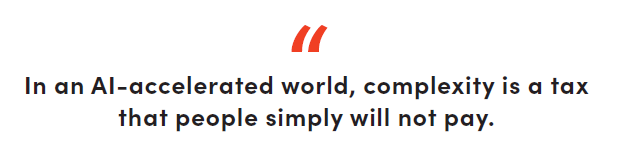
Direct selling competes not only with other companies but with every platform that seeks the field’s attention, energy and discretionary effort. In an AI-accelerated world, complexity is a tax that people simply will not pay.

The companies demonstrating the greatest resilience today are those with strong field cultures, high leadership trust, deep community engagement and friction-reduced systems that support—not overwhelm—the field.

This is not a debate between customer acquisition and relationship strength.

The future belongs to companies that can compete in acquisition while building deep, enduring relationship equity with their field and customers.

In that environment, the ability to measure and strengthen relationship equity is no longer optional. It is a strategic requirement.

A Field-Forward Action Plan for Executives

  • Define your RES metrics.
  • Build a Relationship Equity dashboard.
  • Tie OKRs to relational strength, not only transactional output.
  • Equip leaders with the New KPI.
  • Treat RES declines as early warning signs.
  • Make network health a standing agenda item in leadership conversations.

The Next Era Belongs to Relationship-Driven Companies

As AI reshapes work and workers prioritize autonomy, flexibility and purpose, the rarest commodity in business will be trust. Relationship equity becomes the foundation for sustainable growth in a field-driven model.

Connection creates belonging.

Contribution creates meaning.

Continuity creates legacy.


MICHAEL CODY is the Chief Operating Officer of Genistar Limited, the UK’s fastest-growing financial education and services brand, serving 145,000+ families with nearly £13 billion worth of policies in force. He began his career in the field at 19 and has since held senior leadership roles, including COO of AquaSource. He is passionate about helping people step off the gig treadmill and into businesses that create lasting value through community, leverage and financial education.

Filed Under: Feature Articles Tagged With: gig economy, Michael Cody, Post-GIg, retention, Scorecard

Leadership Development

December 3, 2025 by Rob Sperry

The missing ingredient in direct selling’s next chapter.

For decades, leadership development was the heartbeat of direct selling. The companies that lasted didn’t just build volume. They built people.

They had systems that turned someone new into a builder and eventually into a leader. Those systems weren’t fancy—they were clear, consistent and culture driven.

Then came the shift.

Social media took over, and suddenly everyone was focused on branding, attraction marketing and personal visibility. The spotlight moved from developing leaders to promoting personalities.

Today, most companies teach how to post; how to sell; and how to attract. Few teach how to lead.

From Building Workhorses to Buying Racehorses

In Built to Last, we discuss how the profession gradually traded developing leaders for buying them. Instead of creating workhorses through internal development, companies began chasing racehorses—experienced leaders from other organizations.

The motive made sense. Faster growth. Instant credibility. But over time, this approach stripped away the foundation that created stability. When leadership is purchased instead of produced, the culture becomes transactional. Teams lose mentorship, depth and long-term loyalty.

Personal development and leadership development are still the cornerstones of duplication. One builds the person. The other multiplies the leader. You can’t grow leaders who lack consistency, humility or belief. Those qualities come long before the title does.

The Cost of Skipping Development

When development disappears, duplication dies. Teams become dependent on a few personalities instead of shared principles. Culture turns reactive. Leaders burn out.

Leadership development remains the strongest retention strategy in the profession. It builds belief, confidence, and trust. It reminds people that growth—not hype—is the real goal.

Rebuilding the Foundation

The companies that win the next decade will return to this foundation. They’ll rebuild leadership systems that grow people from the inside out. They’ll pair mindset training with skill training. They’ll invest in mentorship, not just marketing.

Duplication doesn’t come from followers. It comes from frameworks.

The Real Test of Legacy

Trends change. Algorithms change. Promotions come and go. What never changes is the impact of a developed leader.

The companies that last will be the ones that build both the person and the leader. That’s how you create growth that endures long after the spotlight fades.

So, every executive and top leader should be asking one simple question:

Are we developing leaders, or just buying them?


ROB SPERRY is a passionate, purpose-driven entrepreneur who has been full time in network marketing since 2008 and the author of Built to Last: The Future of Direct Selling. Due to his expertise, Sperry has been featured in national and international books, podcasts, blogs, articles and magazines specific to finding success in network marketing. His podcast, Network Marketing Breakthroughs has listeners in 118 countries.

Filed Under: Insights Tagged With: Built to Last, Rob Sperry

eXp Realty Launches LYVVE Platform

December 2, 2025 by DSN Staff Writer

eXp Realty announced the official debut of LYVVE, an international property search platform that includes listings from nearly 30 countries where eXp Realty operates. The goal of LYVVE is to deliver a faster, more intuitive user experience that bridges borders.

“The way people buy and sell homes has changed; the world is more connected, and buyers think globally now,” said Felix Bravo, Managing Director of eXp Realty International. “LYVVE brings agents and clients together in real time, making international home discovery simple and transparent. With built-in features like WhatsApp messaging, communication is simple, direct, and immediate. It’s what modern real estate should look like. At eXp, we believe real estate doesn’t stop at the border, and neither should opportunity.”

LYVVE, which was envisioned by Bravo and rolled out in beta form earlier this year, supports multiple currencies and diverse property types and connects communities and investment opportunities in real time. The platform will remain agent-centric and build on eXp Realty’s proprietary technology that applies AI to create simpler ways for agents and consumers to connect across international borders. Agents will have full control of their listings, data and leads, and clients can search across countries to find the right vacation property or home for their needs.

“LYVVE solves three fundamental challenges in the industry: fragmentation, visibility, and accessibility,” Bravo said. “It brings everything together in one place: an effortless, unified and borderless marketplace where opportunity moves as freely as information. Our goal is simple: make global real estate as easy to explore as local real estate.”

Filed Under: Daily News Tagged With: EXP REALTY, Felix Bravo

PM-International Named a “Top 150” Company in Luxembourg

December 1, 2025 by DSN Staff Writer

PM-International was recognized at the “Luxembourg Official Top 150 Awards 2025” as one of the event’s “Titans of Industry.” This award list recognizes the largest retail companies in Luxembourg that demonstrate economic impact, sustainable growth and long-term contribution to the Grand Duchy’s business landscape.

“As a company built on the entrepreneurial spirit of hundreds of thousands of independent distribution partners worldwide, this award belongs to our field,” said Adrien Rincheval, PM-International Chief Sales Officer. “At PM-International, our commitment has always been to strengthen and continuously innovate our industry through premium experiences and long-term growth. For over 30 years, we believe in making a difference with our FitLine products and this recognition is a testament of our shared dedication.”

PM-International set company records with its 2024 revenue, which exceeded $3.25 billion, and achieved 28% organic sales growth in the first five months of 2025.

Filed Under: International Tagged With: Adrien Rincheval, Luxembourg, PM-International

Executive Engagement & Field-Centric Leadership

December 1, 2025 by Clay Brewer

The indispensable cornerstones of direct selling.

Listen to this story starting at 19:05 on the new, revamped The DSN Podcast. Even when your day is packed, we make it easy to stay informed, engaged and one step ahead. Listen now or read below!

https://open.spotify.com/episode/0nuvBdFlcPc7mN1NhPm0vc?si=W4rTTFmeQouQZVib6TVigg

As an attorney who advises both executives and distributors, I’ve learned there is one thing the strongest companies in the direct selling space have in common: relentless executive engagement and field-centric leadership.

When either are missing, even the most storied companies can find themselves confronting legal exposure, reputational damage and a sudden erosion of distributor confidence.

The Contractual Covenant at the Heart of Direct Selling

JLco Julia Amaral/shutterstock.com

Every independent distributor who joins a direct sales company joins under a written agreement that incorporates the company’s policies and procedures and the compensation plan. That collection of documents should be treated as more than boilerplate; it is a mutual covenant laying out the relationship between the company and the distributor.

Executives promise to apply the plan transparently, and distributors promise to market the brand ethically while building a downline. When openness turns opaque—through secret deals, bridges, undisclosed waivers or selective enforcement—the covenant fractures.

And no incentive can repair the resulting loss of trust. When this covenant—which is foundational to the relationship—is compromised, trust erodes quickly and even strong companies can face instability. Executives and field leaders should grow together, not on the others’ back.

Eroding Trust: When Playing Fair Stops Mattering

Your time in the sun is likely to be short lived when you ostracize even the most ardent of supporters, your field. This distance could expose the company to risks.

  • Culture of Doubt
    Special treatment and half-truths rarely stay secret. Once the field senses favoritism or deception, belief in fairness vanishes and the overall presentation of the opportunity becomes misleading and deceptive to both current distributors and prospective ones.
  • Regulatory Scrutiny
    Whenever trust fades, complaints will quickly follow; and complaints generate regulatory inquiry.

The Most Cost-Effective Compliance Strategy

Decisionmakers must be transparent. This is the simplest yet often frequently ignored concept. Accountability and open communication with the field allows issues to surface early and disputes to resolve amicably.

But isolation signals indifference and magnifies mistrust leading to both sides doubling down on their ego. Executives must be accessible and share their vision with the field. Direct selling is different than a prototypical retailer that can more closely control the brand’s mission and message. In direct selling, your field must be the ones to fulfill that vision.

Ground Picture/shutterstock.com

Field Leaders as Cultural Linchpins

Field leaders are the cultural linchpins of direct selling success—they don’t just drive sales; they embody the company’s values, vision and energy at the grassroots level. As mentors, motivators and community builders, they shape the tone, trust and belief system. Their influence sets the pace for engagement, retention and growth, making them essential partners in sustaining a vibrant, aligned and high-performing culture.

They can be your staunchest advocates or most feared critics. Choose wisely. Prominent field leaders capture a monumentally large following, for better or for worse.

Best Practices—A Leadership Checklist

  • Transparent Communication
    Executives should maintain regular, honest updates via webinars, emails and Q&As to build trust and alignment. The field must know what the executives are thinking and why.
  • Field Advisory Councils
    In reverse, executives need to know what field leaders are seeing on the ground. These councils can assist in presenting field concerns to company management. Executives cannot risk becoming isolated in ivory towers.
  • Field Recognition and Executive Presence
    Have executives visibly recognize field achievements through events, shoutouts and company platforms as well as have executives on the ground to connect with the field and establish a strong connection between the two. The field wants to be heard.
  • Pilot Programs
    Test new tools, proposed changes or products with a select group of field leaders before full rollout. Field leaders likely know the market better than the executives due to their intimate relationship with their customers and downline.
  • Unified Messaging
    Ensure executives and field leaders communicate with a consistent voice on company vision, priorities and culture. No double speak. There are likely few things more damaging than having multiple messages circulating at once.
JLco Julia Amaral/shutterstock.com

Leadership Engagement is No Longer Optional

The direct selling business model harvests its power from human networks, and human networks thrive on trust, access and shared vision. Whenever executives distance themselves from the field, trust deteriorates. By contrast, when executives remain visible, transparent and accountable, the field reciprocates with loyalty that no marketing budget can replace.

The most trusted companies are those where executives maintain regular dialogue with the field, visibly recognize achievements and share a consistent vision.

In direct selling, executive engagement and authentic field-centric leadership are not just desirable—they are the indispensable pillars upon which all sustainable success rests.


Partner at Thompson Burton PLLC, CLAY BREWER’s practice focuses on advising both established companies and startups on a wide range of matters such as business planning, capital raising, corporate structuring, regulatory risk and cross-border transactions. A prolific writer and thought leader, Clay provides strategic counsel to clients and has a strong interest in the evolving direct sales industry as well as digital assets and blockchain technologies.

Filed Under: Legal Briefs Tagged With: Clay Brewer, Thomas Burton PLLC

  • « Previous Page
  • 1
  • …
  • 38
  • 39
  • 40
  • 41
  • 42
  • …
  • 637
  • Next Page »
brand-logo
The News You Need.
The Name You Trust.
Subscribe

Breaking global news, emerging trends and powerful stories conveniently curated to help direct selling executives stay informed, engaged and a step ahead.

  • Read
  • Listen & Watch
  • Attend
  • Achieve
  • Research
  • About
  • Connect
5717 Legacy Drive
Suite 250
Plano, Texas 75024
info@directsellingnews.com
Copyright 2026 Direct Selling News | All Rights Reserved
  • Privacy Policy
  • Terms of Use
  • Advertise
  • Subscribe
We use cookies on our website to give you the most relevant experience by remembering your preferences and repeat visits. By clicking “Accept All”, you consent to the use of ALL the cookies. However, you may visit "Cookie Settings" to provide a controlled consent.
Cookie SettingsAccept All
Manage consent

Privacy Overview

This website uses cookies to improve your experience while you navigate through the website. Out of these, the cookies that are categorized as necessary are stored on your browser as they are essential for the working of basic functionalities of the website. We also use third-party cookies that help us analyze and understand how you use this website. These cookies will be stored in your browser only with your consent. You also have the option to opt-out of these cookies. But opting out of some of these cookies may affect your browsing experience.
Necessary
Always Enabled
Necessary cookies are absolutely essential for the website to function properly. These cookies ensure basic functionalities and security features of the website, anonymously.
CookieDurationDescription
cookielawinfo-checkbox-analytics11 monthsThis cookie is set by GDPR Cookie Consent plugin. The cookie is used to store the user consent for the cookies in the category "Analytics".
cookielawinfo-checkbox-functional11 monthsThe cookie is set by GDPR cookie consent to record the user consent for the cookies in the category "Functional".
cookielawinfo-checkbox-necessary11 monthsThis cookie is set by GDPR Cookie Consent plugin. The cookies is used to store the user consent for the cookies in the category "Necessary".
cookielawinfo-checkbox-others11 monthsThis cookie is set by GDPR Cookie Consent plugin. The cookie is used to store the user consent for the cookies in the category "Other.
cookielawinfo-checkbox-performance11 monthsThis cookie is set by GDPR Cookie Consent plugin. The cookie is used to store the user consent for the cookies in the category "Performance".
viewed_cookie_policy11 monthsThe cookie is set by the GDPR Cookie Consent plugin and is used to store whether or not user has consented to the use of cookies. It does not store any personal data.
Functional
Functional cookies help to perform certain functionalities like sharing the content of the website on social media platforms, collect feedbacks, and other third-party features.
Performance
Performance cookies are used to understand and analyze the key performance indexes of the website which helps in delivering a better user experience for the visitors.
Analytics
Analytical cookies are used to understand how visitors interact with the website. These cookies help provide information on metrics the number of visitors, bounce rate, traffic source, etc.
Advertisement
Advertisement cookies are used to provide visitors with relevant ads and marketing campaigns. These cookies track visitors across websites and collect information to provide customized ads.
Others
Other uncategorized cookies are those that are being analyzed and have not been classified into a category as yet.
SAVE & ACCEPT