Thursday / November 19. 2026
menu-logo menu-logo
brand-logo
Subscribe
Subscribe
Thursday / November 19. 2026
  • Read
    • Daily News
      • Financial
      • Insights
      • U.S.
      • International
    • Digital Issue
    • Executive Announcements
    • Cover Stories
    • Feature Articles
      • Exclusive Interviews
    • International Focus
    • Company Spotlights
    • Forward Thinking
    • Legal Briefs
    • Insights from the Outside
    • For You | For Your Field
    • Working Smart
  • Listen & Watch
    • Direct Approach Podcast
    • What’s Working in Direct Selling
    • BUILT TO LAST
      • Zinzino
      • PM-International
      • LifeWave
    • The DSN Podcast
  • ATTEND
  • Achieve
    • Global 100 List
    • Bravo Awards
    • Best Places to Work
    • Legends
  • Research
    • Stock Watch
    • DSN Supplier Sponsors
    • The DSN Guide
    • Supplier Directory
    • Stock Ticker
    • Resources
  • Engage
    • About DSN
    • Supporter Program
    • Subscribe
    • Advertise
    • VIP Text Alerts
    • Connect
  • Search
Subscribe

The Real Brokerage Celebrates 12th Anniversary

June 24, 2026 by DSN Staff Writer

The Real Brokerage Inc. celebrated its 12th anniversary with the announcement that it has surpassed 35,000 agents across the US and Canada. This milestone, the company says, is a result of its “collaborative professional community and a culture centered on agent success.”

The company added 3,200 agents in the first half of 2026 and more than 15,000 agents since the beginning of 2024.

“Since our founding in 2014, our mission has been simple: build a company that serves agents better than anyone else in the industry,” said Tamir Poleg, Real Chairman and CEO. “Everything we’ve accomplished, from our technology platform to our financial products and the culture we’ve built, has been guided by that commitment. Surpassing 35,000 agents is an incredible milestone, but more importantly, it’s validation that agents are looking for a partner that puts their success first.”

Recently, Real strengthened its executive leadership team with appointees who have experience as agents themselves, including Ken Pozek, board member; Dusty Oglesby, Vice President of Agent Learning and Development; and Jason Cassity, Chief Growth Officer. The company has also expanded its suite of AI-powered tools to reduce administrative work for its agents.

“Agents today are looking for more than traditional brokerage support,” Cassity said. “They want access to innovative technology, meaningful professional development, a supportive community and opportunities to build long-term wealth. That’s what Real has spent the last 12 years building, and it’s why we’re continuing to attract some of the industry’s leading professionals who are looking for a better way to grow their business.”


Filed Under: Daily News Tagged With: Real, REAL Brokerage, Real Estate

4Life Singapore Provides Day of Scientific Discovery for At-Risk Children

June 24, 2026 by DSN Staff Writer

4Life, through its philanthropic arm Foundation 4Life, partnered with Children’s Wishing Well to provide a day of learning and discovery for children from low-income families. The event took place at the Science Centre Singapore and included a screening of Ocean Paradise at the digital dome theater.

Attendees were also given the opportunity to explore the One Ocean Exhibition, which included virtual reality demonstrations, immersive projections and interactive displays teaching about marine ecosystems and ocean conservation.

“At 4Life, we believe every child deserves the chance to dream and discover the world around them,” said Tan Cher Lyn, 4Life Singapore and Malaysia General Manager. “Seeing our volunteers connect with the children and spark their curiosity was truly meaningful. These moments remind us that even small acts of kindness and encouragement can make a lasting difference in a child’s life and future.”

Filed Under: International Tagged With: 4Life, 4Life Singapore, Philanthrophy

Stop the Slop

June 24, 2026 by DSN Staff Writer

Listen to this story on this episode of The DSN Podcast. Even when your day is packed, we make it easy to stay informed, engaged and one step ahead.

When it comes to AI, quality—not quantity—is your real competitive edge.

As generative AI tools move from novelty to necessity, a new term has entered the business vocabulary: AI slop.

In 2025, several major dictionaries identified “slop” as a cultural word of the year—not in the agricultural sense, but as shorthand for low-quality, AI-generated digital output that floods channels with polished but ultimately hollow content. It is a signal of a broader shift: artificial intelligence is transforming communication at scale, and not all of that transformation is beneficial.

For executives, marketers and field leaders, this isn’t a philosophical debate. It is a strategic one. In an environment defined by abundance and attention scarcity, quality has become a differentiator—and AI slop is its opposite.

What AI Slop Really Is

AI slop refers to content generated by Large Language Models or other generative systems that prioritize speed and volume over substance and insight. It often reads smoothly. It may even sound authoritative. But it lacks depth, originality and clear purpose.

In practice, it shows up as blog posts filled with recycled buzzwords, social media updates that say little of consequence, templated email campaigns or videos and graphics that appear derivative rather than distinctive.

The issue is not that AI is inherently flawed. The issue is that AI can produce content faster than organizations can evaluate its quality—and scale without scrutiny quickly becomes noise.
For a relationship-driven industry like direct selling, noise can be costly.

How to Recognize Slop

The challenge is that slop does not always look bad. In fact, it often looks complete. That is precisely the risk.

Four Hard-to-Miss Tells of AI Slop

  1. Surface-Level Prose
    The language is grammatically correct but generic. Phrases such as “in today’s ever-evolving marketplace” appear frequently. The tone is confident but lacks specificity or insight.
  2. Lack of Original Perspective
    Well-written does not equal well-thought-through. Slop often summarizes what is already widely known without adding context, data or strategic framing.
  3. Confident Inaccuracy
    Because generative systems predict language rather than verify facts, errors can appear wrapped in authoritative phrasing. The confidence of the tone masks the weakness of the content.
  4. High Volume, Low Differentiation
    When multiple pieces of content read nearly identically—with minor variations but no nuance—it signals automation without intention.

Why This Matters for Direct Selling

In the product world, excess content may simply fade into the background. In a channel built on relationships and personal influence, it erodes trust. Trust is the currency of direct selling. Field leaders stake their credibility on the materials they share. Customers rely on clarity and accuracy. Corporate messaging sets tone and direction. When content feels generic, misaligned or hollow, three risks emerge.

  1. Erosion of Trust
    Audiences become skeptical. If messaging sounds interchangeable or exaggerated, credibility weakens.
  2. Brand Dilution
    Slop flattens tone and strips differentiation. Companies that rely heavily on unrefined AI output risk sounding like everyone else.
  3. Regulatory and Compliance Exposure
    In industries such as financial services, energy or legal protection—where many service companies now operate—accuracy is non-negotiable. Errors amplified at scale can have real consequences.

There is also a broader ecosystem concern. AI models learn from existing digital content. As lower-quality material floods the web, future systems are trained on weaker inputs, creating a feedback loop that compounds degradation.

Using AI without Creating Slop

The objective here is not to reject AI. The objective is to use it deliberately. Generative tools can accelerate drafting, ideation and formatting. They can help analyze data and surface patterns. They can support productivity across marketing, compliance and operations. But what they can’t do is be a suitable substitute for human judgment.

Organizations that use AI effectively tend to share several disciplines.

Start with strategic intent
Every piece of content should answer a defined need. Who is the audience? What decision are we influencing? What insight are we adding? Without clarity of purpose, AI defaults to generic output.

Prompt with precision
AI systems respond to specificity. Context-rich instructions produce stronger results than broad requests. The quality of the input shapes the quality of the output.

Maintain human oversight
AI should augment expertise—not replace it. Drafts require review. Claims require verification. Tone requires alignment with brand standards.

Protect voice and differentiation
Direct selling organizations succeed when their messaging reflects culture, leadership philosophy and field realities. Generic phrasing weakens that connection.

The Competitive Advantage of Quality
The generative AI era is defined by two simultaneous truths: content production has never been easier, and attention has never been more fragmented. In that environment, quality becomes scarce—and scarcity creates advantage.

Companies that maintain high standards will stand out. Leaders who prioritize depth over volume will retain credibility. Field teams equipped with clear, accurate and meaningful materials will perform more effectively.

Ultimately, the conversation about AI slop is a conversation about discipline.

Technology will continue to evolve. Productivity gains will accelerate. But long-term brand equity, customer loyalty and field confidence are built on substance, not scale alone.

To thrive in the generative era, you don’t have to produce the most content. But you should strive to produce the most meaningful content—strategic, accurate, differentiated and rooted in human insight. DSN


From the May/June 2026 issue of Direct Selling News magazine.

Filed Under: Forward Thinking Tagged With: AI, artificial intelligence

Mary Kay Named #1 Skin Care and Color Cosmetics Brand in the World

June 23, 2026 by DSN Staff Writer

For the fourth consecutive year, Mary Kay Inc. has been named the #1 Direct Selling Brand of Skin Care and Color Cosmetics in the World. The accolade was given by Euromonitor International, a market analysis and consumer insights firm with a history of more than 50 years of market research across more than 100 countries. The ranking is backed by independent data and analysis and signals Mary Kay’s global market performance as well as its ability to deliver consistent value, quality and relevance in a competitive global marketplace.

“Earning the #1 global ranking from Euromonitor for the fourth consecutive year comes as a powerful endorsement of the impact of our Independent Beauty Consultants around the world who drive our success every day,” said Ryan Rogers, Mary Kay Inc. Chief Executive Officer. “Their entrepreneurial spirit, combined with our transformational investments in R&D and cutting-edge technology enable us to deliver high-performance skin and beauty solutions. This is the winning ticket that makes us one of the world’s most beloved consumer brands.”

This recognition joins a number of other achievements by the brand this year, including ranking second on the Forbes 2026 Best Customer Service list and #20 on the Women’s Wear Daily Beauty Inc.’s Top 100 Beauty Companies.

Filed Under: Daily News Tagged With: Euromonitor, Mary Kay, Ryan Rogers

DSA Canada Hosts Connect 2026

June 23, 2026 by DSN Staff Writer

The Direct Selling Association of Canada (DSA Canada) welcomed leaders, executives and stakeholders of direct selling companies from across Canada and beyond for networking moments and educational keynotes on emerging trends shaping the future of the direct selling channel.

Held at the Pearle Hotel in Burlington, Ontario, Connect 2026 delivered high-power speakers, including Olympic gold medalist Alex Kopacz; AI expert Dan Debnam; World Federation of Direct Selling Associations Executive Director and Chief Operating Officer Shaila Manyam; and USANA Chief Commercial Officer Brent Neidig. These speaker sessions covered a range of topics, from modernizing the traditional compensation plan to implementing practical technology actions.

Attendees also had access to networking sessions and panel discussions that offered topics like evolving consumer expectations, regulatory developments and the increasing role of technology in salesforce support.

At the DSA Canada Awards Gala, direct selling organizations had the opportunity to celebrate resilience and adaptability as the best of the industry were honored on stage. Included in this prestigious list was MONAT, who was recognized with the Direct Selling Association Industry Innovation Award for its pioneering leadership in social commerce and its transformative impact on the direct selling industry. MONAT has led the way in social commerce integration with the launch of its TikTok Shop and MONAT Meta Affiliate Program, available in the US and Canada, and represents a new evolution of direct selling that accounts for modern consumer behavior and the increasing influence of social platforms on buying decisions.

“This recognition reflects MONAT’s commitment to innovation and our belief that the future of direct selling lies at the intersection of entrepreneurship, technology and social connection,” said Marcia Cota, MONAT Senior Vice President of Sales. “Our Social Commerce strategy empowers Market Partners to grow their businesses in the spaces where consumers are already discovering, engaging with and purchasing products. We are honored to be recognized by the Canada DSA for helping shape the next chapter of our industry.”

Filed Under: International Tagged With: awards, Canada, DSA Canada

Telecom Plus Announces Financial Results for the Year Ending March 31, 2026

June 23, 2026 by DSN Staff Writer

Telecom Plus PLC, trading as Utility Warehouse and known as UW, announced its financial results for the year ending March 31, 2026. Full-year 2026 revenue reached $2.5 billion, up 5.6% year-over-year with a gross profit of $514 million, representing an 8.7% year-over-year improvement. Adjusted EPS improved by 3% year-over-year.

Total customers in 2026 grew by 23.3% from the previous year to 1.43 million, with 1.26 million categorized as “organic customers.” The company’s cross-sell trial into the acquired TalkTalk customers continued to perform well with 14,500 customers upgraded and cross-sold at the period’s end.

As part of its financial results, the company also revealed a new five-year plan, which intends to double the number of high-quality and multiservice customers to more than one million by 2031. The plan builds on the company’s differentiated business model and will require a $72 million annual investment, with the goal of optimizing its multiservice proposition, scaling Partner sales channels, building a nationally recognized brand and developing AI-powered digital experiences.

In 2031, the plan is expected to deliver an adjusted profit before tax of $231 million, with earnings per share growing faster than total customer growth, and shareholder distributions of approximately $132 million.

“Today, as well as announcing our full year results for FY26, we are launching our new five-year plan,” said Stuart Burnett, Telecom Plus CEO. “Telecom Plus has built a unique business, helping households by putting all their household bills – energy, mobile, broadband, insurance, on one platform in a multiservice package, saving them time and money.  Over the last 30 years we have built a network of 80,000 Partners who introduce this multiservice offering to new customers, typically their friends, family and members of their local community.  These multiservice customers are the strongest driver of long-term value, staying with us for longer and generating higher returns and this model has now delivered five consecutive years of record results and more than 1.4 million customers. Today we are detailing how we will be building on our leading position in multiservice customers by investing behind the proven strengths of our model as well as outlining some of the encouraging results from our trial initiatives already underway. Successful delivery of the plan will more than double our multiservice customer base to over 1 million customers by FY31, enhance the quality and resilience of our earnings and result in attractive long-term returns for shareholders.”

Filed Under: Financial Tagged With: Stuart Burnett, Telecom Plus, Utility Warehouse, UW

The Decision Before the Decision

June 23, 2026 by Jackie Molling

The smartest market-entry moves happen long before launch.

Over the past ten years, I’ve sat across the table from regulators, attorneys, customs officials and government agencies all over the world. I’ve had conversations in Brazil, Taiwan, South Korea and countless other markets where companies were eager to expand and excited about the opportunities ahead of them. Those conversations have taught me that international expansion in direct selling is rarely just a legal challenge. It’s an operational challenge. It’s a financial challenge. It’s a cultural challenge. And—perhaps most importantly—it’s a human challenge.

Most companies spend a lot of time thinking about where they want to go next and not nearly enough time thinking about what it will actually take to succeed once they get there. When people talk about opening a new market, they tend to focus on the visible milestones. Launch events, ribbon cuttings, growing revenue. What they don’t see are the months—and sometimes years—of research, planning and preparation that happen before any of those things are possible.

Opening a market is the easy part. Determining whether you should open it in the first place is often much harder.

Understanding the Type of Market You’re Entering

At Young Living, when we evaluate a new country, one of the first questions we ask ourselves is whether we’re looking at a pull market or a push market. Understanding the difference has a significant impact on everything that follows.

A pull market is one where demand already exists. Many direct selling companies already have some visibility into these markets through NFR (Not for Resale) programs or cross-border purchasing activity. You have data. The market is already telling you something.

Because of that, pull markets often represent lower-risk opportunities. You’re not trying to convince people they want your products or your opportunity. You’re responding to existing demand rather than trying to create it from scratch.

Push markets are different. In those situations, a company decides to enter a market because it sees future potential; wants a presence in a particular region; or believes there is an opportunity to create demand over time. There’s nothing inherently wrong with that approach, but it comes with a different risk profile. The upfront investment is usually higher. Revenue is less predictable. Forecasting becomes more difficult because there are fewer indicators available to guide decision-making.

fizkes/shutterstock.com

Most successful market openings contain elements of both approaches. A market is rarely one thing or the other. The key is understanding your starting point. Are you building demand or responding to it? That answer influences how much you’re willing to invest; how quickly you expect results; and how much uncertainty you’re prepared to accept.

It’s also worth recognizing that opening a market isn’t always the best answer. Sometimes a company discovers that a lighter-touch approach can accomplish many of the same objectives without the cost and complexity of establishing a full operation.

I’ve seen situations where a company already has products moving into a market through an NFR program and everything appears to be working well. Then they begin evaluating what it would take to officially open the country and discover that local regulations would require product reformulations, fewer SKUs and different compensation structures. Suddenly, the market looks very different than it did at the beginning of the conversation.

In some cases, customers could end up with fewer products and distributors could end up earning less money than they were before. Growth should improve the experience—not make it worse. That’s why expansion decisions require more than enthusiasm. They require analysis.

The Questions Most Companies Don’t Ask

At Young Living, our first phase of expansion is market assessment. This stage often takes far longer than people expect because we’re not looking for confirmation that a market is attractive. We’re trying to understand whether we can realistically succeed there.

A large population and strong demand signals are helpful, but they don’t tell the whole story. Every market comes with its own demographic realities, cultural expectations and regulatory requirements.

Market assessment is ultimately about reducing uncertainty. That means asking questions that are often less exciting than announcing a launch but far more important to long-term success.

  • Do we already have customers there?
  • Do we understand the competitive landscape?
  • Can our products be registered?
  • Will our compensation model work within local regulations?
  • Are there tax implications that fundamentally change the economics of the market?

What Compliance Really Looks Like

One of the biggest misconceptions about international expansion is that compliance begins and ends with obtaining the necessary licenses. Licensing is only one piece of a much larger puzzle.

Every market has its own rules regarding corporate structure, taxation, ownership and operational requirements. Some countries require multiple shareholders. Others restrict foreign ownership. Some require local directors. Others impose specific capital requirements before a company can begin operating.

On paper, each of these requirements may seem manageable. The challenge is that they rarely exist in isolation. A decision about corporate structure can influence tax obligations. Tax obligations can affect profitability. Profitability can influence how aggressively a company invests in the market. Every decision has downstream consequences, which is why expansion requires coordination across legal, finance, operations and executive leadership.

Direct selling companies face an additional layer of complexity because compensation plans are often regulated differently from one country to the next. Certain markets place restrictions on payouts. Others require government approval before compensation plan changes can be implemented. Some approvals can take months.

Companies often imagine that they can simply take a successful business model and replicate it internationally. The reality is that every market introduces variables that require careful consideration. Success depends on understanding those variables before they become problems.

Why Products Don’t Always Travel Well

Products create another layer of complexity that companies frequently underestimate. A product that fits neatly into one regulatory category in the United States may fall into an entirely different category elsewhere. That change can trigger additional registration requirements, new documentation needs and, in some cases, product reformulation.

Packaging introduces similar challenges. Localization is about much more than translating words into another language. Countries have different labeling requirements, disclosure standards and consumer protection rules. In some cases, companies can use supplemental labels during the early stages of growth. In others, dedicated packaging becomes necessary.

These details may seem small, but collectively they influence launch timelines, operational costs and customer experience. The more preparation that occurs upfront, the fewer surprises emerge later.

PeopleImages/shutterstock.com

Building an Ecosystem for Growth

Once a market moves beyond research and planning, the focus shifts toward building the infrastructure that will support long-term growth.

That process involves much more than hiring employees and finding office space. It requires identifying logistics providers, legal advisors, accounting partners, tax experts and operational vendors that understand the local environment. These partners often provide insights that companies simply can’t obtain from headquarters.

I remember opening operations in Colombia and realizing how different local payment behavior was from what we were accustomed to in the United States. We naturally assumed people would pay in ways that felt familiar to us. Instead, local consumers often relied on entirely different payment methods and purchasing habits. Without local expertise, those differences can create friction that slows adoption and frustrates customers.

Experiences like that reinforce the importance of hiring local talent. Local leaders understand consumer expectations, cultural norms and operational realities in ways that outside organizations never fully can. They help companies identify blind spots, adapt processes and build stronger relationships within the market. No amount of research can completely replace the perspective of someone who lives and works there every day.

What Happens after Launch

Most people think the launch is the finish line, but the real work begins after the market opens. Once operations begin, the company takes on a new set of responsibilities. Compliance requirements don’t disappear. They increase. Data privacy obligations must be monitored. Product claims require oversight. Regulatory changes need to be tracked. Customer expectations continue to evolve.

At the same time, market realities often reveal opportunities and challenges that weren’t visible during the planning phase. Companies may discover that import costs are higher than expected. They may identify opportunities for local manufacturing. They may need to adjust pricing, logistics or operational processes as the market matures. That’s normal. International expansion is not a single event. It’s an ongoing process of learning, adapting and improving.

When I think about the markets that succeed over the long term, three factors consistently stand out.

  1. Alignment. Legal, finance, IT, operations, marketing and field development all need to understand the priorities and support the same objectives.
  2. Due diligence. Details matter and overlooking them often creates problems later.
  3. Local talent. The people closest to the market frequently provide the insights that make success possible.

Ultimately, successful expansion isn’t defined by how quickly a company opens a country. It’s defined by whether that market is still thriving years later. The organizations that grow successfully across borders are rarely the ones chasing the most launches. They’re the ones willing to do the work long before anyone gets an invite to the ribbon-cutting ceremony.


Three Questions to Ask Before Opening Any Market

1. Are we responding to demand or trying to create it?
Understanding whether a market is pull-driven or push-driven shapes investment, forecasting and risk.

2. Can our products and compensation plan work within local regulations?
What succeeds in one country may require significant adaptation in another.

3. Do we have the right local partners and talent?
Local expertise often reveals challenges—and opportunities—that research alone cannot uncover.


JACKIE MOLLING, Executive Vice President, International Legal Affairs, Young Living, brings more than 20 years of direct selling industry experience to her work supporting global organizations with international legal strategy. Her expertise spans market expansion, regulatory compliance and operational scalability across diverse and emerging markets. Jackie has been instrumental in growing Young Living’s international footprint, guiding successful market entries across Taiwan, the Philippines, South Korea, South Africa, Colombia, Costa Rica, China, Russia, Thailand and Brazil.

An Online Exclusive from Direct Selling News magazine.

Filed Under: Feature Articles Tagged With: expansion, International, markets, Young Living

DSA UK Shortlisted for People in Retail Awards 2026

June 22, 2026 by DSN Staff Writer

The Direct Selling Association in the United Kingdom (DSA UK) was shortlisted as a finalist in the Retail Partner of the Year category at the People in Retail Awards 2026. This award celebrates teams, leaders, rising talent, community champions and the “customer heroes” who keep stores, head offices and operations functioning every single day.

The DSA UK was honored alongside major brands, including Logile, OLIO, Paper Starlights, Retail Merchandising Services, Shiseido, Top to Toe and TruRating Ltd.

The official awards ceremony will take place on September 24 at a black-tie gala in London where senior leaders and innovators will gather to celebrate excellence and achievement.

“To be recognized alongside some of the most respected names in retail is a tremendous achievement and a testament to the strength, professionalism and positive impact of our industry,” the DSA UK wrote in a statement. “We are particularly proud to see the Direct Selling Association featured among organizations such as The White Company, Morrisons, Holland & Barrett and Liberty.”

Filed Under: International Tagged With: awards, DSA UK

Direct Selling Teams Up for World Cup History

June 22, 2026 by DSN Staff Writer

As the world turns its attention to World Cup action, direct selling companies are playing an integral role in fueling the elite athleticism seen on the field and the fandoms that want to improve their own wellbeing and workouts.

Herbalife has partnered with Cristiano Ronaldo for more than two decades, and as the World Cup brings even more attention to his phenomenal abilities and curiosity about his training regimen, Herbalife shared a four-part framework that everyday consumers can turn to as a way to improve their own performance:

  • Prepare – Eat every 2-3 hours and include protein and fluid intake each time
  • Perform – Monitor how your body is feeling during exercise
  • Recover – Rest and consume protein and hydration to replenish what your body used during exercise
  • Repeat – Consistency creates habits

“We’re really trying to take these elite athlete principles and give them some easy, simple steps so everyday people can use them,” said Dr. Krissy Ladner, Herbalife Director of Sports Performance & Nutrition Education.

Herbalife co-created its Herbalife24 CR7 Drive with Cristiano Ronaldo to develop a sports hydration product that incorporates carbohydrates into fluids to power workouts. It’s a partnership strategy that is expressed through the company’s Fuel Like Ronaldo campaign, an initiative designed to transform elite athlete nutrition and performance strategies into something everyday consumers can utilize.

Herbalife’s sports nutrition marketing push capitalizes on the market’s increasing interest in healthy aging, energy, hydration and recovery – all concepts that competitive and professional athletes rely on for success – and Ronaldo’s endorsement builds a connection to soccer fans that the company might otherwise not reach.

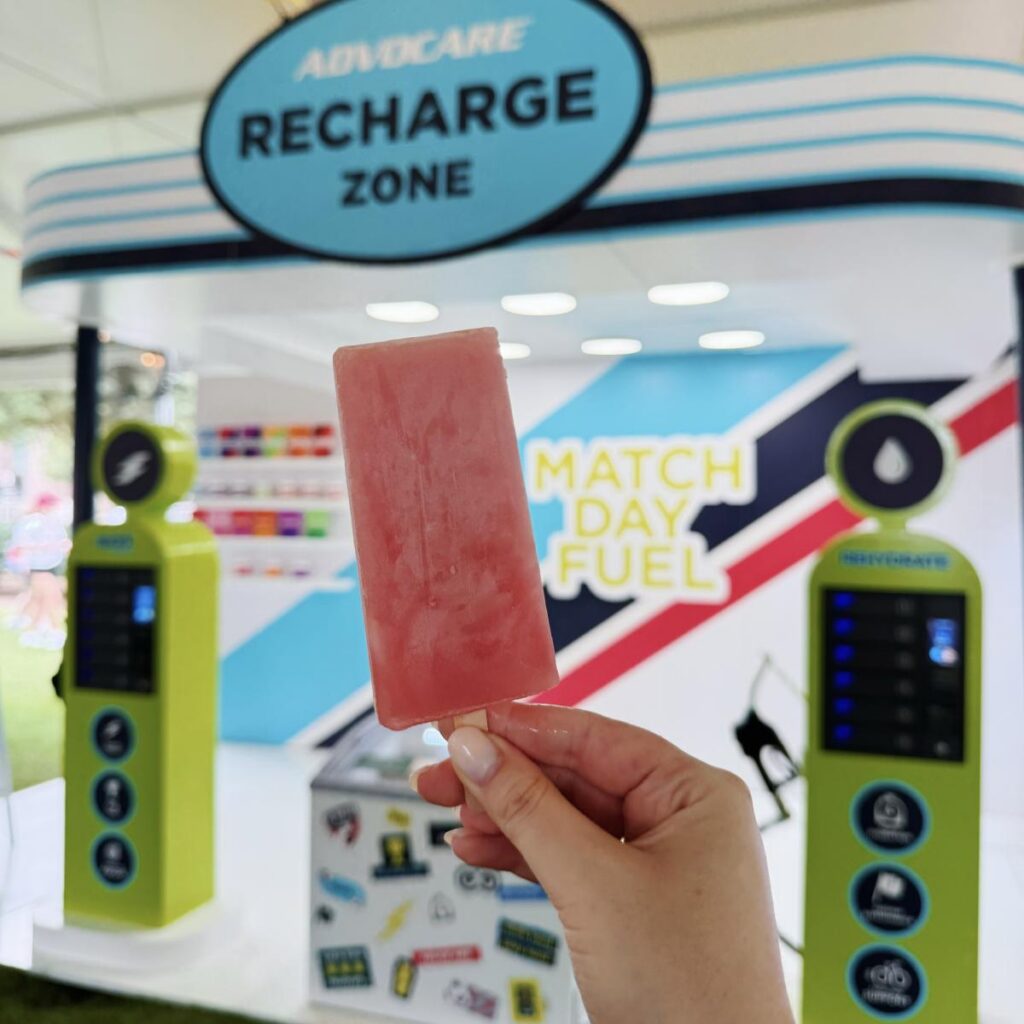
Other direct selling companies, like AdvoCare, are harnessing the global attention through localized events. The AdvoCare Recharge Zone! offers a free fan experience at the FC Dallas Soccer Celebration in Frisco, where giant screens will show 97 matches. AdvoCare’s event offers its Spark energy drinks, its Rehydrate electrolyte beverages and free popsicles, as well as a chance to win prizes in their own free claw machine.

Filed Under: Daily News Tagged With: AdvoCare, Herbalife, World Cup

Bravo Impact Award | Zinzino

June 19, 2026 by Jenna Lang Warford

A Mission with Momentum

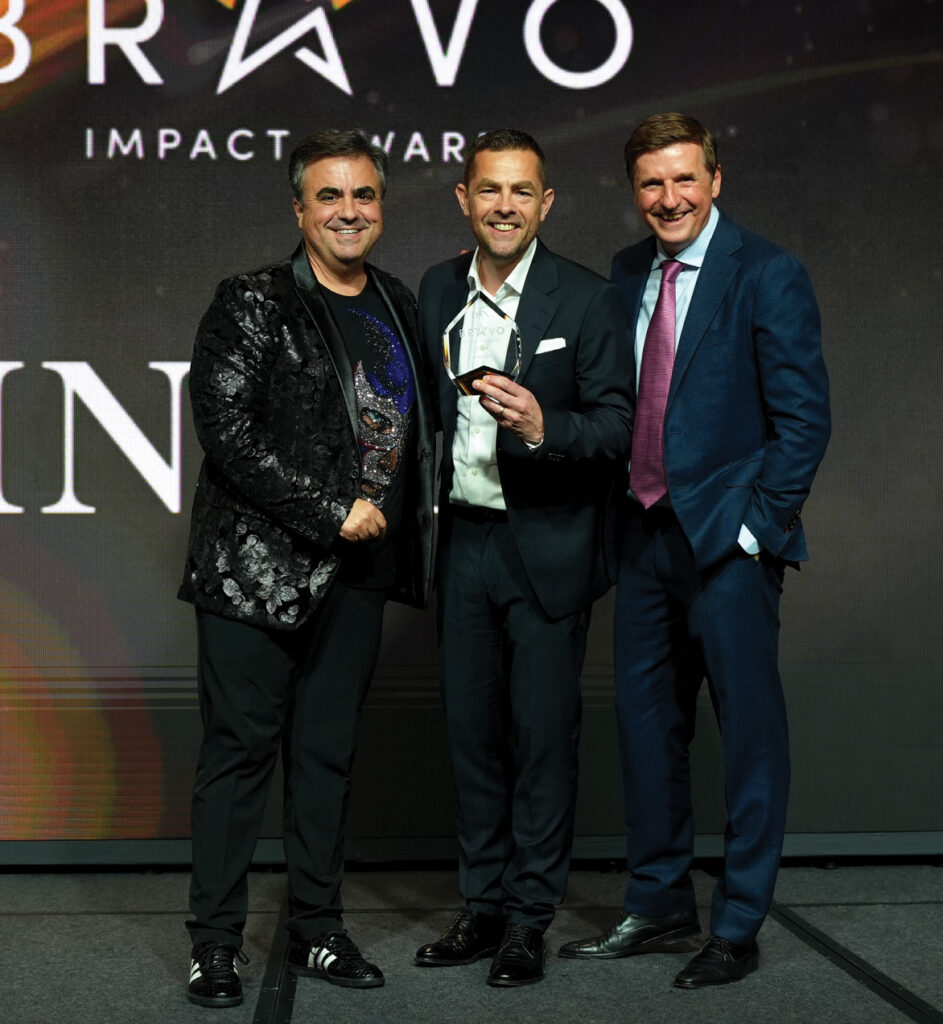
The Bravo Impact Award honors companies that take a thoughtful, balanced approach to growth—prioritizing innovation, operational integrity and long-term sustainability. Over the past two decades, Zinzino has embodied that approach, evolving from a small Scandinavian startup into a global life science company rooted in purpose and precision.

This year, Direct Selling News is proud to recognize Zinzino as a recipient of the Bravo Impact Award.

A Foundation Built on Purpose

When Hilde and Ørjan Sæle founded Zinzino in 2005, their vision extended beyond building a successful business. They set out to create a company that would help people make better health decisions while offering a model grounded in integrity and long-term value.

What began as a coffee startup has since transformed into a leader in test-based, personalized nutrition—centered on a simple philosophy: test, don’t guess.

That focus has fueled steady, intentional growth. By 2024, Zinzino reached $200M in annual revenue and earned a spot on the DSN Global 100 list. In 2025, the company continued its momentum with 80 percent year-over-year growth ($362M in annual revenue) and an ambitious long-term vision to reach 100 million customers worldwide.

A Customer-First Approach

At the heart of Zinzino’s success is a commitment to building a business driven by product value rather than recruitment. “A lot of the industry has been recruitment led,” said Ørjan. “We chose a different route: product-led growth and real customer value.” That philosophy is embedded across the company, including its compensation plan, which emphasizes active customers at every level. By prioritizing genuine product demand, Zinzino has created a model designed for long-term sustainability.

The company’s evolution into a life science organization reflects that same commitment. Its portfolio of science-backed nutritional products and home health tests empowers customers to better understand their bodies and make informed decisions on their lasting health—an approach that continues to resonate in a growing global wellness market.

Expanding with Intention

Zinzino’s growth strategy has been both deliberate and disciplined. While the company has expanded its global footprint, it has done so with a focus on alignment—ensuring that new opportunities support its culture and long-term vision.

Recently, Zinzino strengthened its presence in key markets through the acquisitions of Zurvita (2025) and It Works! (2026), expanding its reach across Europe and North America while enhancing its wellness offerings.

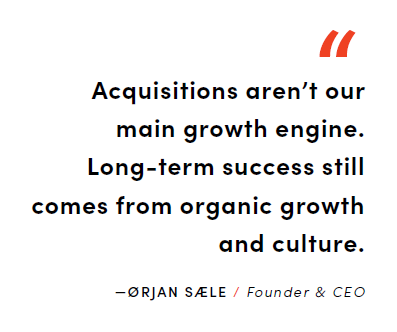
But for Zinzino, acquisitions are not the primary driver of success—they are a complement to it. “Acquisitions aren’t our main growth engine,” Ørjan explained. “Long-term success still comes from organic growth and culture.”

This disciplined approach has allowed the company to scale while maintaining the values that define its identity.

Leading from the Field

One such element is the connection between its leadership and its field. Ørjan and Hilde built their business from the field up, and that experience continues to shape how the company operates. Their perspective provides a clear understanding of what distributors need to succeed and helps ensure that systems and support remain practical and effective.

“We’ve lived the reality—what works, what doesn’t and what people actually need to succeed,” Ørjan shared.

That hands-on approach has helped foster strong alignment between corporate leadership and the field, creating a culture where feedback is valued and collaboration drives progress.

A Culture of Connection

As Zinzino has grown, its culture has remained a defining strength. The company emphasizes community, leadership development and meaningful connection among its distributors and customers.

That culture was on display in 2025, when thousands gathered in Oslo, Norway for the company’s annual event, with many more joining online from around the world. These moments reflect not just growth, but a shared sense of purpose across the organization.

Beyond business, Zinzino continues to make an impact through its philanthropic efforts. Through its Glocal Aid initiative, the company provided full scholarships to more than 1,500 children in 2025, extending its mission beyond health and into global support.

Built to Last

Zinzino’s story is not one of rapid expansion, but of steady, intentional growth built on strong fundamentals. By focusing on validated product quality, customer experience and community, the company has created a model designed to endure.

Rather than pursuing growth at any cost, Zinzino has remained committed to scaling in a way that aligns with its values—prioritizing sustainability over speed and long-term impact over short-term gains. As the company looks ahead, its path remains clear: continue building products that deliver real value, a business people can trust and a community that supports growth at every level.

Congratulations to Zinzino on receiving the Bravo Impact Award.


From the May/June 2026 issue of Direct Selling News magazine.

Filed Under: Feature Articles Tagged With: Bravo Awards, Bravo Impact Award, Ørjan and Hilde Sæle, zinzino

USANA Celebrates a Decade of Service

June 17, 2026 by DSN Staff Writer

For the past ten years, USANA, through its USANA Foundation, has participated in meaningful acts of kindness for World Service Week. These acts bring together volunteers, distributors and employees from across the world to help vulnerable populations, support local organizations and share hope.

This year, USANA’s philanthropic activities included supporting vulnerable children by donating food, toys, school supplies and meals; creating educational empowerment with more than 100 school kits in the Philippines; visiting isolated community members like senior centers and remote villages; and creating celebrations in local barangays to promote nutrition and sustainable gardening.

“USANA’s World Service Week has made such a tremendous impact around the world and I am so proud of the work we have done so far,” said Michelle Benedict, USANA Foundation Director of Global Programs. “This milestone is not only a celebration of what we’ve accomplished together over the past 10 years, but also a reminder of the impact we can continue to make when we serve with purpose. Every volunteer project, donation and act of kindness helps us move closer to a future where more families have access to the nutrition and resources they need to thrive. I am excited to see where the next 10 years will take us.”

Filed Under: Daily News Tagged With: Michelle Benedict, Philantrophy, USANA, USANA Foundation

Greenway Global Celebrates 9th Anniversary

June 17, 2026 by DSN Staff Writer

Greenway Global gathered 8,000 team members for its largest global event to date as it celebrated its ninth anniversary. The event, held at Moscow’s Live Arena, was broadcast with multilingual real-time translation to a global audience and featured a multi-stage structure within a single event. Live performances by artists, DJs and dancers created what the company described as “a continuous flow between business segments and entertainment elements” to maintain heightened energy throughout the event.

Top-ranked partners received advanced training and business development insights from the Presidential Council and senior leadership before the event transitioned into a two-day convention that featured product presentations, announcements and entertainment, which were delivered at concert-production levels, before closing with a strategic session about recruitment, long-term vision and organizational priorities.

The flow of the event was designed to illustrate a clear progression from focused leadership development to mass engagement to high-level strategic planning.

Filed Under: International Tagged With: event, Greenway Global, Russia

  • « Previous Page
  • 1
  • …
  • 18
  • 19
  • 20
  • 21
  • 22
  • …
  • 643
  • Next Page »
brand-logo
The News You Need.
The Name You Trust.
Subscribe

Breaking global news, emerging trends and powerful stories conveniently curated to help direct selling executives stay informed, engaged and a step ahead.

  • Read
  • Listen & Watch
  • Attend
  • Achieve
  • Research
  • About
  • Connect
5717 Legacy Drive
Suite 250
Plano, Texas 75024
info@directsellingnews.com
Copyright 2026 Direct Selling News | All Rights Reserved
  • Privacy Policy
  • Terms of Use
  • Advertise
  • Subscribe
We use cookies on our website to give you the most relevant experience by remembering your preferences and repeat visits. By clicking “Accept All”, you consent to the use of ALL the cookies. However, you may visit "Cookie Settings" to provide a controlled consent.
Cookie SettingsAccept All
Manage consent

Privacy Overview

This website uses cookies to improve your experience while you navigate through the website. Out of these, the cookies that are categorized as necessary are stored on your browser as they are essential for the working of basic functionalities of the website. We also use third-party cookies that help us analyze and understand how you use this website. These cookies will be stored in your browser only with your consent. You also have the option to opt-out of these cookies. But opting out of some of these cookies may affect your browsing experience.
Necessary
Always Enabled
Necessary cookies are absolutely essential for the website to function properly. These cookies ensure basic functionalities and security features of the website, anonymously.
CookieDurationDescription
cookielawinfo-checkbox-analytics11 monthsThis cookie is set by GDPR Cookie Consent plugin. The cookie is used to store the user consent for the cookies in the category "Analytics".
cookielawinfo-checkbox-functional11 monthsThe cookie is set by GDPR cookie consent to record the user consent for the cookies in the category "Functional".
cookielawinfo-checkbox-necessary11 monthsThis cookie is set by GDPR Cookie Consent plugin. The cookies is used to store the user consent for the cookies in the category "Necessary".
cookielawinfo-checkbox-others11 monthsThis cookie is set by GDPR Cookie Consent plugin. The cookie is used to store the user consent for the cookies in the category "Other.
cookielawinfo-checkbox-performance11 monthsThis cookie is set by GDPR Cookie Consent plugin. The cookie is used to store the user consent for the cookies in the category "Performance".
viewed_cookie_policy11 monthsThe cookie is set by the GDPR Cookie Consent plugin and is used to store whether or not user has consented to the use of cookies. It does not store any personal data.
Functional
Functional cookies help to perform certain functionalities like sharing the content of the website on social media platforms, collect feedbacks, and other third-party features.
Performance
Performance cookies are used to understand and analyze the key performance indexes of the website which helps in delivering a better user experience for the visitors.
Analytics
Analytical cookies are used to understand how visitors interact with the website. These cookies help provide information on metrics the number of visitors, bounce rate, traffic source, etc.
Advertisement
Advertisement cookies are used to provide visitors with relevant ads and marketing campaigns. These cookies track visitors across websites and collect information to provide customized ads.
Others
Other uncategorized cookies are those that are being analyzed and have not been classified into a category as yet.
SAVE & ACCEPT