Sunday / April 5. 2026
menu-logo menu-logo
brand-logo
Subscribe
Subscribe
Sunday / April 5. 2026
  • Read
    • Daily News
      • Financial
      • Insights
      • U.S.
      • International
    • Digital Issue
    • Executive Announcements
    • Cover Stories
    • Feature Articles
      • Exclusive Interviews
    • International Focus
    • Company Spotlights
    • Forward Thinking
    • Legal Briefs
    • Insights from the Outside
    • For You | For Your Field
    • Working Smart
  • Listen & Watch
    • Direct Approach Podcast
    • SHIFT podcast
    • BUILT TO LAST
      • Zinzino
      • PM-International
      • LifeWave
    • The DSN Podcast
  • Attend
    • DSN Marketing Deep Dive
    • DSU Spring 2026
  • Achieve
    • Global 100 List Nomination Form
    • Global 100 List
    • Bravo Awards
    • Best Places to Work
    • Legends
  • Research
    • Stock Watch
    • DSN Supplier Sponsors
    • The DSN Guide
    • Supplier Directory
    • Stock Ticker
    • Resources
  • Engage
    • Supporter Program
    • VIP Text Alerts
  • About
    • About DSN
    • Subscribe
    • Advertise
    • Connect
  • Search
Subscribe

Thermomix TM7 Launch Breaks Sales Records

November 24, 2025 by DSN Staff Writer

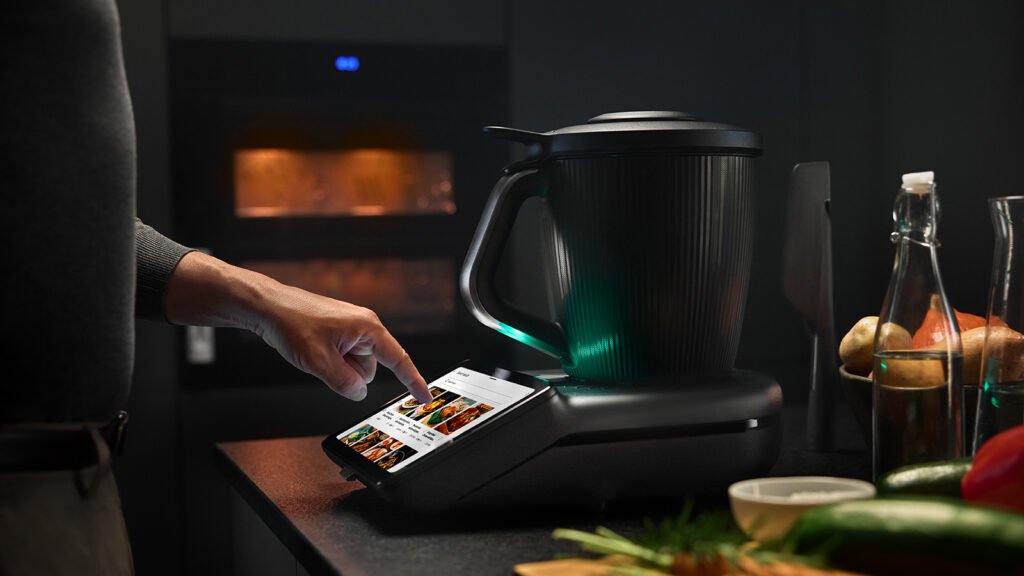
Vorwerk announced that its new Thermomix TM7 appliance has sold approximately 860,000 units since its launch in February. This marks a record number and the most successful product launch in Vorwerk’s company history. Order volumes from November 2024 to October 2025 increased by more than 200,000 units compared to the previous year, which the company says “underscores the sustained high demand” for its products.

“The Thermomix TM7 record is no coincidence; it reflects the lasting strength of our direct sales model,” said Dr. Thomas Stoffmehl, Speaker of the Executive Board of the Vorwerk Group. “Once again, we see what becomes possible when our community of advisors, customers and employees channels its passion and conviction into a shared effort. Our sincere thanks and appreciation go to the entire Thermomix community.”

Vorwerk’s associate community has also seen growth, which the company believes has been a “key driver of this success.” More than 128,000 distributors were active in the Vorwerk global network, exceeding totals from any other time in the company’s history.

Filed Under: Daily News Tagged With: Thermomix, Thomas Stoffmehl, Vorwerk

Talk Fusion Launches GetPaidin1.com

November 24, 2025 by DSN Staff Writer

Talk Fusion announced the launch of GetPaidin1.com, a tool and affiliate program that allows network marketers to get paid “while they sleep.” The new site explains the Talk Fusion Instant Pay Opportunity, the company’s Video Email technology, and community-first culture in 13 languages, supporting lead  generation and simplifying instant duplication.

The goal of this new tool is to provide a faster, more convenient way for Promoters to grow their business while helping customers enhance communication through the Talk Fusion Video Email. Each Promoter receives a personalized, self-replicating GetPaidin1.com link that can be personalized to match their individual personality and brand.

“Each Promoter link is unique in that the prefix is their Talk Fusion 8-digit-ID followed by ‘.getpaidin1.com’, however, Promoters have the opportunity to change it to whatever they like,” said Kristie Reina, Talk Fusion Founder. “For example, if I wanted to change my link to “WinWithTalkFusion.getpaidin1.com” it’s easy. I can log in to my Portal and make the change myself – no Support Team necessary. It’s cutting-edge technology, but designed to be user-friendly.”

The company also announced new Video Email templates, bringing the company’s total to 40,000 templates, revealed its new Unified Payments Interface (UPI) that will debut in India, and teased additional global payment options on the horizon.

“We have many exciting things lined up for 2026 and beyond,” said Bob Reina Talk Fusion Founder & CEO. “We’re not done shattering records, making MLM history, and changing lives. Stay tuned to our social media and Live Events for details. We’re accomplishing things no MLM company ever dreamt was possible.”

Filed Under: Daily News Tagged With: Affiliate, Bob Reina, Kristie Reina, Talk Fusion

inCruises Recognized by MSC Cruises as Best MSC Yacht Club Producer

November 20, 2025 by DSN Staff Writer

At the All Stars of the Sea event aboard the MSC Seaview, inCruises was honored with the awards Best MSC Yacht Club Producer 2025 as well as the FIT Over the Top Producer 2025.

These awards recognize inCruise’s top sales position for the MSC signature luxury cruise experience, called the Yacht Club, and its leading role in generating the highest overall sales for MSC Cruises in 2025 within new emerging markets.

“Our partnership with MSC Cruises continues to be an important part of fulfilling our mission to deliver the joy of cruising to our members worldwide,” said Anthony Varvaro, Chief Operations Officer and Chief Financial Officer of inGroup International. “We’re grateful for this recognition, which truly belongs to our Partners who continue to inspire members to see the world. We look forward to growing our collaboration with MSC even further.”

Filed Under: Daily News Tagged With: Anthony Varvaro, Award, inCruises

LifeWave Conference Welcomes Largest Audience in Company History

November 20, 2025 by DSN Staff Writer

LifeWave, Inc. announced record-breaking attendance at its 2025 Global Conference in Anaheim, California. The event, themed Share the Light, welcomed thousands of brand partners from more than 35 countries in both virtual and in-person settings.

Guests experienced three days of celebration and education as well as product debuts, including the Cellergize Evening supplement, and the global launch of its new AI-powered LifeWave NOW app, which offers personalized social media tools, progress tracking and team-building resources. LifeWave CEO and Founder David Schmidt delivered the event’s keynote address and attendees were surprised with a lighthearted short film featuring legendary actor William Shatner in The World’s Oldest Intern.

“This year’s Share the Light Conference was more than an event—it was a movement,” Schmidt said. “From groundbreaking technology to world-class inspiration, this milestone gathering reflected our mission to bring light and healing into the world, providing people with more energy, vitality and hope.”

The company discussed its twenty-year journey and 30x growth since 2019 on the DSN podcast Built to Last. Schmidt and LifeWave President Meredith Berkich shared how the company’s innovative phytotherapy technology and people-first culture have driven sustained success and global growth.

“Our growth story is really a people story,” Berkich said. “LifeWave empowers individuals to experience wellness, purpose, and possibility—and this episode captures how that mission is resonating around the world.”

LifeWave’s appearance marked the podcast’s debut episode and has already exceeded 500,000 views.

Filed Under: Daily News Tagged With: David Schmidt, LifeWave, Meredith Berkich

The Real Brokerage Named to Deloitte’s List of Fastest-Growing Companies

November 19, 2025 by DSN Staff Writer

The Real Brokerage Inc. announced it was ranked number 100 on the Deloitte Technology Fast 500, a list of the 500 fastest-growing technology, media, telecommunications, life sciences, fintech and energy tech companies in North America. Companies selected must have proprietary intellectual property or technology that contributes to base-year operating revenues that exceed $50,000 and current-year operating revenues of at least $5 million, with a growth rate of 50% or greater.

This year, Real’s revenue grew by 939% from 2021 to 2024, serving more than 31,000 agents and their clients.

“This recognition underscores the strength of our model and our ability to thrive in any market,” said Tamir Poleg, Real Chairman and CEO. “By investing in innovation and empowering our growing agent base to deliver exceptional experiences, we’re redefining what a modern real estate platform can be and we’re just getting started.”

Real stated that according to the RealTrends Verified 2025 Brokerage Rankings, it is now the nation’s fifth largest brokerage in terms of volume.

Filed Under: Daily News Tagged With: REAL Brokerage, Tamir Poleg

Zinzino Releases Interim Report for Q3 2025

November 19, 2025 by DSN Staff Writer

Zinzino announced its interim report for the third quarter of 2025. Revenue during the quarter was $82 million, representing 47% growth when compared to the same quarter last year. Gross profit was $29 million with a gross profit margin of 35.4%. EBITDA during the quarter was $11.5 million with an EBITDA margin of 14%. The company’s acquisition of Zurvita and stronger gross profit has supported improvements in its EBITDA margin. Net profit was $9.4 million with cash flow from operating activities of $14.3 million. During the quarter, the health segment made up 93% of total sales.

Results for the first nine months of 2025 show total revenue of $242 million with a gross profit of $78.8 million. EBITDA was $28.2 million with an EBITDA margin of 11.6%. Net earnings per share during this period was $0.60. Cash and cash equivalents at the end of September 2025 totaled $55.7 million.

The company has made a total of seven acquisitions so far this year, including Bodē Pro, Truvy, Sanki and Xion, which were made during the quarter or soon after the end of the quarter. The company stated it is actively looking for new companies to acquire as it continues to increase its distribution power, improve access to raw materials, invest in AI and develop its technology platform.

“We are focusing on meeting all our financial and strategic goals and balance short-term and long-term focus while continuing to work on larger plans and strategies for the coming years,” said Dag Bergheim Petterson, Zinzino CEO. “There are some clear areas that we measure ourselves against and where our focus is to develop our sales on a global scale in both our existing markets and to open new ones. We are working on further developing our existing product portfolio while developing new products and services. We recently launched a brand-new test that we call the Gut Health Test. It is many years of scientific studies and research that have now been launched and we are proud to say that over 60,000 tests were sold in less than a month. This further increases our brand awareness and publicity, as well as helps many new customers to better preventive health. In addition, we are building a database that we can utilize for future research and develop even better products going forward, completely based on data and science.”

Zinzino offered an outlook for 2025-2027 that showed an average sales growth of “at least” 20% with an operating margin before depreciation of more than 10%.

Filed Under: Financial Tagged With: Dag Bergheim Pettersen, quarterly, zinzino

Leadership in the AI Era

November 18, 2025 by Kathleen Ross

Going beyond the hype to real transformation.

Listen to this story starting at 13:05 on the new, revamped The DSN Podcast. Even when your day is packed, we make it easy to stay informed, engaged and one step ahead. Listen now or read below!

I’ve been speaking about AI transformation across the COUNTRY for the past few years, and there’s one question that continues to come up when I speak with leadership: What if the real barrier to AI adoption isn’t our teams’ capabilities, but our own leadership blind spots?

Just kidding. I wish that were the question more leaders were asking.

Most of the questions I actually hear are: How can we save money? What can AI do for us? Can’t AI replace an entire department? Even when leaders don’t say it out loud, that’s the internal dialogue. And honestly, I get it. This is the moment to evolve or get left behind.

But the harder, more important question is this: How do I need to change the way I lead? What old habits do I need to abandon to prepare for an AI-powered future? That’s the real challenge.

The Leadership Paradox

I watch executives get excited about AI’s potential. They send new tools to their teams and get frustrated when adoption doesn’t happen at “machine speed.” But most haven’t adjusted their own ways of working.

You can’t lead an AI transformation with pre-AI leadership habits. It’s like trying to coach Formula One while driving a horse and buggy.

Stanford research shows that 70 million US workers are about to face their biggest workplace transition because of AI agents. That includes leaders. There’s no playbook for this because the technology is evolving faster than any of us can predict.

Everyone Just Got a Promotion

Here’s the mindset shift most people miss: everyone in your organization just became a manager. Not of people, but of AI tools and agents.

Your marketing coordinator is now managing AI for content creation. Your sales team is directing AI assistants for lead research. Every role now includes prompting, quality control and knowing when to intervene.

Two Paths Forward

Right now, I see two very different approaches to AI adoption.

  • Path One: Cut and Save
    Leaders who choose this route see AI as a way to reduce headcount, streamline operations and focus on the savings alone. It’s tempting, but it’s shortsighted if you don’t have a plan for what comes next.
  • Path Two: Train and Transform
    These leaders view AI as a way to amplify human capability. They reinvest efficiency gains into reskilling, new opportunities and innovation. And look, not everyone can be saved, but this path opens new opportunities and creates roles that don’t exist yet.

The second path fuels long-term growth, where people use AI as a thinking partner and unlock creativity at scale.

Three Leadership Challenges

Leaders today juggle three distinct challenges. They’re still leading people, which requires emotional intelligence, trust and vision. They’re also leading AI, which demands understanding its capabilities and limits. And they’re leading people who are learning to work with AI, which requires creating psychological safety for experimentation and a culture that rewards innovation. All while ensuring teams don’t become overly reliant on AI or abdicate critical thinking to machines.

Who is Danny/shutterstock.com

What’s coming next adds another layer: AI-to-AI conversations, where systems communicate and make decisions without human oversight. How do you lead when parts of your business are happening in conversations you’re not even in? In short, guardrails, but I don’t have all the answers to that one yet.

Speed Meets Reality

Yes, AI can do things incredibly fast. I’ve seen full presentations generated in minutes that once took days. But speed isn’t the same as skill. Learning to use these tools well takes practice, iteration and re-doing.

This isn’t a “stop everything and learn AI” moment. It’s a daily discipline to innovate.

The World Economic Forum says six out of ten workers will need new skills by 2027. The only way forward is to start building them now.

The Framework for AI-First Leadership

Leading in an AI-first world starts with one question: How can AI enhance this process? But the deeper challenge is being willing to rethink how work gets done.

It means blowing up systems that have worked for years. It means accepting that some days you’ll be learning as much as your most junior employee. And it means maintaining the human in the loop for critical decisions while allowing AI to take over the routine.

The Human Edge

Despite everything AI can do, humans remain irreplaceable in three areas: taste, relationships and creativity.

AI can process customer data, but it can’t build the trust that closes complex deals. It can optimize processes, but it can’t imagine entirely new business models. It can handle interactions, but it can’t decide what’s truly valuable to a customer.

For field leaders, this is critical. They are the face of the organization, building connections that no AI can replicate.

The Real Challenge Ahead

The hardest part isn’t just a technical one. It’s human. Your people need more support right now, not less. They need to know they matter; that they have a future; and how to get there.

The leaders who succeed won’t be the ones with the fanciest AI tools. They’ll be the ones who remember to implement AI in a way that keeps people engaged and feeling valued in this new world. DSN

You can’t lead an AI transformation with pre-AI leadership habits. It’s like trying to coach Formula One while driving a horse and buggy.


KATHLEEN ROSS, Fractional Chief Marketing Officer & Keynote Speaker, is an accomplished marketing executive with over 15 years of experience driving brand growth for startups and Fortune 5000 companies. As a CMO, she’s known for spotting whitespace opportunities, executing large-scale campaigns and events and building high-performing teams. Kathleen brings a unique blend of strategic vision and creative excellence—making her a compelling voice for today’s fast-moving marketing landscape.

From the November/December 2025 issue of Direct Selling News magazine.

Filed Under: Insights from the Outside Tagged With: AI, leadership

Herbalife Chief Financial Officer Discusses Q3 Sales Momentum on Schwab Network

November 18, 2025 by DSN Staff Writer

In an appearance on the Market on Close show on the Schwab Network, Herbalife Chief Financial Officer John DeSimone shared insights about Herbalife’s recent third-quarter earnings report and the positive momentum the company is experiencing. In Q3 2025, Herbalife delivered its strongest quarter since 2021, driving a turnaround and momentum that the company believes will remain stable and continue through 2026.

This growth is what DeSimone calls “a culmination” of the initiatives Herbalife launched over the past eight quarters, building a momentum that accelerated a positive revenue trajectory in the recent financial report. The company experienced volume growth around the world, and reported volume growth in the United States market for the first time in four years.

“We’re elevating our margin profile,” DeSimone said. “We paid down a lot of debt; we generated free cash 40% higher than a quarter ago. There is a lot of good momentum going on in the business driven by the initiatives that have happened over the last year and a half.”

Those initiatives included building a new distributor base as the company recovers from lost momentum coming out of the pandemic, as well as new training, tools, technology and next-generation products to support them. With these efforts, new distributor numbers are up substantially—what DeSimone called “double-digit” growth—over the last two years.

Although it has yet to release future guidance numbers, DeSimone was clear that the company expects growth to remain stable in 2026, in part because of its recent acquisition of Pro2col and Link Biosciences, which is fueling the company’s momentum in the digitization niche within the health and wellness market. The Pro2col personalization platform uses consumer biometrics to individualize meal plans, hydration and nutrition while its controlling interest in Link Biosciences will give it the manufacturing capacity to develop personalized supplement formulas for each user.

“Think of a packet coming in with powder with your name on it with all the ingredients,” DeSimone said. “[You] rip it open, dump it into a shake or your water and drink it and you’ve had your supplementation for the day and it is very unique to your needs. That is what Link Biosciences does. We will launch that in beta form in the US early next year.”

DeSimone noted that the wellness category is moving into digitization at a rapid rate, and these new acquisitions will support Herbalife’s differentiation in the space. More than that, however, is its far-reaching distributor base. The global wellness market is now a $2 trillion industry, and DeSimone pointed out that the white space within it is found in geographies.

“We’re in 95 countries,” he said. “A lot of the health and wellness advancements struggle to get into the local communities out in these 95 countries. They don’t struggle to get into Los Angeles or New York, but they struggle to get into parts of Colombia or Bolivia. That is where we’re the strongest. We already have customers in those geographies. We can bring the advanced technology, the advancements in health and wellness to those consumers without much customer acquisition cost.”

Filed Under: Financial Tagged With: Herbalife, John DeSimone

Social Commerce, Defined

November 17, 2025 by Stuart Johnson

What it is, what it isn’t and what it means for direct selling’s future.

Listen to this story on this episode of The DSN Podcast. Even when your day is packed, we make it easy to stay informed, engaged and one step ahead.

Over the last few years, a new phrase has quietly moved from conference stages and investor decks into everyday conversations: social commerce.

Retail analysts use it. Tech companies tout it. Social platforms are racing to build tools and features around it. And increasingly, consultants, thought leaders and executives throughout the channel are all asking the same question:

What does social commerce mean for direct selling?

Is it just a trendy label for what this channel has always done—people selling to people through relationships and referrals? Or is it something new—a structural shift in how customers discover, evaluate and purchase products in a digital-first world?

The answer is: both.

Social commerce is a new term for a new era. But it is also a powerful signal to the outside world that the way people shop has permanently changed, and direct selling is uniquely positioned to lead—not follow—in this transformation.

What Social Commerce Is—and Isn’t

Let’s start with clarity. Social commerce is more than “selling on social media.” It’s not simply posting product pictures on Instagram or sharing a link on Facebook. Those are tactics. Social commerce is about where the entire customer journey happens.

In a social commerce environment, the flow looks like this:

  1. Discovery happens in the feed—through a creator, a friend or branded content.
  2. Evaluation happens in the comments, reviews, live chats, DMs and shared videos.
  3. Purchase happens without leaving the platform—through shoppable posts, in-app checkout or integrated links that remember payment details and shipping preferences.

Social commerce turns the social platform itself into the storefront, the sales conversation and the checkout counter. That’s very different from traditional ecommerce where social media drives traffic to a separate website and creates an inherent barrier to purchase. In social commerce, social becomes the website.

For the broader retail world, that’s a radical shift. But for direct selling, it should feel familiar. This channel has always thrived where community and commerce intersect. Social commerce simply moves that intersection from the kitchen table to the digital feed.

wichayada suwanachun/shutterstock.com

Powered by AI

Going forward, social commerce will increasingly be defined by the power of AI—how well a company turns data, content and conversation into real-time, personalized experiences. Intelligent commerce stitches together product discovery, creator content, customer chat, payments and follow-up into a single, learning system. In short, AI makes social commerce feel one-to-one at scale.

As these systems learn, the impact compounds. Each interaction teaches the engine a little more about who the customer is, what the field needs and which messages actually move the needle. Over time, that intelligence will sit quietly underneath our social commerce efforts—helping the right product and message show up at the right moment, without adding complexity for the field or the customer.

Why It’s Exploding

Three forces are driving the rise of social commerce: proximity, trust and friction.

  1. Proximity
    Consumers—especially younger generations—are not starting their shopping trips on a search engine or a corporate home page. They are starting inside social apps. They are already there, engaged, scrolling. Social commerce brings the buying experience into the space where they are already spending their time.
  2. Trust
    Direct selling has always been built on relationship and referral. Social commerce amplifies that dynamic in a digital context. Instead of one person telling you about a product in a living room, you see thousands of people reacting to it in real time. A creator you follow shows you how it works on live video. A comment section becomes a running testimonial thread. The result is the same relationship commerce principles the channel has relied on for decades—people buying from people they trust—but now powered by a visible, always-on conversation.
  3. Friction
    Every additional click in a traditional funnel—social ad to brand site to product page to cart to checkout—is a chance for distraction and drop-off. Social commerce compresses that journey. The moment of inspiration (“I like that”) and the moment of transaction (“I bought it”) happen in the same environment, often in a single flow.

Direct selling has always gone where the customer is—homes, offices, kitchens, coffee shops, community gatherings. Social commerce is simply the next neighborhood.

And the concept of live shopping via media is certainly not new. The QVCs and HSNs of the world have been doing it for decades—but now those conversations are shifting to the biggest, most relevant community of all.

We must be where the conversations occur. We must make it simple, fast and convenient to shop. Removing as many barriers to purchase as possible not only creates a better user experience for the customer, it sets up the company and the field for success.

The New Storefronts: Platforms as Marketplaces

When you take note of how the major platforms are evolving, the pattern becomes clear. TikTok Shop and its Chinese counterpart, Douyin, are perhaps the purest expression of social commerce at scale.

Short-form videos, creator storefronts, live shopping events and in-app checkout collapse marketing, storytelling and transaction into one entity. The video is the ad, the presentation and the order form all at once. For categories like beauty, wellness and fashion—the backbone of direct selling—that is a powerful combination.

Thaspol Sangsee/shutterstock.com

Meta has layered shopping tools into Facebook and Instagram. Shops, shoppable posts and in-app checkout have turned profiles and pages into destination storefronts. For many direct selling companies, this is where the first experiments began: Facebook Lives functioning as digital parties; private groups acting as always-open showrooms; Instagram posts and Reels offering distributors opportunities to tag products and link to social shops.

Beyond the giants, smaller platforms and creator networks are building their own ecosystems. Affiliate-style platforms and link-in-bio tools tie content to commerce in smoother ways. The common thread is simple: the creator—not the corporate site—becomes the primary storefront.

Again, the DNA feels familiar. Direct selling has always put a person at the center of the story. But in this new environment, that “person” might be a top distributor, a niche creator, a micro-influencer or even the brand’s own social channel—and the gatekeeper is increasingly the platform’s algorithm.

Shared DNA

So, is social commerce just a new label for what direct selling has always been? The answer is yes and no.

Yes, the philosophy is aligned. Direct selling and social commerce are both built on trust, recommendation and community-led growth. Both live outside traditional retail and use relationship as the bridge to purchase. But underneath that shared philosophy, the structure is changing.

Traditional direct selling is organized around independent distributors who affiliate with a company, use its replicated tools and operate within the confines of its compensation plan. Whether that has been through selling products at in-home parties or hosting packed hotel ballrooms for opportunity presentations, corporate ran the show, owning the infrastructure—systems, warehouses, websites, data—and designing the economics.

Social commerce, by contrast, is organized around platforms. The infrastructure lives inside TikTok, Meta or another social environment. The algorithms decide who sees what. Creator tools determine whose voice carries. In many cases, the platform—not the company—controls the customer relationship and transaction data.

That shift has real implications. In classic direct selling, if you own the comp plan and the back office—you own the model. In social commerce, you may be one app update away from a very different playing field.

But that doesn’t make social commerce the enemy of the channel. It simply means we cannot treat it as a bolt-on tactic. It is a new operating environment that demands new design choices.

Social Selling vs. Social Commerce: Why Language Matters

Inside the industry, we talk far more about “social selling” than “social commerce.” That isn’t wrong, but it is narrow.

Roman Samborskyi/shutterstock.com

Social selling is a people-first term. It rightly focuses on the behavior of distributors—how they use social tools to connect, tell stories and invite customers to buy. It describes tactics and training.

Social commerce is a market-first term. It describes a broader ecosystem that includes brand shops, platform marketplaces, creator storefronts, affiliate models and classic distributor activity. It forces us to think bigger than a single field strategy.

A distributor hosting a Facebook Live “party” with shoppable links is doing social selling and participating in social commerce. A beauty creator on TikTok who has never heard of direct selling, but sells out her inventory in one live session, is absolutely part of social commerce, even if she never attends a company convention.

For channel executives, using the broader term in strategic conversations is helpful because it raises more fundamental questions. Where do we want to sit in this ecosystem? Do we want our brand presence to be centered in corporate channels, the field, platforms, influencers, affiliates —or in some combination of those? How do we support our distributors to act more like creators without losing the compliance, culture and community that make this channel unique?

The words we use shape the decisions we make. Narrow language tends to lead to incremental change. Broader language opens the door to reinvention.

How Direct Selling Is Already Participating

The good news is that most direct selling companies are already in the social commerce arena—whether they use that label or not.

Legacy names like Avon, Mary Kay, Herbalife, Pampered Chef and Tupperware are nudging the sales conversation out of the living room and into the feed. Their fields are using Facebook Live events that feel like digital parties; short-form demos on Instagram Reels and TikTok; and social shops where customers can tap a tagged product and buy on the spot.

Others, like MONAT, Beauty Society and Arbonne, are leaning into a more influencer-style approach. Their distributors look and act a lot like creators—curating “get ready with me” routines, posting before-and-after transformations and building audiences that extend well beyond their immediate friends and family.

Meanwhile, companies such as Scentsy, Color Street, Norwex and Lemongrass Spa are turning Facebook groups and recurring live “parties” into 24/7 social commerce environments.

Corporate teams are creating improved social assets, link-in-bio tools, simplified mobile enrollment and starter kits designed to be “Instagram ready.” MONAT has even gone a step further, creating an official TikTok shop. All of that is a step in the right direction. And the through line is clear: leading companies are designing from the reality of social commerce, not merely trying to adapt to it.

They start with a clear understanding of where and how the customer experiences the brand—most often in a feed, a live, a short video or a community—and then work backward to ensure that content, community and checkout are as seamless as possible.

Strategic Questions Every Company Must Answer

As social commerce moves from experiment to expectation, a few strategic questions become unavoidable.

  1. Ownership
    Who owns the customer relationship? When a sale happens inside a social platform, how much data does the company actually receive? How will we continue the conversation after the first purchase if we do not have reliable access to that customer?
    Direct selling has always prized lifetime value and long-term consumption; that requires a plan to bring customers into assets we own—communities, apps, email lists—even as we meet them on the platforms they prefer.
  2. Identity
    Are our top field leaders primarily distributors or are they increasingly creators? If they function like creators, do our tools, policies and compensation reflect that reality? Do we help them build personal brands that can live across platforms, or do we confine them to duplicating corporate content? And are we prepared for a reality where someone with creator-level reach may expect creator-level economics?
  3. Risk
    Platform risk is now business risk. A change in algorithm, an update that deprioritizes external links, a new fee structure for in-app checkout—these are not small adjustments. They can materially affect volume patterns. Companies that over-concentrate their activity on a single platform may find themselves vulnerable overnight. Diversification—along with thoughtful investment in owned digital infrastructure—is now a strategic necessity, not a luxury.
  4. Culture
    Our channel has always been about community, mentorship and personal growth. As the environment speeds up and the medium shifts from in-person to digital, how do we preserve that DNA? The most successful companies are using technology to deepen community—not replace it—by creating spaces for coaching, recognition and collaboration that are as intentional online as they once were in hotel ballrooms.

The Road Ahead

Social commerce is not a trend on the horizon. It is the environment our field is already operating in today. The question is not whether direct selling will participate. It already does. The real question is whether we will participate by default or by design.

In a world where the “party” is now a live stream; the “guest list” is now an algorithmic feed; and the “host” may be a distributor, a creator or the brand itself—we have a choice to make. We can treat social commerce as a set of new tools tacked onto an old model. Or we can recognize it for what it truly is: a fundamental shift in how people discover, evaluate and purchase—and then intentionally engineer our companies to feel native in that world.

Direct selling has never grown by playing defense. It has grown when leaders had the courage to rethink the model, not just update the language.

Social commerce, properly understood, is not a threat to direct selling’s future. It is the proving ground for it. The same principles that built this channel—trust, relationship, storytelling, community—sit at the very center of this new landscape.

The companies best positioned for future growth will be the ones that stop asking, “How do we add social commerce to what we already do?” and ask instead, “How do we redesign what we do so that it belongs in social commerce?”

That is the conversation worth having. And the time to have it is now.


5 Questions Every CEO Should Ask about Social Commerce

Creative,Abstract,Question,Mark,Hologram,On,Modern,Computer,Background,,Future
Pixels Hunter/shutterstock.com
  1. If a new customer discovers us today on social, how many clicks stand between curiosity and checkout?
  2. Where does our brand look and feel most alive online—and who is responsible for that presence: corporate or field?
  3. What percentage of our orders could realistically move to a social-commerce or app-based flow in the next 24 months?
  4. Do we have a clear stance on who owns the customer relationship in a platform-dominated world—and is that reflected in our systems and compensation?
  5. If we erased our website tomorrow, could a new customer still understand, experience and purchase our core offering entirely through social platforms and messaging apps?

If the answer to most of these questions is “I’m not sure” or “probably not,” you’ve just identified your strategic roadmap for the next three years.


The Personalization of Personal Development

One of the greatest strengths of direct selling has always been its commitment to personal development. But what’s changing now is the personalization of that journey. Instead of one-size-fits-all training, today’s field leaders are tapping into platforms that tailor learning to their individual strengths, communication styles and stages of growth. Social platforms surface what each person needs in real time—storytelling tips, product insights, content ideas, confidence-building tools—based on their behavior and their audience’s response.

That personalization is powerful because direct selling has always grown through people, not processes. When individuals evolve, their influence expands. And as social commerce becomes the environment where that influence lives, the impact compounds. A representative’s personal growth translates directly into more authentic content, deeper community connection and higher credibility in the feed.

The more someone grows, the more their voice resonates—and the more naturally customers gravitate toward them.

In this new era, personal development isn’t just a benefit of the business; it is a strategic advantage. Social commerce amplifies the human journey. It takes individual growth and broadcasts it—through lives, stories, reels, communities and conversations—where customers can see, feel and respond to it instantly.

Nothing drives sales like a person who is becoming a better, stronger, clearer, more confident version of themselves in front of an audience that is rooting for them.


STUART JOHNSON, Founder & CEO of Direct Selling News, has served the direct selling industry for nearly 40 years. His passion for the channel encompasses a broader commitment to build and connect the direct selling community through exclusive industry events such as Direct Selling University and the DSN Global Celebration. Stuart is arguably the most connected person in direct selling. He has built an impressive and growing network of executives. His advice and counsel are sought after by leaders throughout the channel.

An Online Exclusive from Direct Selling News magazine.
Filed Under: Feature Articles Tagged With: Commerce, Direct Selling, personalization, social commerce, Social Selling, Stuart Johnson

Immunotec Welcomes MyDailyChoice to Its Global Network

November 17, 2025 by DSN Staff Writer

Mauricio Domenzain, CEO of Immunotec

Immunotec, Inc., a global leader in glutathione health and direct selling, has officially welcomed MyDailyChoice (MDC), a US-based network marketing company recognized for its expansive affiliate and customer network, achieving over $600 million USD in sales and more than one million members worldwide into its global organization.  

Founded and led by Josh Zwagil, MDC has built one of the most dynamic and engaged field communities in the industry. As part of this integration, Josh joins Immunotec as an ImmunotecPro, bringing his decades of experience in leadership and network development to strengthen Immunotec’s global growth strategy. 

“This partnership represents a union of shared purpose — bringing together Immunotec’s four decades of scientific excellence and credibility with a community eager to make a meaningful impact,” said Mauricio Domenzain, CEO of Immunotec. “It’s about expanding our reach while preserving what makes Immunotec unique: research, integrity, and products that truly work.” 

MDC Founder Josh Zwagil

Following that vision, Immunotec’s field leadership continues to be the heart of its success. Across 18 countries, hundreds of thousands of Independent Consultants are building businesses rooted in science, authenticity, and purpose.

Earlier this year, the company introduced ImmunotecPro, a new identity created to celebrate and empower its Consultant community with tools, recognition, and training that elevate professionalism and pride in the field.

This continued investment in people and culture reinforces Immunotec’s commitment to partnership, positioning its community as a driving force behind the company’s accelerating global momentum. 

“Joining Immunotec marks an exciting new chapter,” said Josh Zwagil. “I’ve always believed that long-term success in this industry comes from offering products people can truly believe in — and Immunotec represents the gold standard. Their science, integrity, and the amazing community they’ve built make this an opportunity I’m proud to embrace and share.” 

Filed Under: Daily News Tagged With: Immunotec, Josh Zwagil, Mauricio Domenzain, MyDailyChoice

Mannatech Reports Q3 2025 Financial Results

November 14, 2025 by DSN Staff Writer

Mannatech Incorporated announced its financial results for the third quarter of 2025. Asia-Pacific continued to be the strongest region for the company, posting $18.8 million in net sales and representing 64.4% of the company’s total third quarter net sales. The Americas followed with $7.9 million in net sales.

Overall net sales during the quarter fell 8.1% to $29.2 million, down from $31.7 million in the third quarter of 2024, which the company attributes to slowing demand in certain regions. Sales during the quarter were still higher than the first two quarters of 2025. Gross profit as a percentage of net sales improved to 76.4%, compared to 74.5% in the same period last year, driven by higher sales prices, the timing of sales promotions and lower inventory reserve additions.

Income from operations during the quarter was $2 million, up from $0.9 million in Q3 2024. Net income was $1.9 million, or $1.01 per diluted share, compared to a net loss of $0.3 million and $0.17 per diluted share in the previous year’s quarter. New and continuing independent associate and preferred customer positions was 119,000, down from 136,000 in the third quarter of 2024. Recruitment of these positions fell 21.9% year-over-year.

The company ended the quarter with cash and cash equivalents of $7.1 million, a 37.3% decrease from $11.4 million at the end of 2024.

Filed Under: Financial Tagged With: Mannatech Inc., quarterly

Aegon Provides Trading Update for Q3 2025

November 14, 2025 by DSN Staff Writer

Aegon posted a trading update for the third quarter of 2025. Operating capital generation (OCG) before holding and operating expenses was $395 million. Aegon stated that its capital ratios of main units remain strong and above their respective operating levels. Cash capital at holding was stated at $2.2 billion, which reflects a sale of 12.5 million shares for $813 million, the payment of a 2024 final dividend and the 2025 interim dividend, and 54% completion of the ongoing $464 million buyback program.

The World Financial Group’s sales account balances increased and the company demonstrated what it is calling “strong commercial momentum” in its US Strategic Assets.

“During the third quarter of 2025, we continued to make good progress in transforming our businesses,” said Lard Friese, Aegon CEO. “Transamerica, our largest business, continued to grow its distribution network, WFG, and maintained its strong commercial momentum with increased life and annuity sales. While our business in the United Kingdom saw some outflows due to the departure of two large, low-margin schemes, our Asset Management and International businesses continued to grow. Throughout the quarter, our businesses remained well capitalized. We delivered strong OCG across our portfolio and remain on track to achieve our full-year OCG target of EUR 1.2 billion for 2025. I look forward to our Capital Markets Day on December 10, where we will provide an update on our strategy and financial targets, and announce the outcome of our ongoing review regarding a potential relocation of our legal domicile and head office to the United States.”

Aegon stated that it is on track to meet all of its financial targets in 2025.

Filed Under: Financial Tagged With: Aegon, Lard Friese, Transamerica

  • « Previous Page
  • 1
  • …
  • 15
  • 16
  • 17
  • 18
  • 19
  • …
  • 612
  • Next Page »
brand-logo
The News You Need.
The Name You Trust.
Subscribe

Breaking global news, emerging trends and powerful stories conveniently curated to help direct selling executives stay informed, engaged and a step ahead.

  • Read
  • Listen & Watch
  • Attend
  • Achieve
  • Research
  • About
  • Connect
5717 Legacy Drive
Suite 250
Plano, Texas 75024
info@directsellingnews.com
Copyright 2026 Direct Selling News | All Rights Reserved
  • Privacy Policy
  • Terms of Use
  • Advertise
  • Subscribe
We use cookies on our website to give you the most relevant experience by remembering your preferences and repeat visits. By clicking “Accept All”, you consent to the use of ALL the cookies. However, you may visit "Cookie Settings" to provide a controlled consent.
Cookie SettingsAccept All
Manage consent

Privacy Overview

This website uses cookies to improve your experience while you navigate through the website. Out of these, the cookies that are categorized as necessary are stored on your browser as they are essential for the working of basic functionalities of the website. We also use third-party cookies that help us analyze and understand how you use this website. These cookies will be stored in your browser only with your consent. You also have the option to opt-out of these cookies. But opting out of some of these cookies may affect your browsing experience.
Necessary
Always Enabled
Necessary cookies are absolutely essential for the website to function properly. These cookies ensure basic functionalities and security features of the website, anonymously.
CookieDurationDescription
cookielawinfo-checkbox-analytics11 monthsThis cookie is set by GDPR Cookie Consent plugin. The cookie is used to store the user consent for the cookies in the category "Analytics".
cookielawinfo-checkbox-functional11 monthsThe cookie is set by GDPR cookie consent to record the user consent for the cookies in the category "Functional".
cookielawinfo-checkbox-necessary11 monthsThis cookie is set by GDPR Cookie Consent plugin. The cookies is used to store the user consent for the cookies in the category "Necessary".
cookielawinfo-checkbox-others11 monthsThis cookie is set by GDPR Cookie Consent plugin. The cookie is used to store the user consent for the cookies in the category "Other.
cookielawinfo-checkbox-performance11 monthsThis cookie is set by GDPR Cookie Consent plugin. The cookie is used to store the user consent for the cookies in the category "Performance".
viewed_cookie_policy11 monthsThe cookie is set by the GDPR Cookie Consent plugin and is used to store whether or not user has consented to the use of cookies. It does not store any personal data.
Functional
Functional cookies help to perform certain functionalities like sharing the content of the website on social media platforms, collect feedbacks, and other third-party features.
Performance
Performance cookies are used to understand and analyze the key performance indexes of the website which helps in delivering a better user experience for the visitors.
Analytics
Analytical cookies are used to understand how visitors interact with the website. These cookies help provide information on metrics the number of visitors, bounce rate, traffic source, etc.
Advertisement
Advertisement cookies are used to provide visitors with relevant ads and marketing campaigns. These cookies track visitors across websites and collect information to provide customized ads.
Others
Other uncategorized cookies are those that are being analyzed and have not been classified into a category as yet.
SAVE & ACCEPT