


The Direct Selling Association (DSA) in the United Kingdom is calling for stronger adoption of recognized industry standards across the UK to regulate AI-generated marketing content, calling the situation “increasingly urgent.”
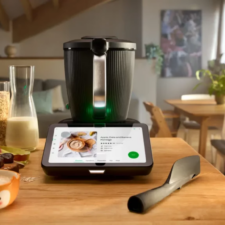
Vorwerk announced a new AI-powered Cookidoo Assistant to provide inspiration and guided cooking for users. With this new assistant, the Cookidoo function makes it easier to search and find recipes, compare options, plan meals and find answers to a wide range of cooking and recipe questions.

Retail has spent years pursuing greater efficiency. Artificial intelligence is accelerating that transformation by making shopping faster, more personalized and increasingly automated. Yet as those capabilities become available to everyone, they become less distinctive. When every retailer has access to similar technology, competitive advantage shifts away from automation itself and toward something much harder to replicate: human connection.
When organizations struggle to gain traction with AI, the problem usually isn't the technology. It isn't the budget, the strategy or the board. More often than not, it's that the people leading the organization haven't become practitioners themselves. AI transformation is personal before it becomes organizational, and until leaders embrace it that way, the rest of the business rarely follows.

The question isn't whether change is coming. It's whether we'll intentionally shape what comes next—or simply react to it.
Whether you feel ready or not, your job has changed. Every leader in every industry is now managing something they’ve likely never been formally trained on. We are all—at this moment—managers of AI, and just like that first promotion, success from here forward is going to look different.
Across the channel, companies and distributors are experimenting with AI-generated captions, graphics and social posts. The result is often more content—but not necessarily more productivity. In many cases, distributors sound increasingly similar, social feeds feel repetitive and audiences are becoming less responsive to templated messaging. The issue is not that AI lacks value. It’s that most organizations are applying it at the wrong stage of the distributor journey. The most important problem in direct selling is not content creation. It’s activation.

In 2025, several major dictionaries identified “slop” as a cultural word of the year—not in the agricultural sense, but as shorthand for low-quality, AI-generated digital output that floods channels with polished but ultimately hollow content. It is a signal of a broader shift: artificial intelligence is transforming communication at scale, and not all of that transformation is beneficial.

Natura announced a new strategic partnership with Debut, an AI-powered biotechnology beauty leader, as it seeks to commercialize an AI-discovered longevity ingredient complex. Debut brings its proprietary AI to the partnership and the two entities expect that Natura’s decades of beauty expertise rooted in the biodiversity of the Amazon Rainforest will allow them to commercialize […]

LivePURE announced the beta rollout of a new AI-powered platform that provides sales assistance and support to its distributors.

Why isn’t AI delivering the impact we expected? Most executives assume the risk sits in the technology. Picking the wrong platform. Backing the wrong vendor. Moving too slowly on agents and automation. In reality, the organizations struggling to see value from AI are rarely blocked by technology at all. They are blocked by adoption.

Powered by AI, Prysm iO is a small, circular device that uses advanced skin-scanning technology to conduct non-invasive imaging of the fingertip. In 15 seconds, the device measures carotenoids, which are antioxidants necessary to support immunity and health in the brain, heart, skin and cells.
- 1
- 2
- 3
- …
- 6
- Next Page »