Wednesday / November 18. 2026
menu-logo menu-logo
brand-logo
Subscribe
Subscribe
Wednesday / November 18. 2026
  • Read
    • Daily News
      • Financial
      • Insights
      • U.S.
      • International
    • Digital Issue
    • Executive Announcements
    • Cover Stories
    • Feature Articles
      • Exclusive Interviews
    • International Focus
    • Company Spotlights
    • Forward Thinking
    • Legal Briefs
    • Insights from the Outside
    • For You | For Your Field
    • Working Smart
  • Listen & Watch
    • Direct Approach Podcast
    • What’s Working in Direct Selling
    • BUILT TO LAST
      • Zinzino
      • PM-International
      • LifeWave
    • The DSN Podcast
  • ATTEND
  • Achieve
    • Global 100 List
    • Bravo Awards
    • Best Places to Work
    • Legends
  • Research
    • Stock Watch
    • DSN Supplier Sponsors
    • The DSN Guide
    • Supplier Directory
    • Stock Ticker
    • Resources
  • Engage
    • About DSN
    • Supporter Program
    • Subscribe
    • Advertise
    • VIP Text Alerts
    • Connect
  • Search
Subscribe

Plexus Summer Wellness Tour Reaches 15,300+ Attendees

September 3, 2026 by DSN Staff Writer

Plexus Worldwide wrapped its Summer Wellness Tour, making 219 stops in 22 states and one territory as part of its summer-long event. Featuring two Plexus Wellness Bar travel trailers, the event spanned 15,559 miles and reached more than 15,300 attendees with opportunities to learn more about the brand’s gut health and microbiome products as well as the role of entrepreneurship in driving economic growth, community engagement and the overall health of American families.

The tour also functioned as a significant philanthropic initiative during a stop in San Juan where more than 70 Plexus Brand Ambassadors packed 920 boxes of food to support in-need families in Puerto Rico and the company’s global Nourish One campaign, which combats food insecurity through the help of Mary’s Meals and Feeding America.

“The Summer Wellness Tour was an incredible success,” said Catherine Scott, Chief Sales Officer. “We are so grateful to our dedicated Brand Ambassadors and everyone who joined us to experience it firsthand. By bringing wellness and community together, our customers and Brand Ambassadors truly embody the Plexus mission to ignite hope, health and happiness through gut health and whole-body wellness.”

Filed Under: Daily News Tagged With: Catherine Scott, Plexus, Tour

Tupperware to Open Global Sourcing and Supply Chain Center in Singapore

September 1, 2026 by DSN Staff Writer

Tupperware Brands Corporation announced plans for a strategic global sourcing center, located in Singapore. The new center will host a number of critical roles, including sourcing, category management, quality, product development engineering, data entry, product and regulatory standards, purchasing, research and design and sustainability, and will serve as a critical component to the company’s supply chain optimization and organization as it supports expansion into new categories and channels.

“We have plans to expand beyond the kitchen and take Tupperware into more categories and channels than ever before to meet today’s growing consumer demand,” said Sandra Harris, Tupperware Chief Operations Officer and Chief Financial Officer. “Singapore will play a critical role in the strategic growth of our iconic brand and emerging sub brands. We have had a corporate presence in Singapore for many years and we look forward to growing our presence in what many see as a global center for business, innovation and talent.”

Jakob Rojens has been appointed Managing Director for the center and will lead global sourcing efforts while overseeing regulatory, quality and safety teams.

“Tupperware’s decision to base its global sourcing hub in Singapore reaffirms our position as a critical node in global supply chains, and a hub for businesses to innovate for a portfolio of brands,” said Fong Pin Fen, Singapore Economic Development Board Vice President and Head of Consumer. “Tupperware will be able to tap on the strong supply chain, research and creative talent base in Singapore to expand its footprint in Asia and globally. The sourcing team will also play a vital role in facilitating Tupperware’s move to adopting sustainable materials, which is aligned with consumers’ evolving preferences and Singapore’s sustainability goals.”

Filed Under: International Tagged With: Fong Pin Fen, Sandra Harris, Singapore, Tupperware

Mary Kay Debuts New Global Brand Platform

September 1, 2026 by DSN Staff

Mary Kay Inc. announced its largest-ever global consumer-facing campaign and long-term brand strategy. The campaign, Beauty Is More Beautiful Shared, will launch across 40 markets worldwide as it reintroduces the brand to a new generation of consumers. With this strategy, the company hopes to address what it calls a “profound cultural longing for community and connection that the world, and generations of women, are feeling more than ever.”

“In a world where beauty has often resonated as a solo act, we’re reclaiming beauty as a shared experience, celebrating the power of sharing, supporting and uplifting one another,” said Dr. Lucy Gildea, Mary Kay Chief Brand and Scientific Officer. “Beauty Is More Beautiful Shared brings the enduring power of womanhood and shared connection into the way Mary Kay approaches beauty. Through this master brand campaign, we are sharing the emotional connection and timeless purpose at the heart of our brand with consumers around the world, celebrating the transformative power of our iconic products and the difference our brand makes in women’s lives and communities. This campaign is an invitation to rediscover what has always made Mary Kay different, and to experience the beauty of what’s possible when we share it.”

The global campaign will address recent shifts in beauty through a comprehensive media mix tailored to the preferences and needs of next-gen beauty buyers. Specifically, the campaign will blend online amplification through digital platforms, shared media, influencer partnerships and “real world” out-of-home placements and events, as well as experiential consumer events designed to bring Gen Z together face-to-face.

“Beauty Is More Beautiful Shared is a reflection of who we are and what we have always stood for: women supporting women,” said Ryan Rogers, Mary Kay Chief Executive Officer. “As we enter our next era of growth, we are celebrating and empowering every Mary Kay woman, from our Independent Beauty Consultants to customers, expanding our reach and impact and bringing our promise of confidence, opportunity and human connection to life in bold, relevant and compelling new ways.”

Filed Under: Daily News Tagged With: Branding, Dr. Lucy Gildea, Mary Kay, Ryan Rogers

What’s Working in Direct Selling

August 31, 2026 by DSN Staff Writer

One of DSN’s most popular podcasts has a new vision, a new host and a new name.

Direct Selling News is ushering in a new era for one of its most popular media platforms.

After nearly 100 episodes and three years of conversations with some of the direct selling channel’s most respected leaders, the Shift podcast has evolved into something new: What’s Working in Direct Selling, hosted by industry coach, consultant and author Rob Sperry.

The transition marks more than a rebrand. It represents a renewed commitment from DSN to provide field leaders, distributors and executives with actionable insights, trusted perspectives and real-world strategies from across the channel. Having worked closely with both corporate teams and field leaders for more than two decades, Sperry hopes to help each side better understand what’s actually driving growth in today’s marketplace.

Originally launched by long-time industry leader Blake Mallen, shift was created to fill what he described as a “gap” in the profession—a trusted platform where distributors and entrepreneurs could hear directly from top performers.

“Over the last nearly 100 episodes, we’ve had a front-row seat to some of the most successful top performers and achievers in the channel,” Mallen said during the podcast’s finale episode. “People who took time away from their teams and families to transparently share the greatest shifts in mindset, methodology and strategy that helped them become who they are today.”

Now, DSN is building on that foundation with a refreshed format and a new voice behind the microphone.

Sperry, who has spent more than two decades coaching leaders and consulting with direct selling companies, brings a uniquely broad perspective to the role. A former top field leader himself, he has trained more than 1,700 verified six- and seven-figure earners and worked closely with both corporate executives and distributor leaders.

“This feels like an emotional episode,” Sperry said during the handoff conversation with Mallen. “You put your heart and soul into this. I feel honored to help take that mantle and do my best to continue it.”

Unlike traditional interview podcasts that focus primarily on inspiration or storytelling, What’s Working in Direct Selling is designed to deliver highly practical, implementation-focused insights listeners can immediately apply in their businesses.

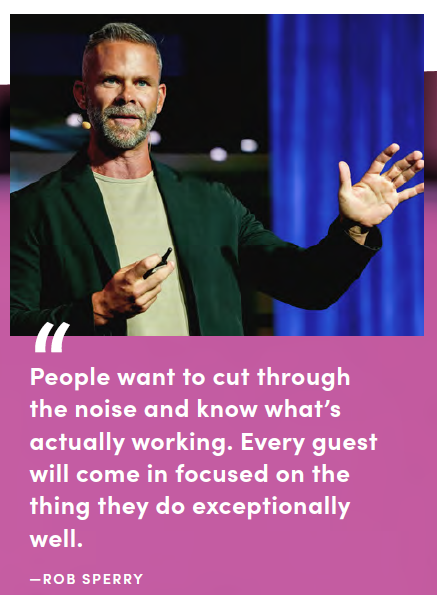
“People want to cut through the noise and know what’s actually working,” Sperry explained. “Every guest will come in focused on the one thing they do exceptionally well, and we’ll break that down into actionable takeaways.”

The structure is intentional. Sperry plans to focus each episode around “the rule of three”—three practical lessons, strategies or systems that listeners can implement immediately.

For DSN, the evolution aligns perfectly with the organization’s longstanding mission of serving as a trusted source of information and leadership for the channel.

“DSN is always looking for new ways to serve the direct selling channel with timely, practical and trustworthy content,” said Stuart Johnson, Founder and CEO. “Shift built a strong foundation. Rob and What’s Working in Direct Selling will take that mission even further by giving leaders direct access to the strategies, insights and conversations shaping success in today’s marketplace.”

Mallen believes the timing for the podcast’s evolution could not be more important. “We are still in this season of rapid evolution and transformation as a channel. We need access to people who are willing to share what’s working today and how they’re navigating change.”

The new format also reflects broader shifts happening across entrepreneurship, social selling and digital business building. Rather than relying solely on broad motivational messaging, Sperry says today’s leaders are searching for clarity, specificity and duplication.

“What works is what duplicates. If someone is getting results with Facebook groups, tell me the top three things they’re doing. If someone is building face-to-face, show me exactly how they’re doing it. I want listeners leaving every episode with ideas they can implement immediately.”

The balance between inspiration and implementation helped make shift resonate with listeners across multiple generations of direct sellers. Over nearly 100 episodes, the podcast featured conversations with legendary leaders, rising stars, executives and entrepreneurs from virtually every corner of the profession.

Reflecting on the experience, Mallen said one of the biggest lessons from hosting the show was discovering the common patterns shared by successful leaders—regardless of company, background or generation.

Those themes will continue into the next chapter of the podcast, but with an even sharper focus on actionable leadership and field execution. Subscribers to shift will automatically continue receiving episodes under the new What’s Working in Direct Selling brand across all major podcast platforms.

For Sperry, the mission behind the microphone remains simple. “My goal is to bring out the best from every guest and share strategies that can genuinely help people grow.”

And for DSN, the evolution represents another step in its ongoing effort to serve the direct selling profession through credible journalism, meaningful conversations and practical leadership resources that help the channel move forward.


From the July/August/September 2026 issue of Direct Selling News magazine.

Filed Under: Feature Articles Tagged With: podcast, Rob Sperry, What's Working in Direct Selling Podcast

LifeVantage Reports Fiscal Q4 and Full Year Fiscal 2026 Financial Results

August 28, 2026 by DSN Staff Writer

LifeVantage Corporation announced its financial results for the fourth fiscal quarter and full fiscal year 2026. Revenue during the fourth fiscal quarter was $42.4 million, down 23.1% year-over-year, with an adjusted EBITDA of $2.7 million. Net income per diluted share was $0.10, compared to $0.15 per diluted share in the year-ago period.

For the full fiscal year 2026, revenue was $182.6 million, a 20.1% year-over-year decrease, with adjusted EBITDA of $13.7 million, down from $22.1 million in full fiscal 2025. Revenue in the Americas during this time fell 23.2% year-over-year, while revenue in Asia/Pacific and Europe decreased by 6.9%. The company attributed this decrease to a decline in sales of the MindBody GLP-1 System, as well as declines in order number and size, but the effects of this decline were partially offset by sales of LoveBiome, which the company acquired in October 2025.

“It’s a privilege to lead LifeVantage at this stage of its journey and my conviction about this company is stronger today than when I accepted the role,” said Terrence Moorehead, LifeVantage President and Chief Executive Officer. “With a differentiated, science-backed platform, strong gross margins and a debt-free balance sheet, our foundation is strong and I believe we have a real competitive advantage. Our early focus will be on strengthening the LifeVantage brand, building a more relevant consumer proposition and driving operational excellence. Despite the challenges reflected in our recent results, I’m optimistic about what lies ahead. We intend to move forward with a real sense of urgency and look forward to sharing more about our strategy as our work progresses.”

Operating income for fiscal 2026 was $6.1 million, down from $12.2 million in fiscal 2025. The company generated $10.2 million of cash from operations during fiscal 2026 and ended the period with cash and cash equivalents of $14.9 million with no debt outstanding.

Filed Under: Financial Tagged With: LifeVantage, quarterly, Terrence Moorehead

Mary Kay China Accelerates Digital Progress

August 28, 2026 by DSN Staff Writer

Under the leadership of Mark Chen, General Manager Mary Kay China and Hong Kong, Mary Kay announced an acceleration of its business transformation in the region, stating that the company is entering the “next chapter of digital-first beauty and growth.”

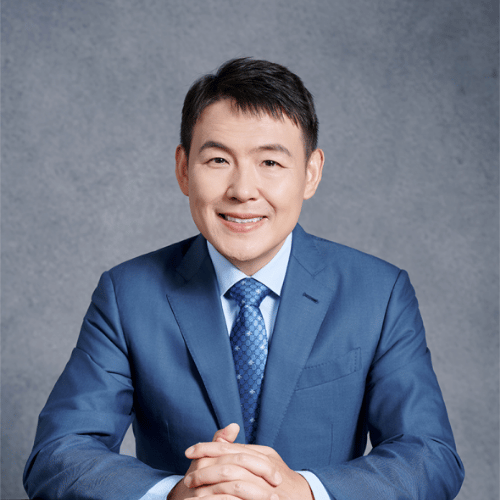
Mark Chen, General Manager Mary Kay China and Hong Kong

Chen, who joined Mary Kay last year, brings extensive experience in brand management, market operations and organization leadership, and has been prioritizing product innovation, digital excellence and balancing legacy and modernization as he continues to shape sustainable growth for the brand.

“For more than three decades, Mary Kay has built an iconic presence in China, defined by pioneering business milestones and a lasting impact on generations of women through the dedication of our Independent Beauty Consultants,” Chen said. “As we look to the future, I am honored to lead a brand that brings together innovation, empowerment and community and to accelerate our modernization, inviting all generations to experience the transformative power of Mary Kay in their own lives and in the lives of others.”

Mary Kay has been active in China for more than thirty years, supporting more than 260,000 women through entrepreneurship and social impact programs, and investing millions in research and development, product safety and efficacy testing, as well as a cumulative investment of 700 million Chinese yuan in a manufacturing facility in Hangzhou, Zhejiang Province. Moving forward, Mary Kay China will sharpen its focus on three strategic pillars, including:

  • Innovation-led growth and the expansion of skincare leadership, product lines and R&D
  • Digital-first empowerment of entrepreneurs through AI tools, social commerce and an embracing of the digital economy
  • Advancing the brand’s mission of empowering women through entrepreneurship, education and social impact

“At Mary Kay, our greatest achievement is measured in the lives changed. Every day, our Independent Beauty Consultants in China demonstrate what’s possible when women are given a viable opportunity,” said Tara Eustace, Mary Kay Chief Opportunity and Sales Officer. “Mark Chen’s leadership ushers in an exciting new chapter in our company’s story in China. His expertise in business transformation and strategic vision will be instrumental in driving growth at Mary Kay China.”

Filed Under: International Tagged With: China, Hong Kong, Mark Chen, Mary Kay, Tara Eustace

Complement, Don’t Compete

August 28, 2026 by Javier Urdaneta

Social commerce isn’t replacing direct selling. It’s giving us new ways to do what we already do best.

For more insights and takeaways, listen to this episode of the Direct Approach podcast.

When my family entered direct selling in Venezuela in the 1990s, social commerce obviously wasn’t part of the conversation. My parents built a team and eventually became Tupperware’s number one distributors in Latin America.

Later, my father moved to the corporate side because he wanted to understand that part of the business, too. Ultimately, our family launched our own direct selling company in Venezuela, and after political and economic conditions forced us to close that operation, we started MONAT in the United States in 2014.

The tools have changed dramatically over that time, but the fundamentals haven’t changed nearly as much. Direct selling has always been about real people sharing products, talking about their experiences and building relationships. That is why—when we began looking seriously at social commerce—it didn’t feel like we were moving away from direct selling. In many ways, it felt surprisingly familiar.

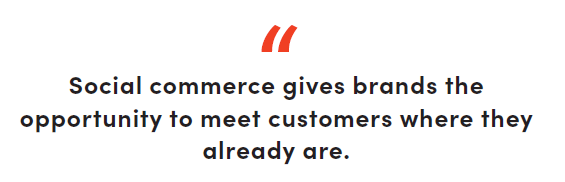
Social commerce gives brands the opportunity to meet customers where they already are. People spend hours on social platforms discovering products, watching demonstrations, reading and watching reviews and deciding what they want to buy. Platforms such as TikTok have simply shortened the distance between those activities and the transaction. Discovery, recommendation and purchase can now happen in the same place.

That creates a significant opportunity. But capturing it requires us to evolve without losing sight of what made this model work in the first place.

Authenticity Wins

One of the clearest things we have learned is that consumers want authenticity. For years, people went to Google to research a product and read reviews before making a purchase. Today, they can watch a real person use that product; explain why they like it; and demonstrate the results. That feels more personal, and it has become an important part of how people make purchasing decisions.

Our data reinforces that. When affiliates create highly polished, heavily produced content, it generally does not perform as well as content that feels natural. Someone standing in the kitchen, bathroom or car talking honestly about a product can generate more reach, engagement and sales than something that looks like a commercial.

AI makes that dynamic even more interesting. Platforms are giving brands and creators AI tools to produce content, and AI certainly has valuable applications throughout sales and marketing. But we are also seeing consumers become very good at recognizing what people sometimes call “AI slop.” Younger consumers in particular can spot content that doesn’t feel real, and they tune it out quickly.

That doesn’t mean AI isn’t useful. At MONAT, we use it for research and problem solving. But when it comes to the customer-facing content that creates trust, real people still have an enormous advantage. Direct selling should recognize that advantage because authenticity has always been one of our superpowers.

Start Before You Have All the Answers

When we first explored TikTok Shop, we did a tremendous amount of research. We studied the platform, asked questions, talked with our technology teams and—yes—used our “$20 consultant,” ChatGPT to help us understand how different pieces might work. But eventually research reaches its limit.

Our philosophy was simple: Don’t wait until things are perfect because you’re never going to do it. We didn’t have every answer, and we decided we didn’t need to in order to get started.

That mindset was important because social commerce is moving too quickly for companies to spend a year designing the perfect strategy before testing. Some of the things we tried didn’t work the way we expected. That was okay. We learned. We adjusted. And, most importantly, we kept going.

We also had an advantage: some MONAT Market Partners were already active on TikTok. Rather than developing the entire strategy internally and presenting it to the field as a finished program, we invited some of those creators into a pilot group. They had audiences ranging from relatively small followings to very large ones, and they understood the platform in ways we didn’t.

We told them what we wanted to accomplish, listened to their feedback and built the program with them. That transparency mattered later because the launch didn’t feel like something corporate had suddenly decided to do. We had Market Partners who understood the strategy; had helped shape it; and could articulate the opportunity.

Let the Platform Teach You

Social commerce also challenges some of the assumptions companies make about their own products. A bestseller in your traditional business will not necessarily be a bestseller on TikTok Shop.

We learned that firsthand. One of our products that sits within our top ten in the traditional business became our number one product on TikTok Shop. Why the bump? We think a relatively accessible price point and the immediacy of the product experience contribute to the appeal. At the same time, one of our top three products in the traditional business has gained very little traction there.

Initially, that was difficult to understand. We spent months trying to push a product because we knew how successful it was elsewhere. Eventually, the market gave us the answer: stop forcing it.

That has been one of the most useful parts of this process. Social commerce provides another stream of consumer behavior we can learn from. It can influence how we think about product development, pricing, positioning and future launches without dictating every decision.

The goal isn’t to turn the entire product strategy over to an algorithm. It’s to pay attention when customers are telling you something.

The same applies to content. We originally heard that videos needed to be short because nobody would watch longer content. Now we see two- and even two-and-a-half-minute videos succeed when they have a strong hook and keep people engaged. There isn’t one formula. You test, learn and double down on what works.

A Volume Game

There is another lesson from social commerce that should sound very familiar to anyone in direct selling: consistency matters.

Creators cannot expect one successful video to keep producing forever. Platforms reward activity, so affiliates need to continually create new content, test new hooks and experiment with different ways of presenting products. Not every video will generate a sale. In fact, we tell new affiliates that they may not make a sale during their first month—and that’s okay.

Because that first month is still productive. They are showing the algorithm they’re active while learning what good content looks like for them. Each video creates another opportunity to understand which products, hooks, formats and messages resonate.

It’s a volume game. You need to be posting a lot. And that principle is not fundamentally different from traditional direct selling. Nobody expects to join a direct selling company, talk to two people and immediately build a significant organization.

Success has always required consistency, repetition, learning and a willingness to keep going when every effort doesn’t produce an immediate result. Social commerce introduces new tools, but many of the behaviors are remarkably familiar.

Training therefore becomes critical. We provide a monthly basics training because new people are continually entering the program, then we supplement that with weekly training around content, hooks, campaigns, promotions and what is working. The platform changes quickly, so education must keep pace.

Protect the Main Thing

The biggest concern we heard from some Market Partners was understandable: Is MONAT becoming an affiliate company?

We were very clear from the beginning that the answer to that was an emphatic no. Direct selling remains our primary model. Social commerce is an additional channel that allows Market Partners to reach people they might never encounter through their existing networks, particularly younger audiences and consumers spending more of their time on platforms such as TikTok.

That is why I use the phrase complement, not compete. Social commerce can generate a product sale, but it can also start a relationship. A new customer can discover MONAT through TikTok Shop and later become a Preferred Customer or Market Partner. Someone who loves creating content but has no interest in recruiting can simply sell. Someone who wants to build a traditional organization can continue doing that while using social commerce as another resource for customers and leads.

We haven’t had to dismantle our existing model to make room for this one. That was essential to getting field buy-in, and I think it is an important lesson for other direct selling companies considering the same move.

The operational side does require work. These platforms were not designed specifically around direct selling compensation structures, so companies should expect technology and commission teams to be deeply involved.

In our experience, some custom middleware is necessary to make the systems communicate correctly. Social commerce cannot simply be handed to marketing as a side project. You need to make it part of the same thing you’re doing.

That may be the most important lesson we have learned. Once we began seeing traction, we brought social commerce more fully into recognition, training, monthly calls and the broader organization. It still complements our traditional business, but it is no longer treated like an experiment happening somewhere off to the side.

Early Is an Advantage

MONAT has been working in this space for roughly a year and a half, and I still believe we are very early. Major brands are entering social commerce; platforms are adding capabilities; and live shopping continues to grow. As more companies arrive, competition for attention will only increase.

But that window won’t stay open indefinitely. I believe direct selling companies have the next six months to a year to get into this space or risk becoming irrelevant. More and more big companies are joining, and you need time to catch up and learn. There’s a lot to learn. You want to join now before it gets crowded with more mainstream brands.

For direct selling companies that are still evaluating the opportunity, my advice is simple: start learning now. Research the platforms. Talk to your field members who are already creating there. Bring technology, commissions, marketing and other key executives into the conversation. Test products and content. Accept that some things won’t work and learn from them quickly.

Five years from now, I expect a much larger percentage of direct sellers to participate in social commerce. But I also think something else will happen at the same time. As people spend more of their lives online, authentic in-person connection is becoming valuable again.

The future doesn’t have to be digital or personal. It can and should be both. The companies that understand how to bring those worlds together—using new platforms to expand reach while protecting the relationships at the heart of the model—will be in the strongest position to grow.


With a background in international business, logistics and information technology, JAVIER URDANETA serves as MONAT’s Chief of Staff and SVP of Emerging Markets. As a team player with a “whatever it takes” attitude, Javier works cross functionally to support every global department reach company goals.

An Online Exclusive from Direct Selling News magazine.

Filed Under: Feature Articles Tagged With: Direct Approach Podcast, Javier Urdaneta, Monat, social commerce

Medifast Launches the Medifast Metabolic Health Institute

August 28, 2026 by DSN Staff Writer

Medifast, Inc., the parent company of Trilivy, has established the Medifast Metabolic Health Institute, bringing rigorous research and evidence-based education to its approach to metabolic health. Through the institute, Medifast will gather its clinical research, scientific expertise and educational resources under a single body to support its belief that everyone deserves access to the science, education, tools and support necessary to achieve optimal metabolic health.

The company’s research foundation already encompasses more than 100 peer-reviewed presentations and publications, including peer-reviewed scientific journal publications, randomized clinical trials and scientific research studies and analyses. This work was the foundation for its Metabolic Synchronization science, which supports Trilivy’s comprehensive metabolic health system.

“Metabolic dysfunction is one of the defining health challenges of our generation, and most people still do not know what metabolic health means or how to improve it,” said Nick Johnson, Medifast CEO. “We have spent 45 years building our expertise, and the institute brings that work together in one place. Turning that science into education people can act on is how we earn the right to be a trusted authority in metabolic health.”

MMHI Distinguished Fellow, Dr. Wayne Scott Andersen, along with Medifast’s Scientific Advisory Board, will guide the scope of work, while the company’s Scientific & Clinical Affairs team of registered dietitians, scientists and health educators and Research and Development team will lead the day-to-day work of the institute to bridge scientific discovery with real-world application.

“For decades, Medifast has invested in clinical research and scientific excellence. The Medifast Metabolic Health Institute builds on that foundation by creating a centralized hub for credible, evidence-based research and educational resources,” said Satya Jonnalagadda, PhD, MBA, RDN, Medifast Vice President of Scientific & Clinical Affairs. “As the understanding of metabolic health continues to evolve, we are committed to helping bridge the gap between scientific discovery and practical application, empowering people with the knowledge needed to support meaningful health transformation.”

In addition, the institute will now also set the standards for Trilivy’s Coach Certification, which ensures every independent coach is equipped with foundational knowledge surrounding optimal metabolic health transformations and capable of providing the highest level of support to clients.

Filed Under: Daily News Tagged With: Medifast, Medifast Metabolic Health Institute, Nick Johnson, Satya Jonnalagadda, Trilivy

The Human Advantage

August 27, 2026 by Susannah Schofield OBE

As artificial intelligence makes retail faster and smarter, direct selling has an opportunity to compete on what technology cannot replicate—trust, relevance and human connection.

Retail has spent years pursuing greater efficiency. Artificial intelligence is accelerating that transformation by making shopping faster, more personalized and increasingly automated. Yet as those capabilities become available to everyone, they become less distinctive. When every retailer has access to similar technology, competitive advantage shifts away from automation itself and toward something much harder to replicate: human connection.

That shift creates an extraordinary opportunity for direct selling. The qualities that increasingly define successful retail—emotional intelligence, trust, community, empathy and confidence—have always been at the heart of our business model.

Consumers are overwhelmed by information, advertising and algorithmic recommendations. What they need is not another opinion generated by technology but someone they trust to help them make sense of the choices in front of them. As AI commoditizes information, human judgment becomes more valuable than ever.

From Information to Meaning

Artificial intelligence can compare products, summarize reviews and recommend purchases with remarkable speed. What it cannot do is replace the confidence that comes from a trusted recommendation. Consumers increasingly want someone who understands their circumstances, not simply their browsing history. That makes emotional intelligence, empathy and community strategic advantages rather than soft skills.

The strongest consumer brands have already recognized that people are buying into stories rather than simply buying products. They create communities, memorable launches and content that customers genuinely want to engage with. The product remains important, but it is the surrounding experience that captures attention and creates loyalty. Brands are no longer just selling products; they are building relationships that happen to include products.

Even many of the world’s leading technology companies continue investing heavily in human storytelling and authentic communication. They recognize that automation improves efficiency, but trust is still built person to person.

Direct selling already possesses something many brands are trying to create—thousands of authentic voices sharing real experiences with products they genuinely believe in. Our opportunity is not to imitate traditional retail but to lean into the strengths that have always differentiated us from it.

The End of Transactional Loyalty

For years, retailers competed on convenience, price and loyalty programs. Those advantages are becoming increasingly fragile because consumers can compare prices, read reviews and find alternatives in seconds. Transactional loyalty is easy to lose when another company offers a better deal.

shutterstock.com/bbernard

Emotional loyalty is so much harder to replace. Customers return to businesses where they feel understood; where someone has taken the time to recommend the right product; and where the experience feels personal rather than automated. That emotional connection becomes part of the value customers receive.

Artificial intelligence also introduces a new challenge: authenticity. As AI-generated content becomes more sophisticated, consumers are becoming less certain about what they can trust. Images, videos and testimonials are no longer automatically believable. At the same time, customers still expect speed, convenience and personalized service. That creates a paradox. They want technology to make shopping easier, but they also want reassurance from someone they know.

That is precisely where direct selling excels. A trusted recommendation from someone who genuinely uses and loves a product carries a credibility that no algorithm can manufacture. Technology should strengthen those relationships by making consultants more informed and responsive, but it should never replace the conversation itself. In a marketplace increasingly filled with synthetic content, authentic human confidence becomes a premium asset.

From Personalization to Personal Connection

Personalization is now expected. Understanding is becoming the differentiator. Consumers want brands that recognize not only what they have purchased before, but why those purchases matter. A recommendation from someone who understands their goals carries a weight that even the most sophisticated algorithm cannot replicate.

This is particularly true among younger consumers, who increasingly see retail as something cultural rather than transactional. They want experiences they can participate in, brands that reflect their values and communities where they feel they belong.

That shift favors businesses capable of creating authentic local connections instead of relying exclusively on centralized marketing campaigns. Thousands of independent consultants sharing their own stories in their own communities can create a level of relevance that traditional advertising struggles to match.

For direct selling, this represents an opportunity to reclaim the narrative. Rather than apologizing for our relationship-driven model, we should recognize that the broader retail industry is moving toward many of the same principles we have practiced for decades. The future belongs to companies that combine digital convenience with genuine human understanding, and that has always been our strength.

Tell the Story Behind the Product

Exceptional products deserve exceptional stories. Customers remember why someone started the business; how a product solved a real problem; or what success has meant for a family far longer than they remember a list of features. Authentic experiences create credibility because they cannot be manufactured by artificial intelligence or copied by competitors.

Our consultants should be known as confident storytellers, not simply knowledgeable sellers. The products speak for themselves; what differentiates our channel is the personal journey behind them. Every consultant has a reason they joined, a challenge they overcame or a customer whose life was genuinely improved. Those stories create emotional connections that inspire confidence and help customers see themselves in the experience.

The industry also needs to become more confident in telling its own story. Direct selling creates entrepreneurship, flexibility, community and personal growth every day, yet we often allow others to define our value.

If we believe our business model offers something uniquely meaningful, we have a responsibility to communicate that message with clarity and conviction. Empowering consultants to tell their stories is one of the most effective ways to reshape perceptions of the channel.

The Next Era of Retail

Artificial intelligence will continue reshaping retail. It will automate routine tasks, improve efficiency and create increasingly sophisticated customer experiences. None of those developments diminish the importance of direct selling. If anything, they reinforce the value of what our channel already does exceptionally well.

The smartest retailers will use AI to handle efficiency while empowering people to deliver empathy, creativity, confidence and memorable experiences. Technology should free people to spend more time building relationships rather than replacing those relationships altogether. The companies that thrive will not be those with the most automation, but those that make customers feel understood.

Direct selling is uniquely positioned for that future. Our consultants create trusted recommendations. Our communities foster inclusivity. Our business model values conversation over transaction and relationships over reach. As technology becomes more common, those human qualities become even more valuable.

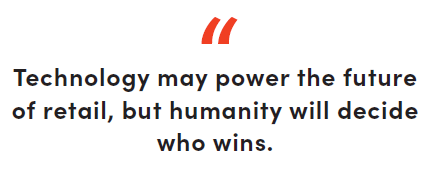
Technology may power the future of retail, but humanity will decide who wins.


SUSANNAH SCHOFIELD OBE is the Director General of the Direct Selling Association UK & Ireland, an industry which is worth over £1billion. Prior to her appointment as leader of the DSA, Susannah spent 18 years at Royal Mail, culminating in her holding the Board-level role of Commercial & Innovation Director, where she led a team of over 800 people. A passionate advocate for women and young people in business, Susannah was awarded an OBE for her work in this area in the 2015 New Year’s Honours List.

An Online Exclusive from Direct Selling News magazine.

Filed Under: Feature Articles Tagged With: AI, artificial intelligence, Human Factor, Susannah Schofield OBE

Trust is the Currency of Change

August 26, 2026 by Justin Serra

Innovation doesn’t fail because companies move too quickly. It fails because leaders haven’t built enough trust to bring people with them.

Read below or you can listen to this special Bonus Episode of Direct Approach, where Justin Serra, CEO of MAKE Wellness, shares his keynote presentation from DSU Spring 2026 on the relationship between trust, culture and a company’s ability to successfully navigate change.

Every direct selling company wants to be more innovative. We want better technology, smarter systems, stronger customer experiences and faster growth. We know our industry is changing at a pace none of us could have imagined just a few years ago, and we understand that standing still is no longer an option.

What we don’t always recognize is that innovation comes with a price. And that price is change.

In direct selling, change isn’t simply a strategic decision made in a boardroom. It’s something experienced by thousands of independent entrepreneurs whose businesses, confidence and income are tied to the decisions we make as corporate leaders.

That’s why I’ve come to believe that the greatest challenge facing our industry isn’t learning how to innovate. It’s learning how to build organizations that can absorb change without losing trust.

That lesson became very real for me only weeks after launching MAKE Wellness. Like every new company, we began with tremendous excitement. The field was energized, enrollment was strong and our team felt like everything was unfolding according to plan. We had worked for years preparing for launch and imagined ourselves spending the coming months building on that momentum.

Instead, we found ourselves facing a crisis.

As we closed our first month, we realized our commission engine wasn’t functioning properly. Some people had been overpaid. Others had been underpaid. Even worse, there wasn’t an obvious pattern that explained why.

After digging deeper, we recognized the problem wasn’t simply the calculations. The technology platform we’d launched on couldn’t support the business we intended to build.

Within our first month, we made the difficult decision to replace our entire technology stack.

From a strategic perspective, it was absolutely the right decision. From an operational perspective, it created enormous disruption. But what stayed with me wasn’t the technology itself. It was watching how differently people responded to the same decision.

Some immediately understood why we had to act. Others had understandable questions about whether we could get it right. That’s when I realized the decision wasn’t really driving the reaction—trust was.

Every Organization Has a Trust Account

I’ve started thinking about leadership in terms of a trust account. Every conversation, every fulfilled commitment and every difficult decision handled with honesty becomes another deposit. Over time, those deposits create confidence that leadership is acting with integrity and in the best interests of the organization.

The opposite holds true as well. Every surprise announcement, every unanswered question and every moment when people feel excluded from the process becomes a withdrawal. Eventually, leaders ask the organization to embrace significant change only to discover there isn’t enough trust available to support it.

That’s when the blame begins. Corporate concludes the field doesn’t like change. The field concludes corporate doesn’t understand what’s happening outside headquarters. Most of the time, neither explanation is completely accurate. The organization simply hasn’t invested enough in trust before asking people to navigate uncertainty together.

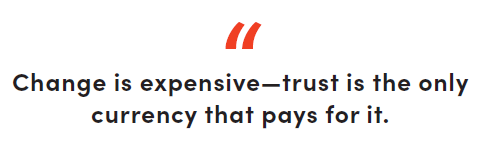
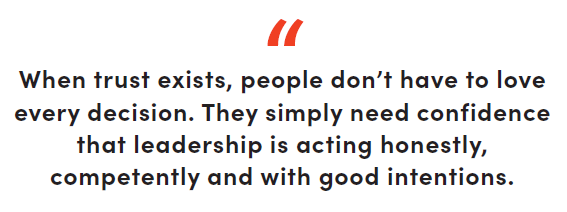
Change is expensive—trust is the only currency that pays for it. When trust exists, people don’t have to love every decision. They simply need confidence that leadership is acting honestly, competently and with good intentions. Once that belief exists, organizations become remarkably resilient. They stop viewing every change as a threat and begin recognizing it as evidence that the company is continuing to improve.

Transparency Prevents the Wrong Story

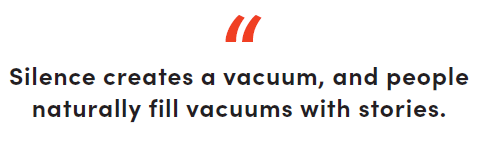
One of the biggest mistakes leaders make during periods of change is believing silence protects the organization. In reality, silence creates a vacuum, and people naturally fill vacuums with stories.

Field leaders aren’t isolated from what’s happening. They’re talking with customers every day. They’re hearing competitive conversations. They’re seeing shifts in the marketplace long before many of those trends appear in executive dashboards. When leadership doesn’t communicate openly, people begin creating their own explanations, and those explanations are almost always worse than reality.

Transparency prevents that. It doesn’t require leaders to have every answer. It requires them to be honest about what they know, what they’re still learning and why certain decisions are being made.

I’ve also become convinced that many of us think about leadership using the wrong metaphor. We often imagine ourselves as airline pilots while the field sits quietly in the passenger cabin. Corporate determines the destination, everyone fastens their seatbelts and hopefully enjoys the flight.

Direct selling doesn’t work that way.

A better model is a leader who relies on scouts because scouts see what headquarters cannot. They’re closest to changing conditions, and the intelligence they bring back should shape better decisions. Our field leaders play exactly that role. They know when customer sentiment is shifting. They recognize competitive threats before most executives do. They understand where excitement is growing and where confidence is beginning to fade. Organizations become dramatically stronger when leadership treats that perspective as intelligence rather than criticism.

The better the information flowing back from the field, the better the decisions corporate can make.

Innovation Requires a Culture That Expects Change

Every executive says they want an innovative organization. What they’re really asking for is an organization that’s comfortable evolving. Those two ideas cannot be separated.

Innovation inevitably changes products, systems, technology and processes. Companies that consistently improve don’t treat those changes as interruptions. They establish an expectation that improvement is part of the culture.

That expectation matters because it changes how people interpret leadership decisions. Instead of asking, “Why are we changing again?” people begin asking, “How does this improvement make us stronger?”

It also requires leaders to communicate consistently that innovation is never finished. We don’t reach a point where systems become perfect or products stop evolving. Improvement is continuous, and organizations that embrace that reality become far more adaptable than those waiting for stability to return.

Bring the Field Along

One of the simplest ways to strengthen trust is eliminating what I call the “ta-da” moment. Corporate leaders love unveiling finished ideas. We announce a new initiative, reveal the final plan and expect everyone to celebrate with us.

The field often has a very different reaction. Their first question isn’t whether the decision is good. It’s why they weren’t part of the conversation.

That doesn’t mean every decision becomes a committee vote. Leadership has responsibilities involving finance, regulation and operations that aren’t always visible throughout the organization. But trusted field leaders should have opportunities to contribute perspective before major initiatives are finalized.

They don’t need to approve the decision, but they do deserve the opportunity to improve it.

Once decisions are made, communication should happen deliberately. Share the vision with key leaders first, answer their questions, give them context and then broaden the conversation throughout the organization. It may feel slower in the beginning, but it creates alignment instead of confusion.

Companies rarely lose momentum because they communicated too much. They lose momentum because they communicated too late.

Trust Is Built Before It’s Needed

One lesson continues to shape how I think about leadership. Trust isn’t created during difficult moments—it’s revealed during difficult moments.

The work happens long before the crisis arrives.

It grows every time leaders acknowledge reality instead of pretending everything is perfect. It grows when feedback from the field results in better decisions. It grows when executives demonstrate enough humility to admit they don’t have every answer.

Those moments may seem small individually, but together they create a culture capable of handling extraordinary change.

I’ve also learned that leadership sometimes requires choosing respect over popularity. People won’t always agree with difficult decisions. They will, however, follow leaders they trust.

The pace of change in our industry will only continue accelerating. Technology will evolve. Markets will shift. Consumer expectations will keep changing.

The brands that thrive won’t be the ones fortunate enough to avoid those realities. They’ll be the ones that invested in trust before they ever needed to spend it. Because change won’t break your company, but a low-trust culture could.


JUSTIN SERRA is co-founder and CEO of MAKE Wellness, where he leads company strategy, innovation and organizational culture. Under his leadership, MAKE Wellness surpassed $100 million in sales during its first year of operations. His leadership philosophy is grounded in transparency, trust and the belief that strong cultures are built before they are tested.

An Online Exclusive from Direct Selling News magazine.

Filed Under: Feature Articles Tagged With: Field Support, Justin Serra, MAKE Wellness, Trust

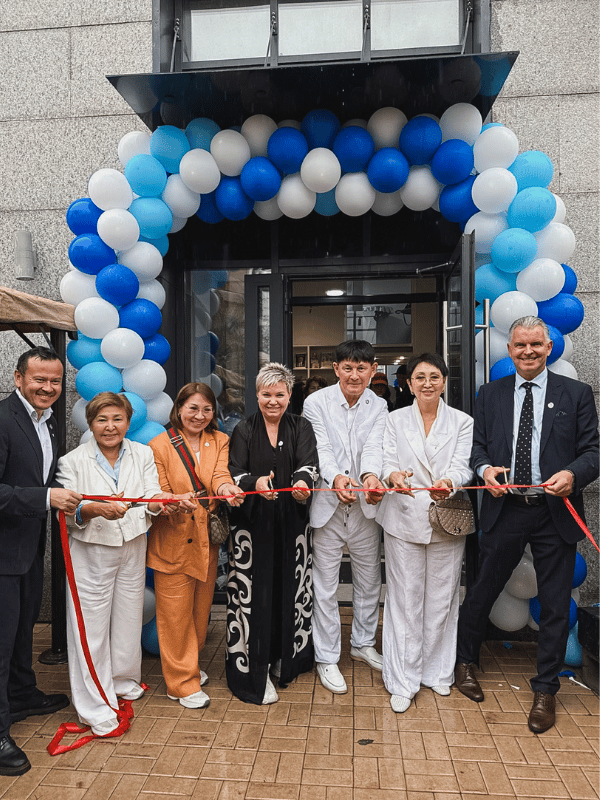
PM-International Opens Direct Sales Center in Kazakhstan

August 25, 2026 by DSN Staff Writer

PM-International announced an expansion of its presence in Kazakhstan with the opening of a new Direct Sales Center in Astana, Kazakhstan. This new center follows the grand opening of PM-International’s Kazakhstan office in Almaty, both of which demonstrate the company’s commitment to building strong and accessible infrastructure in the region.

Astana is a key, strategic hub in Northern Kazakhstan as well as the second-largest city in the country. This new center is expected to speed up delivery times by allowing Team Partners and customers to pick up products directly. Because of Kazakhstan’s vastness, shipping can be delayed, so this is expected to provide a meaningful boost to market development and sales momentum within the region.

“Astana is a natural next step in the development of our business in Kazakhstan,” said Abdurashit Makhametov, PM-International Kazakhstan General Manager. “Following the opening of our offices in Almaty, this new center allows us to serve our Team Partners in the north of the country just as directly and reliably. It reflects how quickly our community here is growing, and it gives us the local infrastructure we need to support that growth in the years ahead.”

Filed Under: International Tagged With: Abdurashit Makhametov, Kazakhstan, PM-International

Aegon Reports Financial Results for First Half of 2026

August 24, 2026 by DSN Staff Writer

Aegon, the parent company of World Financial Group (WFG), reported its financial results for the first six months of 2026. Net revenue was $709 million, up from $707 million in the first half of 2025. Operating results improved by 9% year-over-year, which the company believes reflects “strong commercial momentum and favorable financial markets.” The company is now on track to meet or exceed all of its group financial ambitions for 2026.

“In the first half of 2026, operating result increased by 9% to EUR 804 million and operating capital generation grew by 27% to EUR 416 million, enabling EUR 392 million in free cash flow,” said Lard Friese, Aegon CEO. “We also conducted our annual assumptions review, mostly to adjust for changing policyholder behavior observed in recent periods. Our performance in the first half reflects the dedication of our people, the momentum in our strategy, and our disciplined capital management. We are announcing an interim dividend of 21 eurocents per share, up 11% versus the prior year period. Supported by our strong capital position and confidence in the outlook for our businesses, we are also increasing our recently announced share buyback program by EUR 150 million to EUR 350 million. Our businesses are well capitalized and we are on track to meet or exceed our Group financial ambitions for 2026.”

Filed Under: Daily News Tagged With: Aegon, Lard Friese, WOrld Financial Group

  • « Previous Page
  • 1
  • …
  • 9
  • 10
  • 11
  • 12
  • 13
  • …
  • 643
  • Next Page »
brand-logo
The News You Need.
The Name You Trust.
Subscribe

Breaking global news, emerging trends and powerful stories conveniently curated to help direct selling executives stay informed, engaged and a step ahead.

  • Read
  • Listen & Watch
  • Attend
  • Achieve
  • Research
  • About
  • Connect
5717 Legacy Drive
Suite 250
Plano, Texas 75024
info@directsellingnews.com
Copyright 2026 Direct Selling News | All Rights Reserved
  • Privacy Policy
  • Terms of Use
  • Advertise
  • Subscribe
We use cookies on our website to give you the most relevant experience by remembering your preferences and repeat visits. By clicking “Accept All”, you consent to the use of ALL the cookies. However, you may visit "Cookie Settings" to provide a controlled consent.
Cookie SettingsAccept All
Manage consent

Privacy Overview

This website uses cookies to improve your experience while you navigate through the website. Out of these, the cookies that are categorized as necessary are stored on your browser as they are essential for the working of basic functionalities of the website. We also use third-party cookies that help us analyze and understand how you use this website. These cookies will be stored in your browser only with your consent. You also have the option to opt-out of these cookies. But opting out of some of these cookies may affect your browsing experience.
Necessary
Always Enabled
Necessary cookies are absolutely essential for the website to function properly. These cookies ensure basic functionalities and security features of the website, anonymously.
CookieDurationDescription
cookielawinfo-checkbox-analytics11 monthsThis cookie is set by GDPR Cookie Consent plugin. The cookie is used to store the user consent for the cookies in the category "Analytics".
cookielawinfo-checkbox-functional11 monthsThe cookie is set by GDPR cookie consent to record the user consent for the cookies in the category "Functional".
cookielawinfo-checkbox-necessary11 monthsThis cookie is set by GDPR Cookie Consent plugin. The cookies is used to store the user consent for the cookies in the category "Necessary".
cookielawinfo-checkbox-others11 monthsThis cookie is set by GDPR Cookie Consent plugin. The cookie is used to store the user consent for the cookies in the category "Other.
cookielawinfo-checkbox-performance11 monthsThis cookie is set by GDPR Cookie Consent plugin. The cookie is used to store the user consent for the cookies in the category "Performance".
viewed_cookie_policy11 monthsThe cookie is set by the GDPR Cookie Consent plugin and is used to store whether or not user has consented to the use of cookies. It does not store any personal data.
Functional
Functional cookies help to perform certain functionalities like sharing the content of the website on social media platforms, collect feedbacks, and other third-party features.
Performance
Performance cookies are used to understand and analyze the key performance indexes of the website which helps in delivering a better user experience for the visitors.
Analytics
Analytical cookies are used to understand how visitors interact with the website. These cookies help provide information on metrics the number of visitors, bounce rate, traffic source, etc.
Advertisement
Advertisement cookies are used to provide visitors with relevant ads and marketing campaigns. These cookies track visitors across websites and collect information to provide customized ads.
Others
Other uncategorized cookies are those that are being analyzed and have not been classified into a category as yet.
SAVE & ACCEPT