Monday / October 5. 2026
menu-logo menu-logo
brand-logo
Subscribe
Subscribe
Monday / October 5. 2026
  • Read
    • Daily News
      • Financial
      • Insights
      • U.S.
      • International
    • Digital Issue
    • Executive Announcements
    • Cover Stories
    • Feature Articles
      • Exclusive Interviews
    • International Focus
    • Company Spotlights
    • Forward Thinking
    • Legal Briefs
    • Insights from the Outside
    • For You | For Your Field
    • Working Smart
  • Listen & Watch
    • Direct Approach Podcast
    • What’s Working in Direct Selling
    • BUILT TO LAST
      • Zinzino
      • PM-International
      • LifeWave
    • The DSN Podcast
  • ATTEND
  • Achieve
    • Global 100 List
    • Bravo Awards
    • Best Places to Work
    • Legends
  • Research
    • Stock Watch
    • DSN Supplier Sponsors
    • The DSN Guide
    • Supplier Directory
    • Stock Ticker
    • Resources
  • Engage
    • About DSN
    • Supporter Program
    • Subscribe
    • Advertise
    • VIP Text Alerts
    • Connect
  • Search
Subscribe

Regulatory Compliance, Analytics & AI

March 11, 2026 by Lauren Poel

Listen to this story on this episode of The DSN Podcast. Even when your day is packed, we make it easy to stay informed, engaged and one step ahead.

The future of direct selling oversight.

In today’s enforcement environment, compliance must be proactive, data-driven and scalable. Written policies and reactive enforcement no longer meet regulator expectations or support responsible growth. As regulators increasingly examine how compliance functions in practice, companies must demonstrate active oversight and continuous improvement.

The Shift Toward Data-Driven Compliance

Regulators are increasingly interested in whether compliance programs are effective in practice, and that effectiveness must be demonstrated with data.

Analytics provide companies with visibility into the number, type and frequency of claims being made by the field, particularly income, lifestyle and product claims that pose heightened regulatory risk. Without this insight, companies may struggle to identify patterns or emerging issues until they escalate into enforcement actions or regulatory inquiries.

Rawpixel.com/shutterstock.com

Tracking claims over time allows compliance teams to move beyond anecdotal enforcement. Instead of reacting solely to individual complaints or isolated posts, companies can identify systemic issues such as recurring claim language, spikes in specific representations or trends tied to certain products, campaigns or geographies. This longitudinal view is increasingly important in demonstrating reasonable oversight.

Data-driven compliance also enables legal and compliance teams to prioritize resources more effectively. Rather than treating all content equally, teams can focus attention on the highest risk behaviors, channels and trends—helping organizations understand where policies are working and where additional intervention may be needed.

Measuring the Effectiveness of Compliance Programs

Regulators increasingly ask not just whether a company has a compliance program, but whether it can demonstrate meaningful outcomes tied to that program.

Metrics such as the volume of non-compliant claims, response times, correction rates, repeat violations and escalation frequency provide insight into how well a compliance program functions in real-world conditions. Declining violations over time may indicate that training and guidance are effective, while persistent or increasing violations may signal deeper structural or educational gaps.

Documenting these metrics as part of a broader compliance narrative helps companies demonstrate continuous monitoring, remediation and improvement. This documentation can be critical during audits, civil investigative demands or regulatory reviews, where companies must show good-faith efforts to prevent and address misconduct.

These metrics also support internal accountability, providing leadership with visibility into compliance performance and reinforcing the business value of compliance investment.

Visibility Across the Downline

One of the most significant challenges in direct selling currently is the decentralized nature of the sales force. Thousands, or even hundreds of thousands, of independent distributors may be creating content daily across social media platforms and digital channels that companies do not directly control.

There is a critical need for visibility across the downline. Without insight into what distributors are saying, companies cannot effectively manage risk, provide timely guidance or intervene before issues escalate.

Visibility is not solely about enforcement. It also enables education and prevention. When compliance teams can identify common areas of confusion or misinterpretation, they can respond with clearer guidance, updated policies and targeted communications.

Early visibility into trends helps prevent isolated issues from evolving into systemic problems and demonstrates active oversight, an increasingly important expectation in today’s regulatory environment.

Targeted and Data-Driven Training

Effective training must be informed by real-world behavior. Analytics make it possible to tailor training programs to address specific risks rather than relying on generic, one-size-fits-all content.

PeopleImages/shutterstock.com

For example, distributors who frequently use social media may require specialized guidance on compliant digital marketing practices. Those who struggle with income claim compliance may benefit from focused training on substantiation requirements, earnings disclosures and appropriate opportunity messaging.

Training effectiveness can also be measured through analytics, such as changes in behavior following training completion. This feedback loop allows companies to refine their programs, reinforce key concepts and demonstrate that training initiatives are producing tangible results.

From a regulatory standpoint, targeted training tied directly to observed risk strengthens a company’s compliance posture and supports a narrative of active, responsive oversight.

AI-Generated Compliant Content

AI-powered tools can help address one of the industry’s most persistent challenges: distributors creating non-compliant materials.

By providing AI-generated, pre-approved content aligned with company policies and regulatory guidance, organizations can significantly reduce the likelihood of misleading or unsubstantiated claims. These tools can generate compliant social media posts, captions, product descriptions and opportunity messaging that distributors can use with confidence.

When compliant content is easy to access and share, distributors are more likely to rely on approved materials rather than creating their own. This shifts compliance from reactive enforcement to proactive prevention, reducing both risk and administrative burden.

Scaling Compliance Through Content Distribution

Manual content review is not feasible for large, global sales forces operating across multiple platforms, languages and time zones.

Centralized content libraries and AI-supported workflows allow companies to distribute compliant messaging efficiently at scale. Analytics further enhance this process by tracking which content is used most frequently and identifying where additional guidance or training may be needed.

This data-driven approach enables continuous improvement in both compliance oversight and marketing effectiveness as organizations grow. Scalable solutions are essential for aligning compliance with expansion into new markets and channels.

Aligning Compliance and Business Objectives

Historically, compliance has sometimes been perceived as a barrier to growth, but it’s clear that strong compliance programs—supported by analytics and technology—can be a competitive advantage.

Clear, compliant messaging builds trust with consumers and regulators alike. Data-driven oversight reduces enforcement risk. AI-powered tools empower distributors to market effectively within established guardrails.

When compliance is integrated into the broader business strategy, it supports sustainable growth rather than constraining it, protecting both the brand and the field.

The Path Forward

The future of compliance in direct selling lies at the intersection of analytics, visibility and technology.

Data provides the precise insight needed to assess effectiveness, while visibility enables proactive oversight and targeted training. AI-generated compliant content offers a scalable solution to reduce risk before it occurs.

As regulatory scrutiny continues to evolve, companies that invest in these tools and approaches will be better positioned to navigate compliance challenges while supporting responsible, long-term growth.


Lauren Poel helps to ensure client success and manages business development while being responsible for operations at Momentum Factor in her role as General Manager. She has a wealth of experience in business that includes client relations, communication, sales and more.


Filed Under: Forward Thinking Tagged With: AI, Analytics, artificial intelligence, Compliance, Momentum Factor, regulatory

PM-International Celebrates Grand Opening in Kazakhstan

March 10, 2026 by DSN Staff Writer

PM-International brought together more than 1,000 local Team Partners and guests for a Grand Opening event celebrating the company’s official launch in Kazakhstan. This expansion is a significant step in the company’s international expansion strategy and reinforces its long-term commitment to what it called “one of Central Asia’s most promising direct sales markets.”

“Kazakhstan represents an important pillar in our Central Asian expansion,” said Rolf Sorg, PM-International CEO and Founder. “The country combines ambition, economic stability and a strong tradition in direct sales which are an ideal foundation for sustainable long-term growth.”

The company’s Kazakh subsidiary is supported by a local team that handles administration, partner support and business operations, which the company says has created a solid foundation for continued growth and success in the region.

Since its establishment, more than 400 people have started earning income as Team Partners and retail sales in the region grew by 270% year-over-year. With the official market launch, PM-International says it is now laying groundwork for even more expansion, including an additional location planned in the capital city of Astana in 2026.

“The response from the Kazakh market has exceeded our expectations,” said Abdurashit Makhametov, PM-International General Manager Kazakhstan. “The momentum is very high and we are proud to offer even more support for our Team Partners and customers in the future.”

Filed Under: International Tagged With: Abdurashit Makhametov, Kazakhstan, PM-International, Rolf Sorg

DSA Canada Survey Reveals Who Is Engaged in Direct Selling and Why They Stay

March 10, 2026 by DSN Staff Writer

The Direct Sellers Association of Canada (DSA Canada) released its results for a recent Independent Sales Consultant (ISC) Survey. The report shared insights into who actively participates in direct selling, why they join and what keeps them engaged over time.

Key takeaways include:

  • Flexibility is key – More than half of distributors (55%) work between 2-10 hours, a sign that entrepreneurs are complementing their traditional employment, hobbies or caregiving responsibilities
  • Long-term sustainability – More than half of distributors have been active within direct selling for nine years or longer
  • Women lead the industry – 89% of respondents were women, mirroring the larger demographics of direct selling in Canada, where majority of direct sellers are women
  • Customer service drives sales – Customers reported being more influenced by product quality and trusted relationships than price alone
  • Additional income is paramount – 67% of direct sellers report part-time income as the leading reason for joining direct sales
  • Cross-Canadian acceptance – direct selling activity takes place across all Canadian provinces and territories, with Ontario and Quebec holding the largest share of distributors

“Canadians are increasingly seeking flexible ways to earn income and build skills outside of traditional employment models,” said Peter Maddox, DSA Canada President. “This research shows that direct selling continues to provide a low-barrier entry point to entrepreneurship, while also offering opportunities for long-term engagement and personal development. Trust remains at the heart of direct selling. In an increasingly digital and impersonal retail environment, Canadians continue to value personalized service and trusted product recommendations.”

Filed Under: Insights Tagged With: Direct Sellers Association of Canada, DSA Canada, Peter Maddox, survey

PM-International Charters Plane to Rescue Distributors Stranded in Middle East

March 9, 2026 by DSN Staff Writer

As a result of the current geopolitical conflict in the Middle East, twelve PM-International team members became stranded in the region. Flights were cancelled, leaving the members without a way to return home.

In response, PM-International chartered its own dedicated aircraft to organize the transfer to Egypt within three hours, which allowed these team members to catch connecting flights back to their homes the following day.

“This effort required careful coordination, safety checks and an overall investment of more than €150,000,” the company wrote in a statement. “Our message is clear: We are here for you, and your safety is our number one priority!”

The PM-International Event Team also worked to redesign its second World Tour location for its European Leaders, as the tense situation in the Middle East removed Bali as a viable destination option. In 24 hours, the team had rearranged the itinerary to honor the well-deserved incentive while providing safe travel routes in Marbella.

“We truly believe that everyone, who works every day with so much passion for our Vision, deserves to know that their company stands behind them,” the company stated. “For us, partnership goes far beyond business. We care for one another, support one another and go the extra mile to keep our PM Family safe.”

Filed Under: International Tagged With: distribution, PM-International

Scentsy Announces Additional Round of Layoffs

March 9, 2026 by DSN Staff Writer

Scentsy announced it will lay off approximately 11% of its workforce. This includes 87 employees at its Meridian headquarters in Idaho, as well as remote and international employees. The move follows a layoff of 116 people in April 2025, and was enacted to “ensure the company’s long-term success.”

“We are deeply grateful for the contributions of every impacted employee and are committed to supporting them through this transition,” said Dan Orchard, Scentsy CEO.

Affected employees were offered compensation packages based on years of service.

Filed Under: Daily News Tagged With: Dan Chard, Scentsy

Winning in LATAM

March 9, 2026 by ALEX HOFFMANN

What’s driving success right now—and why.

Listen to this story on this episode of The DSN Podcast. Even when your day is packed, we make it easy to stay informed, engaged and one step ahead.

At the beginning of 2025, Direct Selling News held the first LATAM DSU in Miami, Florida, an event that gathered some of the most visionary corporate executives, company owners and brilliant minds in our channel. The energy was electric. We immersed ourselves in conversations about the potential in each Latin American market; shared best practices from companies thriving in the region; and discussed the current opportunities and political complexities that continue to shape the direct selling landscape.

Aleksandar Todorovic/shutterstock.com

The consensus was clear: LATAM remains a vibrant and fertile region—maybe one of the most exciting arenas for expansion in the global channel. Yet we must also acknowledge the political fluctuations that sweep through the region and, at times, become unpredictable burdens for international business.

So, the questions I hear almost everywhere I go are the same: “What country should we enter first?” “Which one is the most profitable?” “Which one is the easiest?”

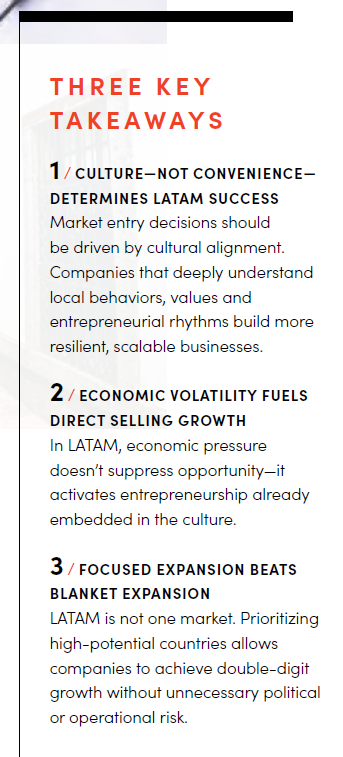
My answer is always the same: It depends on your company’s mission and vision and your short-, mid- and long-term goals. Understanding the specific culture of the market you wish to enter is also a very important foundation of any international expansion. Without this alignment, even the most brilliant business strategy becomes fragile.

Culture: The Core of Expansion

One of the concepts I have repeated for years at events, in boardrooms and in private consultations, is how crucial culture is within a business framework, especially when expanding internationally. We have all heard the famous Peter Drucker quote, “Culture eats strategy for breakfast.” I have lived this truth throughout my entire career.

Being half Latino and half American has given me a front-row seat to the deep contrasts between cultures, not just in language, but in how people perceive opportunity, money, community and entrepreneurship. Every company has a culture. Every country has one, too. The question is: how do you marry both cultures to build a profitable, sustainable business?

This is the question too many executives forget to ask. They laser focus on the profitability model, pricing, logistics, compensation plans without understanding that—once again—culture eats strategy for breakfast. And when the venture struggles or shuts down, only then do they realize culture wasn’t just a detail…it was the missing piece.

Vergani Fotografia/shutterstock.com

Understanding and adapting to a local culture is much more than translating marketing materials. It requires walking the streets, visiting the markets, talking to local business owners, observing how people interact, work, hustle and dream. You must understand the rhythm of the country, not just the numbers.

Direct selling thrives in LATAM for one primary reason: economic need. The informal economy plays a key role, representing approximately 41 percent of GDP and more than half of all employment.

Long before Avon, Tupperware or any direct selling pioneer entered Latin America, people were already selling products from home, running small shops and relying on community-based commerce. Entrepreneurship is embedded in the region’s DNA.

LATAM people were born into environments that shaped them into entrepreneurs. It’s cultural. It’s generational. And that foundation is one of the greatest reasons for the massive success of direct selling in the region.

A Region in Transition

Throughout 2025, I traveled extensively around LATAM. In Peru, a taxi driver proudly told me their currency (soles) had strengthened from 4 to 3.5 per dollar. In Colombia, another driver shared a similar observation: the Colombian peso was strengthening from 4,300 to 3,800 per dollar. In Mexico, conversations were even more animated. People celebrated how their peso had strengthened from 23 to 18 per dollar in just a few years.

These taxi drivers were only seeing one side of the coin: local economies were becoming stronger, while the US dollar was weakening. Whether we call it a recession or a depression, we are clearly living through a global economic transition. Some local economies are strengthening while some others are weakening.

Currencies are shifting. Governments are intervening. Economic models are being tested and restructured. And the world of business is undergoing a transformation we haven’t seen in decades.

But here is the good news for us. When economies go down, our channel goes up. While some executives hesitate to enter emerging markets out of fear, true entrepreneurs recognize that these environments unlock extraordinary opportunities.

Growth Opportunities

Mexico continues to amaze me as one of the most strategic and accessible markets for expansion in LATAM. But don’t be fooled, its proximity to the US and its trade agreements do not guarantee a smooth entry. You must still learn the culture; understand the risks; and identify the real opportunities for your product category. If you set it up correctly, Mexico—now the 8th-largest market in the direct selling channel—can become a strong portion of your company’s revenue.

Then we have Brazil, an economic giant with a bureaucratic government structure that fiercely protects local industry and often discourages foreign investment. High tariffs and slow bureaucracy create obstacles for companies in nutritional and beauty categories. Yet, for those who succeed, Brazil can become a monumental win.

Vergani Fotografia/shutterstock.com

After these two giants, Colombia and Peru stand out as highly entrepreneurial markets, naturally aligned with our channel. When you observe successes like Natura &Co, Omnilife, Yanbal, Belcorp, Fuxion, Leonisa, Muscari and others, you quickly understand the strength of direct selling in the region.

Argentina is reawakening. Companies like Nu Skin, who remained patient during years of economic instability, are now thriving as the country rebounds from decades of mismanagement. Argentina is becoming one of the fastest-growing markets in LATAM.

Then you have smaller but stable nations like Chile, Uruguay and Paraguay. Their populations are small, but their democratic structures are solid, making them reliable, though not transformative markets. On the other hand, countries with heavy political or criminal influence like Venezuela, Nicaragua, Bolivia, Ecuador and several Caribbean nations remain too risky for most expansion strategies.

Companies that focus on the top five can achieve
double-digit growth without venturing into the more complicated markets.

I also believe in leveraging Amazon’s emerging logistics infrastructure and grouping Central America and the Caribbean into what I call the CAC Hub: Panama, Costa Rica and the Dominican Republic. These countries have a strong direct selling culture and a well-educated base of entrepreneurs hungry for opportunities.

Infrastructure: A Country’s Economic Pulse

My father taught me something simple but powerful: wherever you see cranes, construction and new buildings you see economic growth. And this never fails.

Take Puerto Rico, for example. The absence of new construction reveals decades of mismanagement and economic stagnation. Contrast that with Panama, where you sometimes can’t tell if you’re in downtown Miami or Panama City.

In 2025, I was impressed by Peru’s stunning new airport, full of modern retail stores and restaurants. I saw new skyscrapers in Peru and Colombia, emerging factories in Mexico and massive foreign investments pouring in across multiple regions.

Tint Media/shutterstock.com

Mexico is becoming the “China of the Americas” a powerhouse of manufacturing, logistics and skilled labor. Over 17 new Chinese electric vehicle brands entered Mexico, dominating a market that the US never imagined it would lose.

Brazil continues to build; Argentina is stabilizing; and the entire region is preparing for a wave of growth that savvy leaders will capitalize on.

Why LATAM

Latin America has embraced direct selling for decades, long before many global giants even looked south. Nearly 80 percent of the population has participated in the channel directly or indirectly. This isn’t just because of economic need. It’s because LATAM’s cultural DNA is perfectly aligned with entrepreneurship.

In much of the region, entrepreneurship isn’t optional, it’s a survival skill. Families grow up understanding that income is something you create, not something you wait for. People sell food, clothes, beauty products and household goods. They trade, they hustle, they use community networks as economic engines.

This is why direct selling thrives here. The entrepreneurial spirit doesn’t need to be taught, it just needs to be activated. Word of mouth is a cultural norm. When a product resonates, it doesn’t simply spread, it explodes. Entire families, neighborhoods and communities mobilize together. Momentum here has a different intensity.

Layer on a major demographic advantage: LATAM is young. With millions of people entering the workforce each year, the appetite for opportunity is enormous. In contrast to aging markets in Europe or North America, LATAM offers fresh energy, ambition and a hunger for financial mobility.

And then there’s resilience. LATAM people reinvent themselves constantly through political shifts, economic cycles and currency swings. This resilience makes them some of the most resourceful entrepreneurs in the world. When companies build here, they are partnering with a population that knows how to adapt—and win.

At the same time, the region is modernizing fast. Ecommerce is booming. Social media usage is among the highest globally. Infrastructure is improving. Foreign investment is accelerating. This creates a fertile landscape for companies looking to scale quickly and sustainably.

All of this is why, for 2026, my top markets for LATAM expansion are:

  1. Mexico
  2. Peru
  3. Colombia
  4. Argentina
  5. The CAC Hub: Panama, Costa Rica, Dominican Republic

If you want to win in LATAM, you must start with culture, understanding the people, their aspirations and the realities of daily life. Empower local leadership. Align with the rhythm of the country. Build with humility, curiosity and respect. Do that, and LATAM won’t just be another expansion, it will become one of the most powerful growth engines in your entire global strategy.

Y que viva LATAM.


ALEX HOFFMANN has more than three decades of experience in the direct selling industry leading both corporate and distributor teams within the channel with expertise in building profitable markets across North America, LATAM and Europe.

From the March/April 2026 issue of Direct Selling News magazine.

Filed Under: Feature Articles Tagged With: Argentina, Colombia, Costa Rica, Dominican Republic, Latam, Mexico, Panama, Peru

Neora: Battle Tested, Built to Last

March 8, 2026 by Jenny Vetter

Listen to this story on this episode of The DSN Podcast. Even when your day is packed, we make it easy to stay informed, engaged and one step ahead.

Founded | 2011

US Headquarters | Dallas, TX

Top Executives | Amber Olson Rourke, CEO & Jeff Olson, CEO

Product Category | Skincare, Personal Care & Wellness

When Amber Olson Rourke and her father, Jeff Olson, launched Neora in 2011, they set out to show the world how impactful direct selling could be. Since then, Neora has invited prospective Brand Partners to make the company their home; for new direct sellers to discover a simple, successful way to build a business; and for experienced direct selling leaders to make one “last run” at building a legacy. As the company celebrates its 15th anniversary, Amber and the leadership team are celebrating something even more exciting—a renaissance.

A Modern Social Selling Movement

As the direct selling space competes against the largest players in every sector, the industry has had to evolve—and for many direct selling companies, that evolution has been a frenetic one. Navigating social media, influencer marketing and a customer experience that changes with every innovation has driven companies to either go too far or not far enough in their attempts to adapt.

But Neora took a simpler approach, defining what Amber and her team have called a “modern social selling movement,” one that focuses on only two variables: how people want to shop and how they want to work.

As she explained, “I think a lot of direct selling companies have been scared to play in the spaces that consumers are finding other brands. We view it really differently. Our competition is anywhere someone can buy a skincare or wellness product because we have to compete at that level. That dictates the packaging we select, the shipping experience, the ordering experience, the return experience, the customer rewards—everything has to reflect what consumers expect.”

On the business side, Neora is asking the same questions about how people want to work, how they want to sell and how they want to build—if building is even a priority. Amber wanted the modern person to easily understand the business model and the paths available without having a background in direct selling.

“It’s been a practice of simplifying everything to be understandable to consumers,” she shared. “We now have a much larger percentage of the population that understands how you can earn income for sharing a product that you like with affiliate programs and with influencers being a mainstream concept. The concept is more well understood by the masses than it has ever been.”

Neora’s simplified approach is not only working, but exceeding expectations at an incredible time in the company’s story. Following the historic victory in its battle with the FTC, the company enjoyed a period of tremendous success, ending 2025 with 47 percent year-over-year growth. Additionally, over 80 percent of Neora’s revenue comes from customers, reflecting its customer-first model and stellar product performance.

This rare combination of stability in the face of adversity and record-breaking growth has built a solid foundation that serves as a second ground floor for Neora. New Brand Partners are often unaware of what the company has navigated in recent years; they’re simply ready for an exciting opportunity with a legacy company and a groundbreaking product profile.

Singular Focus

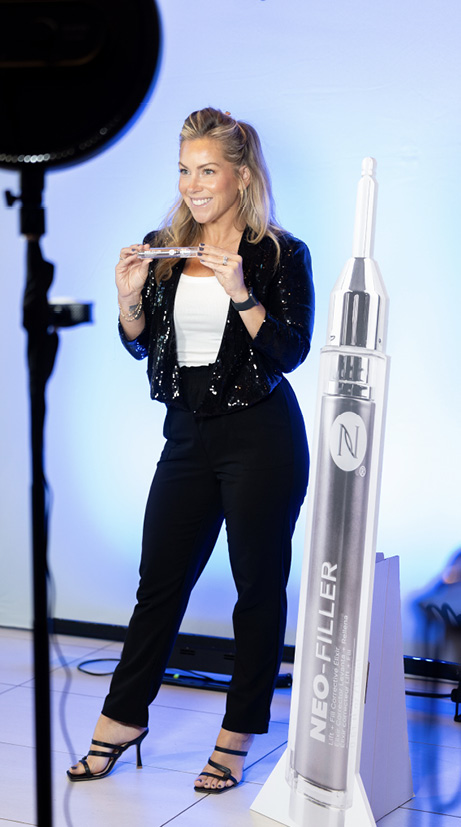
Since its launch, Neora’s Age IQ Night Cream has been the cornerstone of its product portfolio, leading the company’s sales story. But all that changed in 2025 when Neora released what they called “the future of filler.”

Amber’s medical spa background inspired her to pursue an alternative to injectables such as fillers and Botox that have dominated medical cosmetics for years. Growing concerns around the safety and cost of injectables created a gap in the market that Neora could fill—if they could develop a best-in-category product.

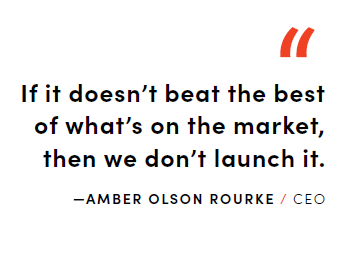
“If it doesn’t beat the best of what’s on the market, not just in the direct selling space, but in any space, then we don’t launch it. It’s why we only launch one core product a year because we iterate on the development of each product for a long time until it meets our standards.”

Years of development led to the Neo-FILLER Lift + Fill Corrective Elixir, designed to train skin to plump and fill itself through a potent blend of growth factor peptides, plant stem cells and a natural biostimulator to target wrinkles, loss of volume and elasticity.

Launched in May 2025, Neo-FILLER completely shifted the sales story at Neora, energizing Brand Partners and engaging customers like never before. This new “tip of the spear” product had the results, differentiation and social media buzz to become Neora’s lead story—and will continue to inspire its product messaging throughout 2026.

But Brand Partners aren’t walking into 2026 with just Neo-FILLER and its wide-reaching results. In September 2025, Neora launched its Intelli-SKIN™ facial scanning technology, an AI-powered skin analysis tool that analyzes multiple skin metrics, provides powerful skin insights and generates customized skincare regimens—all from a smartphone. This gives Brand Partners a simpler, more actionable way to connect with customers.

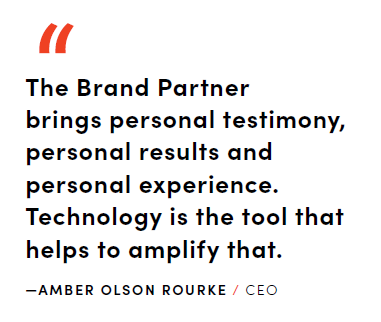
“It’s so much easier to start a conversation when you’re leading with value versus leading with kind of a pitch about your product,” Amber said. “The Brand Partner brings personal testimony, personal results and personal experience to a product. Technology is the tool that helps to amplify that message. We’re very focused on that marriage of high tech and high touch.”

Making People Better

Brand Partners share Neora products in over 13 countries, reaching customers where and how they like to shop for personal care and wellness products. Neora’s notable success in 2025 was the result of clearly defined goals, consistency and simple systems at scale.

“We outlined the goals and strategies for 2025 of what we wanted to achieve and all of those ended up happening because we stayed really committed to the plan,” Amber explained. “We remained disciplined in our simplicity and our focus and remained disciplined in the actions we were training our Brand Partners to take, continuously giving them better tools to amplify that message.”

As Neora blazes into 2026, Amber is most excited about what the year holds for current and prospective Brand Partners, as her passion centers on creating an ecosystem where people can achieve their individual goals. Whether they want free product, an additional income or want to build a legacy business, Neora’s compensation plan and ecosystem is set up to accommodate every size dream.

The company’s second ground floor—a fresh start with a fresh product innovation—offers Neora’s field endless opportunities to build a first-time business or a “last run” legacy, a term coined by Co-Founder Jeff Olson. After decades of success in direct selling, Jeff wanted other veterans to feel confident in choosing Neora as the place to build their final run.

“Our mission of making people better has never changed,” Amber reflected. “A big part of my role going forward is to ensure we make every decision in alignment with that.”

This mission has guided Neora through 15 years of evolution; to record-breaking growth and industry-leading innovation. As both newcomers and veterans discover Neora’s next chapter, they’re finding what Jeff and Amber set out to create from the beginning: direct selling at its best and built to last.


From the March/April 2026 issue of Direct Selling News magazine.

Filed Under: Company Spotlights Tagged With: Amber Olson Rourke, Jeff Olson, Neora

Direct Selling’s APAC Opportunity

March 6, 2026 by DSN Staff Writer

Evaluating Singapore’s role in your Asia Pacific strategy.

Listen to this story on this episode of The DSN Podcast. Even when your day is packed, we make it easy to stay informed, engaged and one step ahead.

The Asia Pacific (APAC) region has become the largest global market for direct selling, reflecting a steady shift in both consumer demand and distributor growth. According to the World Federation of Direct Selling Associations’ (WFDSA) 2024 Global Sales Report, APAC accounted for 40.3 percent of global retail sales, surpassing the Americas at 37.3 percent.

The region also represents half of the world’s top ten direct selling markets, with continued year-over-year gains in countries such as China and Malaysia. From 2021 to 2024, APAC was the only region to record positive compounded annual growth in distributor participation—driven in part by a growing middle class and strong interest in entrepreneurial income opportunities.

Combined with high demand for health and wellness products and a long-standing cultural familiarity with relationship-based selling, APAC continues to draw attention from companies evaluating new or expanded regional strategies.

Singapore: Strategic Gateway to Asia Pacific

Within this broader APAC landscape, Singapore is often evaluated as a preferred regional base due to its geographic location, regulatory clarity and business infrastructure.

Singapore consistently ranks high in global competitiveness indices, including IMD’s World Competitiveness Ranking, reflecting strengths in economic performance, business efficiency and governance. These characteristics have made the city-state a popular choice for multinational companies establishing Asia Pacific headquarters across multiple industries, including direct selling.

Direct selling is permitted and regulated in Singapore, with a legal framework designed to distinguish legitimate business models from prohibited pyramid schemes. This clarity can reduce uncertainty for companies seeking a stable regulatory environment while operating across multiple APAC jurisdictions with varying legal standards.

In practice, some organizations are using Singapore as a coordination point rather than a primary growth market—housing regional leadership teams, operational functions or innovation initiatives while executing market-specific strategies elsewhere in Asia.

APAC’s Regional Test Environment

Singapore’s connectivity to other APAC markets has positioned it as a preferred testing ground for regional initiatives, including product pilots, leadership programs and operational frameworks. Its transportation links and proximity to Southeast Asia, Greater China and Australia allow companies to convene teams from multiple markets with relative ease.

Several global direct selling organizations—including Amway, Herbalife, PM-International, Nu Skin, USANA, Young Living and Unicity—have established regional offices in Singapore, citing access to talent, infrastructure and administrative efficiency as factors in those decisions.
These headquarters typically support strategy, training, supply chain coordination or digital initiatives serving wider APAC markets rather than focusing solely on domestic sales within Singapore.

Top Leadership Meeting and Incentive Destination

Situated in the heart of APAC and home to the award-winning Changi Airport, Singapore offers excellent air connectivity to over 170 cities in 50 countries and territories worldwide. Companies organizing their regional or global meetings or incentives—no matter the scale—can easily convene participants from across the world.

From an operational standpoint, Singapore offers a diverse range of venues capable of hosting leadership meetings, recognition events and training sessions, along with reliable transportation and hospitality infrastructure.

Singapore also offers unconventional venues to create unique, one-of-a-kind experiences. From heritage spaces such as the iconic National Gallery Singapore, closed street parties in Chinatown to networking receptions onboard the Royal Albatross, Asia’s only luxury tall ship, Singapore offers endless possibilities for events that aim to connect, inspire and make an impact.

For companies exploring APAC expansion, incentive trips or leadership meetings in Singapore can also serve as reconnaissance opportunities—allowing executives and field leaders to gain firsthand exposure to the region’s business environment, regulatory norms and operational considerations.

Examples from the Field

Several direct selling organizations have held regional or international events in Singapore in recent years. Nu Skin Korea hosted a Success Trip in 2024 for more than 500 leaders, incorporating business sessions alongside cultural activities.

Herbalife selected Singapore for its Future President Team Retreat in 2022, where 1,700 distributors from over 14 markets came together and will do so again. The success of the event gave Herbalife confidence to hold their bigger flagship event, Herbalife APAC Extravaganza, in Singapore twice, first in 2023 for over 20,000 people and later this year with close to 25,000 people.

These examples illustrate how companies have used Singapore as a convening location, integrating business development activities with recognition and networking.

A Practical APAC Consideration

Singapore is not the only pathway into Asia Pacific, nor is it a universal solution for every company’s expansion strategy. Growth across APAC remains highly market specific, shaped by local culture, regulation, consumer behavior and economic conditions.

However, for companies seeking a centralized base for regional coordination—or a neutral meeting ground for leadership teams spanning multiple countries—Singapore remains an intriguing option with its unmatched connectivity, global business hub reputation, highly skilled workforce and opportunity for execution across diverse APAC markets.

As direct selling companies continue to assess where and how to invest in Asia Pacific, Singapore represents one of several established platforms from which regional strategies can be developed, tested and refined.


From the March/April 2026 issue of Direct Selling News magazine.

Filed Under: Feature Articles Tagged With: Amway, APAC, Herbalife, Nu Skin, PM-International, Singapore, Unicity, USANA, WFDSA, Young Living

Farmasi Opens 8 New European Markets

March 6, 2026 by DSN Staff Writer

During a worldwide live presentation, Farmasi President Emre Tuna announced the launch of eight new European markets. This expansion is part of the company’s long-term development strategy to strengthen its footprint across Europe.

These new markets are now open for registration and include:

  • Austria
  • Belgium
  • Estonia
  • Netherlands
  • Germany
  • Latvia
  • Lithuania
  • Luxembourg

“This expansion marks a defining moment for FARMASI and for our global vision,” Tuna said. “Opening eight new markets simultaneously reflects our belief in the strength of the European region and our commitment to building a future where our infrastructure, our products and our community can thrive together. Europe is ready—and so are we.”

Each new territory will host its own pre-launch platform, localized communications and early community activation to accelerate growth.

“This launch represents far more than market openings; it represents readiness,” said Juanjo Horrillo, Farmasi Vice President, Western Europe. “With a solid infrastructure, unified digital presence and a community eager to engage, we are entering these markets with clarity, confidence and momentum. FARMASI is building something lasting in Europe—and this is only the beginning.”

Filed Under: International Tagged With: Austria, Belgium, Emre Tuna, Estonia, Farmasi, Germany, Juanjo Horrillo, Latvia, Lithuania, Luxembourg, Netherlands

USANA-Sponsored Athletes Bring Home 28 Olympic Medals

March 5, 2026 by DSN Staff Writer

USANA Health Sciences, Inc. congratulated the 190 USANA-sponsored athletes who competed at the 2026 Winter Olympic Games. The Olympians earned 28 medals across 12 winter sports and represented eight national teams from four countries.

USANA athletes competed in a variety of competitions, including bobsled, biathlon, ice hockey, speed skating and snowboarding. USANA also supported national sporting organizations, including US Ski & Snowboard, US Speedskating, Biathlon Canada, Jamaica Bobsleigh and Skeleton, USA Biathlon, USA Bobsled and Skeleton, USA Luge and Nordiq Canada.

The US Speedskating team, which USANA has sponsored since 1999, won five medals, including setting an Olympic record in the men’s 1000m.

“Twenty-eight medals at the Winter Games is an incredible achievement,” said Brent Neidig, USANA Chief Commercial Officer. “We had our most successful Winter Games ever and achieved a medal count greater than any country outside of the United Sates, Italy and Norway. We are proud of the discipline and commitment these athletes demonstrate every day, and we are honored they trust USANA to support their training and recovery.”

Filed Under: Daily News Tagged With: Athletes, Brent Neidig, Olympics, USANA

DSA Meets with US Department of Labor Officials

March 5, 2026 by DSN Staff Writer

The Direct Selling Association (DSA) brought a delegation of chief executives and senior leaders from member companies to Washington, DC to meet with federal policymakers about the state of independent work, entrepreneurship and the direct selling industry. The meetings follow the US Department of Labor’s announcement of a proposed rule to clarify the classification of independent contractors.

The DSA met with US Deputy Secretary of Labor Keith E. Sonderling, the second highest ranking official in the US Department of Labor, to thank the department for the proposed rule, which the DSA described as being “grounded in long-standing economy reality principles.”

“Clear and consistent standards matter for the millions of Americans who choose to pursue entrepreneurship through direct selling,” said Dave Grimaldi, Direct Selling Association CEO. “Direct sellers are independent individuals who decide whether, when and how they engage in building businesses on their own terms. We appreciated the opportunity to thank Deputy Secretary Sonderling for the Department’s recent action and to discuss how regulatory clarity helps ensure that independent business models can continue to operate with confidence.”

The delegation also met with Senator John Curtis (R-UT), who is a member of the Senate Committee on Small Business and Entrepreneurship, and Senator Angela Alsobrooks (D-MD), whose office serves on the Committee on Health, Education, Labor and Pensions (HELP), to discuss the impact of policies on independent contractors and the importance of bipartisan engagement on independent contractor policy.

“Direct selling offers people a uniquely accessible path to entrepreneurship,” said Andrew Schmidt, Amway Region President, West Markets and DSA Chairman. “Every day, millions of individuals choose to build businesses through our channel because it gives them the flexibility and independence to pursue business ownership in ways that fit their lives. Engaging directly with policymakers helps ensure they understand how the model works and why clear, consistent policies matter for the Americans who depend on it.”

The delegation met with the offices of Democratic members of the House Committee on Energy and Commerce, which oversees agencies such as the Federal Trade Commission, to discuss the channel’s commitment to consumer protection and compliance, including the DSA Code of Ethics and the work of the Direct Selling Self-Regulatory Council (DSSRC).

“Direct selling remains one of the most accessible pathways to entrepreneurship in the American economy,” Grimaldi said. “Our goal in Washington is to ensure policymakers understand how the model works and why clear, consistent policies are essential for the individuals building businesses through it every day.”

Filed Under: U.S. Tagged With: Andrew Schmidt, Dave Grimaldi, Direct Selling Association, US Department of Labor

Korea Direct Selling Association Hosts Annual General Meeting

March 4, 2026 by DSN Staff Writer

The Korea Direct Selling Association (KDSA) welcomed key stakeholders to an event in Seoul to discuss Korea’s direct selling market. The event welcomed domestic and international representatives from leading companies and partners to the event, including Shaila Manya, WFDSA Chief Operating Officer and Executive Director; Han-Gill Park, KDSA Chairman; and Ji-Sang Yoo, Incheon Tourism Organization President.

According to the World Federation of Direct Selling Associations (WFDSA), South Korea generates approximately $15 billion in direct selling retail sales, making it the fourth largest direct selling market in the world.

“South Korea is one of the top markets in the global direct selling industry and a country where human-centered business values remain strong,” Manyam said. “In an era where AI is rapidly expanding, our industry continues to put people at the center of success, enabled and empowered by technology and focused on workforce development, high ethical standards, economic growth and sustainable practices.”

The event precedes the WFDSA’s World Congress, which will be held in October in South Korea, marking the first time the Congress has been held in Northeast Asia. This triennial Congress will bring together CEOs of leading direct selling companies, national DSAs, senior policymakers and academics from around the world who will discuss emerging global trends and the future of the industry at large.

Korea’s growing influence on direct selling, culture and innovation – from K-beauty to K-food – will be a focus of the Congress as well, and the event expects to have interactive experience zones to allow participants to engage directly with Korean culture and products.

Filed Under: International Tagged With: KDSA, Korea Direct Selling Association, meeting, Shaila Manya

  • « Previous Page
  • 1
  • …
  • 25
  • 26
  • 27
  • 28
  • 29
  • …
  • 636
  • Next Page »
brand-logo
The News You Need.
The Name You Trust.
Subscribe

Breaking global news, emerging trends and powerful stories conveniently curated to help direct selling executives stay informed, engaged and a step ahead.

  • Read
  • Listen & Watch
  • Attend
  • Achieve
  • Research
  • About
  • Connect
5717 Legacy Drive
Suite 250
Plano, Texas 75024
info@directsellingnews.com
Copyright 2026 Direct Selling News | All Rights Reserved
  • Privacy Policy
  • Terms of Use
  • Advertise
  • Subscribe
We use cookies on our website to give you the most relevant experience by remembering your preferences and repeat visits. By clicking “Accept All”, you consent to the use of ALL the cookies. However, you may visit "Cookie Settings" to provide a controlled consent.
Cookie SettingsAccept All
Manage consent

Privacy Overview

This website uses cookies to improve your experience while you navigate through the website. Out of these, the cookies that are categorized as necessary are stored on your browser as they are essential for the working of basic functionalities of the website. We also use third-party cookies that help us analyze and understand how you use this website. These cookies will be stored in your browser only with your consent. You also have the option to opt-out of these cookies. But opting out of some of these cookies may affect your browsing experience.
Necessary
Always Enabled
Necessary cookies are absolutely essential for the website to function properly. These cookies ensure basic functionalities and security features of the website, anonymously.
CookieDurationDescription
cookielawinfo-checkbox-analytics11 monthsThis cookie is set by GDPR Cookie Consent plugin. The cookie is used to store the user consent for the cookies in the category "Analytics".
cookielawinfo-checkbox-functional11 monthsThe cookie is set by GDPR cookie consent to record the user consent for the cookies in the category "Functional".
cookielawinfo-checkbox-necessary11 monthsThis cookie is set by GDPR Cookie Consent plugin. The cookies is used to store the user consent for the cookies in the category "Necessary".
cookielawinfo-checkbox-others11 monthsThis cookie is set by GDPR Cookie Consent plugin. The cookie is used to store the user consent for the cookies in the category "Other.
cookielawinfo-checkbox-performance11 monthsThis cookie is set by GDPR Cookie Consent plugin. The cookie is used to store the user consent for the cookies in the category "Performance".
viewed_cookie_policy11 monthsThe cookie is set by the GDPR Cookie Consent plugin and is used to store whether or not user has consented to the use of cookies. It does not store any personal data.
Functional
Functional cookies help to perform certain functionalities like sharing the content of the website on social media platforms, collect feedbacks, and other third-party features.
Performance
Performance cookies are used to understand and analyze the key performance indexes of the website which helps in delivering a better user experience for the visitors.
Analytics
Analytical cookies are used to understand how visitors interact with the website. These cookies help provide information on metrics the number of visitors, bounce rate, traffic source, etc.
Advertisement
Advertisement cookies are used to provide visitors with relevant ads and marketing campaigns. These cookies track visitors across websites and collect information to provide customized ads.
Others
Other uncategorized cookies are those that are being analyzed and have not been classified into a category as yet.
SAVE & ACCEPT