Listen to this story on this episode of The DSN Podcast. Even when your day is packed, we make it easy to stay informed, engaged and one step ahead.
Why the future of direct selling depends on belonging, contribution and cultures built with intention.
One of the biggest misconceptions in direct selling is that community happens automatically.
We assume that because people gather around a product, a mission or an opportunity, culture will naturally form on its own. We think momentum creates connection. We think growth creates loyalty. We think a shared compensation plan is enough to keep people aligned.
But after nearly two decades in this industry, I’ve learned that strong communities rarely happen by accident. They are intentionally designed, reinforced and protected over time. And when they are not, companies eventually feel the effects everywhere—through retention challenges, inconsistent duplication, leadership breakdowns and stalled momentum.
For years, the channel has focused heavily on systems, tools and tactics designed to accelerate growth. There is always another launch, another incentive, another strategy promising to create momentum. But many organizations are trying to solve cultural problems with operational solutions. What they are experiencing is not always a sales issue or even a leadership issue. Often, it is a community issue.
That distinction matters because people do not stay committed to environments where they feel invisible. They stay where they feel connected.
Direct Selling Is a “Be-In” Industry
Direct selling has always been a relationship business, but in today’s environment, relationships are no longer just part of the business model—they are becoming the business model itself. Technology continues to accelerate communication, automate systems and streamline processes, but none of those things replace the human need for belonging. If anything, they make it more valuable.

People are looking for places where they feel seen. They want to contribute to something meaningful. They want to know that who they are matters beyond what they produce.
That is why I often describe direct selling as a
“be-in” industry.
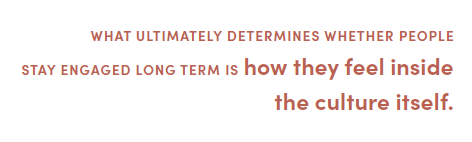
People are not simply joining to purchase products or participate in compensation plans. They are joining communities. They are searching for environments that give them purpose, identity and connection. Yes, products matter. Compensation matters, too. But what ultimately determines whether people stay engaged long term is how they feel inside the culture itself.
The challenge is that many companies unintentionally allow culture to develop by default instead of by design.
Creating Agreement in Motion
Corporate teams often view themselves as separate from the field—as if the company operates independently from the community that represents it every day. But culture is not created solely through policies or leadership messaging. It is created through repeated experiences. It is shaped by what people consistently see, hear and feel when they interact with the organization and with one another.
That means leadership has a responsibility not just to manage operations but to intentionally shape environments.
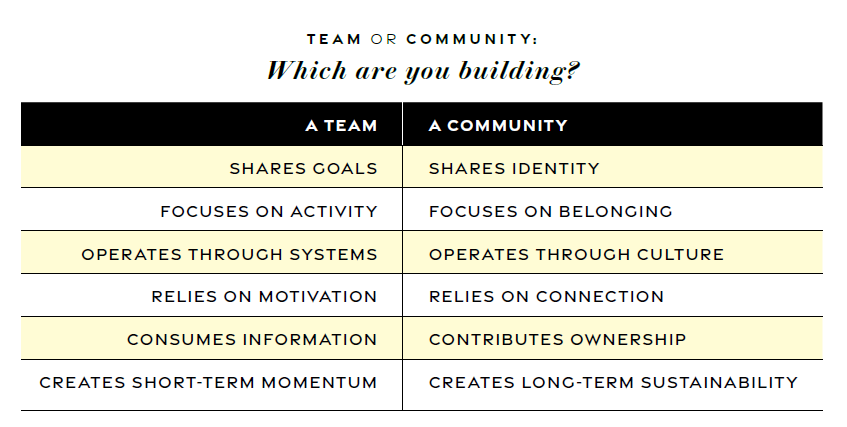
Community is not simply a Facebook group, a chat thread or proximity between people. To me, community is “agreement in motion.” It is a shared identity expressed consistently through action. It is people moving together with common values, expectations and purpose.
When that alignment exists, organizations become significantly more resilient.
I believe intentional community building solves three of the biggest challenges facing direct selling today: retention, duplication and momentum.
Why Belonging Drives Retention
Retention, for example, is often misunderstood. Companies frequently assume people leave because of products, compensation or market conditions. Sometimes those things contribute. But more often, people disengage because they no longer feel emotionally connected to the environment they joined.
People stay where they feel valued. They stay where they feel known. They stay where relationships extend beyond transactions or performance metrics.
That emotional connection becomes even more important during difficult seasons. Momentum naturally rises and falls in every business. Excitement fades. Markets shift. Challenges emerge. When people are connected only to hype, they disappear when excitement slows. But when they are connected to community, they continue building because their investment is deeper than temporary momentum.
Belonging creates emotional investment, and emotional investment creates longevity.
Systems Don’t Duplicate—Environments Do
The same principle applies to duplication.
One of the industry’s biggest mistakes is believing systems alone create duplication. Systems matter. Training matters. Structure matters. But systems do not duplicate behavior nearly as effectively as environments do.
People absorb culture through repetition. They mirror the standards, energy and expectations around them. If the environment feels disconnected or uncertain, hesitation spreads. If the environment feels supportive and aligned, confidence spreads, too.
That is why some organizations with relatively simple systems outperform organizations with far more sophisticated infrastructure. The difference is often cultural clarity.
People move faster when they understand who they are; what they are part of; and how they are expected to show up.
Identity and Language Shape Culture
One of the most important ways companies create that clarity is through identity.
Strong communities know exactly what they stand for. They define the values that shape the culture, not just the products that drive revenue. People need to understand the bigger mission they are participating in. Without that emotional connection, engagement becomes transactional and short term.
Language also plays a critical role in shaping culture. The phrases organizations repeat consistently become part of how people interpret the business itself. Shared language creates shared expectations. Over time, it reinforces behavior, identity and belonging. That is why culture is often felt before it is formally explained.
Another important shift happens when companies move beyond simply telling people what to do and begin defining how people are expected to show up within the community.
The healthiest cultures are not built entirely around compliance or correction. They are built around shared standards and mutual accountability. People understand the values of the organization because they experience them consistently in leadership behavior, communication and interaction.
Removing Barriers and Doubt
One of the simplest but most important lessons I’ve learned is that complexity creates hesitation.
When people are overwhelmed by too many systems, too many priorities or too many competing messages, they stop moving. They question themselves. Their confidence weakens. Simplicity creates momentum.
When people clearly understand what to do; why it matters; and how it connects to the larger mission, participation becomes easier and duplication becomes more natural. Clear direction removes friction.
Consistency also builds trust. Community is strengthened through repeated rhythms—weekly calls, recognition, events, communication and shared experiences that reinforce belonging over time. These moments are not valuable simply because they transfer information. They matter because they create emotional continuity.
Inconsistent environments create uncertainty. Consistent environments create belief.
Ownership Changes Everything
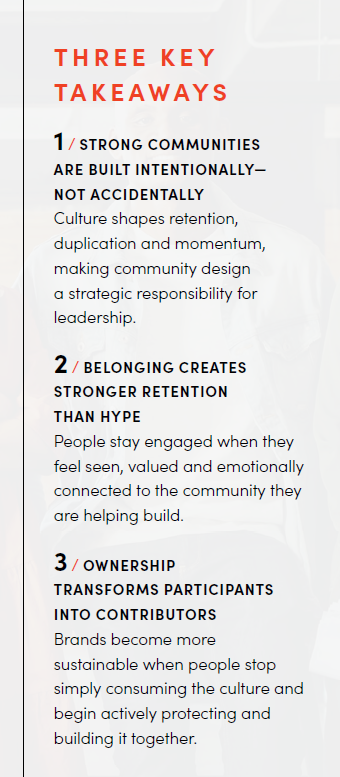
Perhaps the most important shift happens when people stop feeling like participants and start feeling like contributors. The strongest communities are built around ownership.
That ownership changes the language people use. It changes the way they engage. Organizations stop feeling like something being managed “for” them and begin feeling like something being built “with” them. And that difference is powerful.
When people feel ownership, they naturally begin protecting the culture, reinforcing standards and helping others succeed. This is where real momentum comes from—not manufactured excitement, but emotional investment.
Leadership still matters deeply in that process. Ownership does not replace leadership; it is anchored by it. Strong communities require leaders who create vision, clarity and integrity. But sustainable culture emerges when the community itself begins carrying that vision forward.
Building Something Worth Protecting
Ultimately, people do not fight for what they simply join. They fight for what they help build.
That is the opportunity in front of this industry right now.
Not just to create better systems or bigger launches, but to intentionally build environments where people feel connected, valued and empowered to contribute. Because when community becomes intentional, everything else becomes more sustainable—retention, duplication, momentum and long-term growth.
And in a world increasingly defined by distraction and disconnection, that kind of belonging becomes one of the most valuable things any company can offer.

JENN ASHBY, Community & Cultural Ambassador, New U Life, specializes in blending simplicity, aesthetics, strategy and execution to create extraordinary results. She has scaled a brand from zero to $150 million in just four years; built communities of over 1 million members; and launched multiple brands to $100,000+ monthly recurring revenue. Her diverse background spans project management, personal and corporate branding, community and culture building, marketing system creation, lead generation and leadership.
From the July/August/September 2026 issue of Direct Selling News magazine.