The real promise of agentic AI may be shortening the distance between a good idea and a solution.
Listen to this story on this episode of The DSN Podcast. Even when your day is packed, we make it easy to stay informed, engaged and one step ahead.
A lot of the conversation around AI has centered on helping people work faster. Generate a caption. Create a graphic. Summarize a document. Research a question. Those applications are useful, but they may only scratch the surface of what AI can mean for direct selling companies.
The bigger opportunity may be moving from AI that tells your team what needs to be done to AI that actually completes portions of the work. That distinction becomes particularly important for lean corporate teams where bandwidth—not ideas—is often the biggest obstacle to moving an initiative forward.
International expansion is a good example. What does it take for a direct selling company to open a new market? The answer usually involves far more people, research and coordination than it appears from the outside.
Where the Time Goes
Legal must determine whether the market requires a cooling-off period and what consumer protections apply. Tax needs to understand how VAT should be displayed and whether invoices are required. Compliance has to determine what disclosures the storefront needs and which privacy requirements apply. Operations must identify the necessary enrollment information and available payment methods.
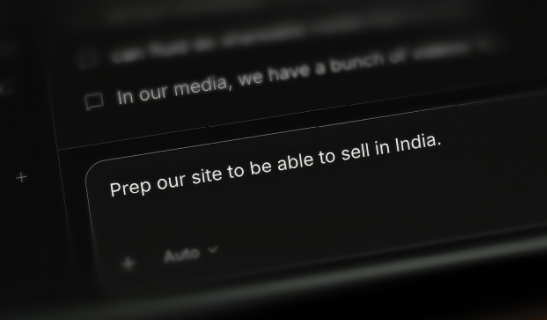
Then all of that research must become something tangible. Disclosure pages need to be created. Tax displays and enrollment forms have to be configured. Checkout needs to reflect the appropriate payment options. Technology has to make each of the pieces work together.
The problem isn’t that any one department is moving too slowly. It’s that several kinds of expertise are required, often in a specific sequence, before the company has enough information to build anything. An opportunity can remain on the wish list for months simply because the organization doesn’t have the bandwidth to determine whether it is worth pursuing.
That is where agentic AI becomes interesting.
From Answers to Action
Most companies are already familiar with AI that can research a question, summarize information or recommend next steps. Agentic AI takes the concept further by acting on those instructions.
Consider the market-entry example. Rather than simply identifying a country’s cooling-off period, VAT requirements, disclosures and payment options, an agent working from country requirements that have already been curated and verified could use them to configure elements of a storefront. The output is something built—disclosure pages drafted, enrollment fields set, a checkout that reflects the market—sitting there waiting for the team to review.

The distinction matters. The AI isn’t replacing the lawyer, tax professional or compliance officer. It is changing where their time is spent.
Instead of having experts devote hours to gathering information and coordinating routine implementation, the technology can help move the process toward something tangible that they can evaluate. Legal can determine whether the disclosures are correct. Tax can validate the configuration. Compliance can identify anything that needs to change. The judgment calls remain with the people qualified to make them.
That creates a very different role for AI. The objective isn’t simply to produce information faster. It is to reduce the research and assembly standing between an idea and a decision.
Beyond Market Expansion
The same principle can apply far beyond opening a new country. Launching a TikTok Shop, deploying WhatsApp commerce where the representative already owns the chat or integrating a back office system can all require significant coordination across departments before a company even knows whether an idea is viable.
Agentic AI has the potential to compress that process by helping teams move more quickly from concept to something they can actually evaluate. Instead of spending months debating a hypothetical initiative, teams may be able to review a working model, identify problems and determine whether the opportunity deserves further investment.
That matters in direct selling because many corporate teams aren’t short on ideas. They’re short on the time required to research, coordinate, build and test those ideas while continuing to run the existing business.

Getting Hours Back
Direct selling already has something most D2C brands spend millions trying to manufacture: a distribution channel made up of real people who believe in what they sell. Generating more captions or graphics doesn’t necessarily strengthen that advantage.
Giving corporate teams more capacity might.
The opportunity is to shorten the distance between “we should try this” and “we have enough information to make a decision.” When routine research and execution can be accelerated, people can spend more of their time applying the experience, context and judgment technology cannot provide.
That is why the most useful question to ask about an AI tool may not be simply what it knows. Ask what it can actually do. Does it give your team another plan to execute, or can it complete repeatable work and return something your experts can evaluate?
The goal isn’t to remove people from important decisions. It is to remove some of the work standing between them and those decisions. For direct selling companies operating with lean teams and increasingly complex technology, that may be where AI creates its greatest value.

Brian Palmer is President of Fluid Studios. Fluid builds commerce technology for direct selling companies, including agentic tools that help lean teams open new markets and channels.
From the October/November/December 2026 issue of Direct Selling News magazine.