When political power shifts in Washington, industries often ask what they stand to lose. Direct selling should also ask what it can achieve.
On November 3rd, Americans will determine the balance of power in Congress. New lawmakers and shifting priorities give us a chance to strengthen support for independent entrepreneurship. The opportunity comes with real risks.
Consider the parent building a business around family responsibilities. The retiree finding renewed purpose and community. The entrepreneur developing skills, supplementing income, or pursuing a business of their own.
We are fighting to protect their right to choose independent work. Direct selling offers products that help people live healthier, happier lives. It also builds relationships rooted in trust. As transactions become increasingly automated and impersonal, human connection remains one of direct selling’s greatest strengths.
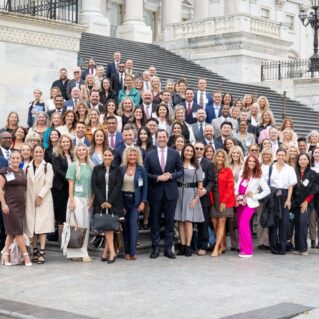
This year, DSA brought company leaders and everyday direct sellers before policymakers in Washington and the states. They explained why they chose independence, how it fits their lives, and how changes in the law could affect their businesses.
DSA has helped advance H.R. 3495, the Direct Seller and Real Estate Agent Harmonization Act, and its Senate companion. The legislation would recognize qualifying direct sellers as independent contractors under federal wage-and-hour law, consistent with their established tax treatment.
We have also pressed for a Department of Labor standard that reflects how direct sellers operate. Its draft final independent contractor rule has reached White House review and would change how the Department determines who qualifies as an independent contractor. Neither the legislation nor the rule is final. New committee leaders could change the legislation’s prospects.
A Democratic majority in either chamber could also intensify oversight, reflecting concerns about federal enforcement. Hearings, investigations, and records requests could examine earnings representations, income disclosures, product claims, recruitment, and sellers’ experiences. Either chamber can act independently; control of both could bring coordinated scrutiny.
Greater scrutiny need not mean hostility toward legitimate direct selling. We should welcome fair, informed examination, answer questions openly, and show how our standards work. Lawmakers from both parties have legitimate interests in protecting consumers. Direct selling’s responsibility is to address misconduct wherever it occurs. Deceptive operators should not define our industry.
The Federal Trade Commission has an essential consumer protection role, and responsible companies share its goals. Regulation must distinguish legitimate direct selling from unlawful operations; failing to do so creates uncertainty for companies and independent entrepreneurs. Congressional elections do not automatically change FTC leadership or rules, but Congress can influence the agency through oversight and legislation.
Republicans and Democrats differ on labor policy and regulation. The desire for independence, flexibility, and meaningful connection crosses party lines. Our advocacy cannot begin or end with an election, and our future should never depend on which party holds the gavels.
Our influence depends on the case we make, the standards we uphold, and our willingness to stand together.
DSA will continue to lead. Every company, every executive, and every independent entrepreneur has a responsibility to help shape our future. Look beyond competitive differences. Build relationships with lawmakers in both parties before we need them, and keep direct sellers in those conversations. Take lawmakers’ concerns seriously, give them facts they can trust, and make sure our companies deliver on what we say. Speak confidently for innovation, entrepreneurial freedom, and the dignity of building something through personal initiative.
The election will determine who leads Congress. Direct selling will determine how effectively the channel responds. We cannot afford to be passive observers.
Majorities will change. The aspirations that bring people to direct selling—independence, opportunity, connection, purpose, and a better life—will endure.
Let us build on the work of 2026 and speak with one strong, unmistakable voice. That is how we protect the future of direct selling. And that is how we shape it together.