What’s driving success right now—and why.
Listen to this story on this episode of The DSN Podcast. Even when your day is packed, we make it easy to stay informed, engaged and one step ahead.
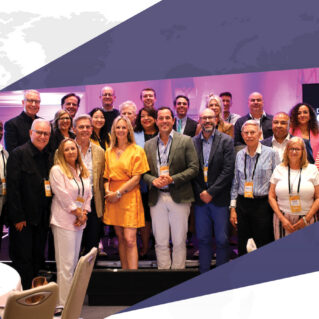
At the beginning of 2025, Direct Selling News held the first LATAM DSU in Miami, Florida, an event that gathered some of the most visionary corporate executives, company owners and brilliant minds in our channel. The energy was electric. We immersed ourselves in conversations about the potential in each Latin American market; shared best practices from companies thriving in the region; and discussed the current opportunities and political complexities that continue to shape the direct selling landscape.
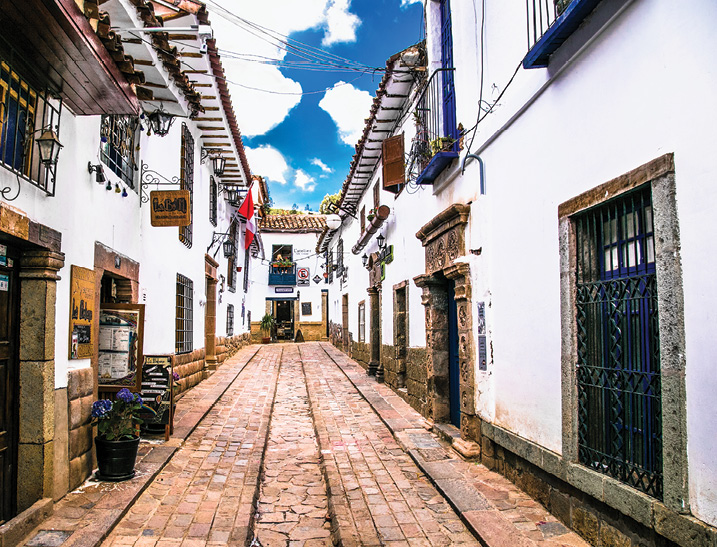
The consensus was clear: LATAM remains a vibrant and fertile region—maybe one of the most exciting arenas for expansion in the global channel. Yet we must also acknowledge the political fluctuations that sweep through the region and, at times, become unpredictable burdens for international business.
So, the questions I hear almost everywhere I go are the same: “What country should we enter first?” “Which one is the most profitable?” “Which one is the easiest?”
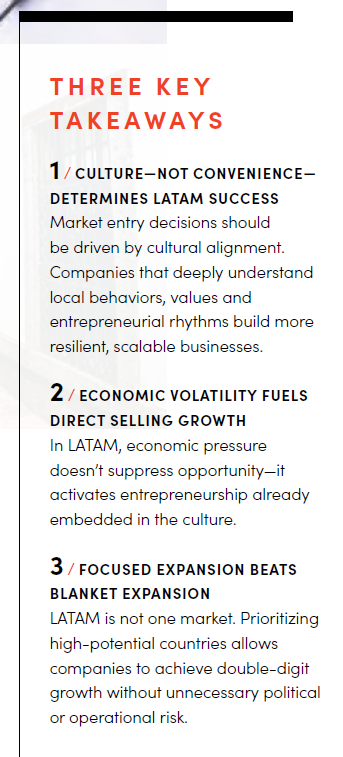
My answer is always the same: It depends on your company’s mission and vision and your short-, mid- and long-term goals. Understanding the specific culture of the market you wish to enter is also a very important foundation of any international expansion. Without this alignment, even the most brilliant business strategy becomes fragile.
Culture: The Core of Expansion
One of the concepts I have repeated for years at events, in boardrooms and in private consultations, is how crucial culture is within a business framework, especially when expanding internationally. We have all heard the famous Peter Drucker quote, “Culture eats strategy for breakfast.” I have lived this truth throughout my entire career.
Being half Latino and half American has given me a front-row seat to the deep contrasts between cultures, not just in language, but in how people perceive opportunity, money, community and entrepreneurship. Every company has a culture. Every country has one, too. The question is: how do you marry both cultures to build a profitable, sustainable business?
This is the question too many executives forget to ask. They laser focus on the profitability model, pricing, logistics, compensation plans without understanding that—once again—culture eats strategy for breakfast. And when the venture struggles or shuts down, only then do they realize culture wasn’t just a detail…it was the missing piece.
Understanding and adapting to a local culture is much more than translating marketing materials. It requires walking the streets, visiting the markets, talking to local business owners, observing how people interact, work, hustle and dream. You must understand the rhythm of the country, not just the numbers.
Direct selling thrives in LATAM for one primary reason: economic need. The informal economy plays a key role, representing approximately 41 percent of GDP and more than half of all employment.
Long before Avon, Tupperware or any direct selling pioneer entered Latin America, people were already selling products from home, running small shops and relying on community-based commerce. Entrepreneurship is embedded in the region’s DNA.
LATAM people were born into environments that shaped them into entrepreneurs. It’s cultural. It’s generational. And that foundation is one of the greatest reasons for the massive success of direct selling in the region.
A Region in Transition
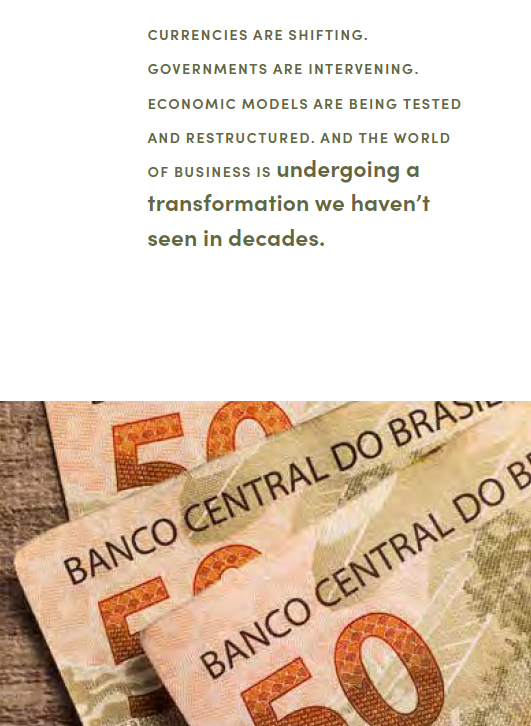
Throughout 2025, I traveled extensively around LATAM. In Peru, a taxi driver proudly told me their currency (soles) had strengthened from 4 to 3.5 per dollar. In Colombia, another driver shared a similar observation: the Colombian peso was strengthening from 4,300 to 3,800 per dollar. In Mexico, conversations were even more animated. People celebrated how their peso had strengthened from 23 to 18 per dollar in just a few years.
These taxi drivers were only seeing one side of the coin: local economies were becoming stronger, while the US dollar was weakening. Whether we call it a recession or a depression, we are clearly living through a global economic transition. Some local economies are strengthening while some others are weakening.
Currencies are shifting. Governments are intervening. Economic models are being tested and restructured. And the world of business is undergoing a transformation we haven’t seen in decades.
But here is the good news for us. When economies go down, our channel goes up. While some executives hesitate to enter emerging markets out of fear, true entrepreneurs recognize that these environments unlock extraordinary opportunities.
Growth Opportunities
Mexico continues to amaze me as one of the most strategic and accessible markets for expansion in LATAM. But don’t be fooled, its proximity to the US and its trade agreements do not guarantee a smooth entry. You must still learn the culture; understand the risks; and identify the real opportunities for your product category. If you set it up correctly, Mexico—now the 8th-largest market in the direct selling channel—can become a strong portion of your company’s revenue.
Then we have Brazil, an economic giant with a bureaucratic government structure that fiercely protects local industry and often discourages foreign investment. High tariffs and slow bureaucracy create obstacles for companies in nutritional and beauty categories. Yet, for those who succeed, Brazil can become a monumental win.

After these two giants, Colombia and Peru stand out as highly entrepreneurial markets, naturally aligned with our channel. When you observe successes like Natura &Co, Omnilife, Yanbal, Belcorp, Fuxion, Leonisa, Muscari and others, you quickly understand the strength of direct selling in the region.
Argentina is reawakening. Companies like Nu Skin, who remained patient during years of economic instability, are now thriving as the country rebounds from decades of mismanagement. Argentina is becoming one of the fastest-growing markets in LATAM.
Then you have smaller but stable nations like Chile, Uruguay and Paraguay. Their populations are small, but their democratic structures are solid, making them reliable, though not transformative markets. On the other hand, countries with heavy political or criminal influence like Venezuela, Nicaragua, Bolivia, Ecuador and several Caribbean nations remain too risky for most expansion strategies.
Companies that focus on the top five can achieve
double-digit growth without venturing into the more complicated markets.
I also believe in leveraging Amazon’s emerging logistics infrastructure and grouping Central America and the Caribbean into what I call the CAC Hub: Panama, Costa Rica and the Dominican Republic. These countries have a strong direct selling culture and a well-educated base of entrepreneurs hungry for opportunities.
Infrastructure: A Country’s Economic Pulse
My father taught me something simple but powerful: wherever you see cranes, construction and new buildings you see economic growth. And this never fails.
Take Puerto Rico, for example. The absence of new construction reveals decades of mismanagement and economic stagnation. Contrast that with Panama, where you sometimes can’t tell if you’re in downtown Miami or Panama City.
In 2025, I was impressed by Peru’s stunning new airport, full of modern retail stores and restaurants. I saw new skyscrapers in Peru and Colombia, emerging factories in Mexico and massive foreign investments pouring in across multiple regions.
Mexico is becoming the “China of the Americas” a powerhouse of manufacturing, logistics and skilled labor. Over 17 new Chinese electric vehicle brands entered Mexico, dominating a market that the US never imagined it would lose.
Brazil continues to build; Argentina is stabilizing; and the entire region is preparing for a wave of growth that savvy leaders will capitalize on.
Why LATAM
Latin America has embraced direct selling for decades, long before many global giants even looked south. Nearly 80 percent of the population has participated in the channel directly or indirectly. This isn’t just because of economic need. It’s because LATAM’s cultural DNA is perfectly aligned with entrepreneurship.
In much of the region, entrepreneurship isn’t optional, it’s a survival skill. Families grow up understanding that income is something you create, not something you wait for. People sell food, clothes, beauty products and household goods. They trade, they hustle, they use community networks as economic engines.
This is why direct selling thrives here. The entrepreneurial spirit doesn’t need to be taught, it just needs to be activated. Word of mouth is a cultural norm. When a product resonates, it doesn’t simply spread, it explodes. Entire families, neighborhoods and communities mobilize together. Momentum here has a different intensity.
Layer on a major demographic advantage: LATAM is young. With millions of people entering the workforce each year, the appetite for opportunity is enormous. In contrast to aging markets in Europe or North America, LATAM offers fresh energy, ambition and a hunger for financial mobility.
And then there’s resilience. LATAM people reinvent themselves constantly through political shifts, economic cycles and currency swings. This resilience makes them some of the most resourceful entrepreneurs in the world. When companies build here, they are partnering with a population that knows how to adapt—and win.
At the same time, the region is modernizing fast. Ecommerce is booming. Social media usage is among the highest globally. Infrastructure is improving. Foreign investment is accelerating. This creates a fertile landscape for companies looking to scale quickly and sustainably.
All of this is why, for 2026, my top markets for LATAM expansion are:
- Mexico
- Peru
- Colombia
- Argentina
- The CAC Hub: Panama, Costa Rica, Dominican Republic
If you want to win in LATAM, you must start with culture, understanding the people, their aspirations and the realities of daily life. Empower local leadership. Align with the rhythm of the country. Build with humility, curiosity and respect. Do that, and LATAM won’t just be another expansion, it will become one of the most powerful growth engines in your entire global strategy.
Y que viva LATAM.

ALEX HOFFMANN has more than three decades of experience in the direct selling industry leading both corporate and distributor teams within the channel with expertise in building profitable markets across North America, LATAM and Europe.
From the March/April 2026 issue of Direct Selling News magazine.