The data behind direct selling’s favorite catch phrase
Our last study on generational research broke this industry’s brain a little, in the best way. Before it, most of us were pitching the opportunity the same way to everybody—one script, one starter kit, one set of talking points—and hoping it resonated. That study proved it doesn’t really work that way.
Together, we learned that Gen X responds to “you could earn an extra $1,000 a month” while Younger Millennials respond better to “an extra $250.” The exact same opportunity, with different value propositions and appeal depending on who’s listening. We learned that “mentor” is a word only half our field wants to be, while almost everyone wants a “trusted guide” and absolutely no one wants an “upline.”

We rebuilt how we think about precision positioning because of that data, and most of you reading this have probably already changed a script, a starter kit or a training module because of it.
But there was a thread running through that entire study that we didn’t fully tease out with the initial research because it wasn’t the biggest story at the time. It was noteworthy but not actionable without additional insights. Still, it kept showing up in the retention data. Our youngest respondents said the single biggest reason they chose to stay with a business after the first three months wasn’t money— it was feeling like they belonged to a community that made them feel included.
It showed up in recognition, where we learned that walking across a stage or a generic Facebook shoutout does almost nothing for younger generations compared to something that says, specifically, we see you and what you’re doing matters.
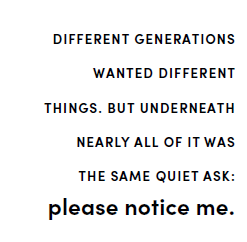
Different generations wanted different things. But underneath nearly all of it was the same quiet ask: please notice me.
Instinctively, I think we all probably recognize this underlying desire—especially those of us who have been doing this for decades. But what I wanted to better understand was, what does that all really mean? We hear about “community” and how important it is and pretty much every brand believes on some level that their community is their secret sauce.
But I have developed a passion for quantifying those instincts, identifying as objectively as possible what customers (and sellers) mean when they say, “community matters to me” or “I just love this community.” Because, until we can quantify it in some way, it isn’t actionable. And if it isn’t actionable, it can’t move the needle…then we’re just left talking to ourselves.
So, we decided to build on the formula that worked with generational insights, and we once again brought The Center for Generational Kinetics back and asked 1,000 Americans, ages 18 to 60, weighted to the US Census, exactly what they meant when they thought of Brand Community. What matters to them; how does it show up; how often (and, importantly, where!) did they want to engage with a brand.
We intentionally separated customers and sellers in this study…more to come on customers later…but this is what sellers had to say about the kind of community they want companies to create and how they want to interact within them.
The Engine of Community
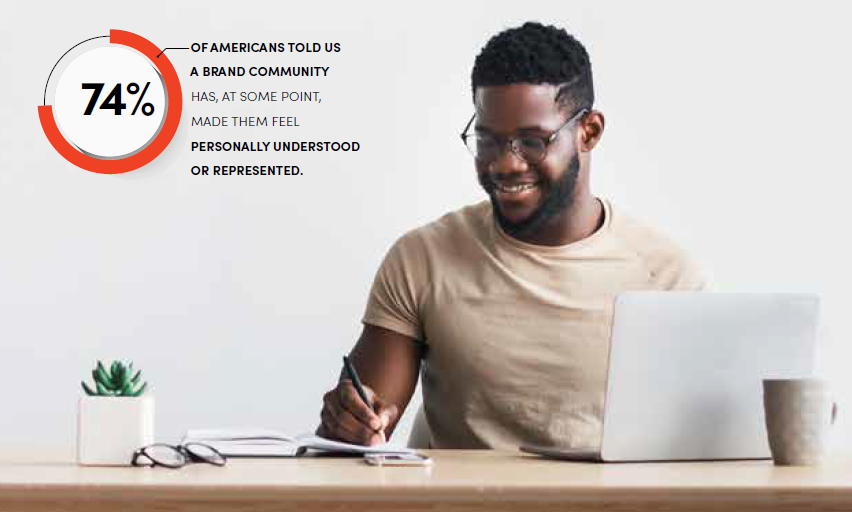
Seventy-four percent of Americans told us a brand community has, at some point, made them feel personally understood or represented. Not entertained. Not rewarded. Understood.
When we asked what actually matters to people about being part of a brand community in the first place, the strongest answers weren’t only about discounts or access, they were about being noticed: feeling personally recognized or appreciated; feeling a sense of belonging with other customers; and feeling part of something bigger than just buying a product.
And it isn’t a nice-to-have for the casually interested. It’s most important to a brand’s best customers, the ones who shop online daily, the highest-value people in the entire study. Seventy-two percent said they’ve decided to buy from a brand specifically because of the experience, connection, or sense of community around it, not the product itself.
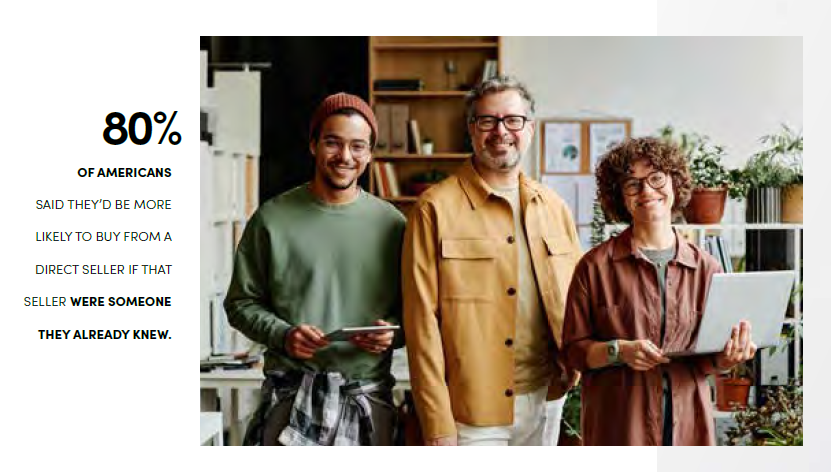
This is where it gets specific to us. Eighty percent of Americans said they’d be more likely to buy from a direct seller if that seller were someone they already knew. And when we asked people to imagine themselves as a direct seller working for a company with a strong, active community, the top three feelings it produced—trust, confidence and connection—landed in a near-perfect three-way tie. No single emotional payoff dominated.
But split that tie by generation and the picture changes. Younger Millennials are significantly more likely to say a strong community makes them feel more successful at building customer relationships, while Gen X is significantly more likely to say it makes them feel more motivated to sell.
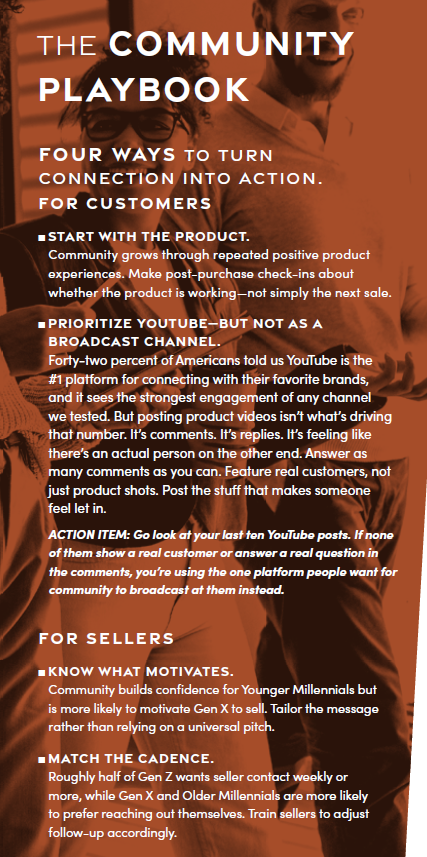
Being seen isn’t one feeling. For a 25-year-old, it’s proof they’re capable and builds confidence. For a 50-year-old, it’s fuel to keep going. Same community, delivering two different outcomes, depending entirely on who’s engaging with it.
However, this is where the art comes in and trumps the science. It’s not enough to be seen. People need to be seen on their own terms, at their own frequency. Right now, most of us are guessing at that instead of asking. So, what does the data show?
How Often Is Too Often?
We asked Americans how often they’d ideally want to hear from a direct seller they’re interested in buying from. Younger Gen Z and Older Gen Z—51 percent and 49 percent—want contact once a week or more. Older Millennials and Gen X—37 percent and 31 percent—are far more likely to only want to hear from you when they choose to reach out. That’s not a small gap. Those are meaningfully different definitions of respectful and welcome communication.
It shows up again once people are engaging with community. Among Americans who already consider themselves active participants, YouTube alone sees 56 percent of them wanting daily or near-daily engagement, more than any other channel we tested. Being seen on that platform means showing up constantly. Being seen somewhere else, for someone else, might mean showing up rarely but really mattering every time you do.
ACTION ITEM: Stop treating “how often should we reach out” as one company-wide setting. Segment your communication cadence the same way you’ve already learned to segment your messaging, by generation at minimum. And build in a real opt-in mechanism for the people telling you, clearly, that less is more.
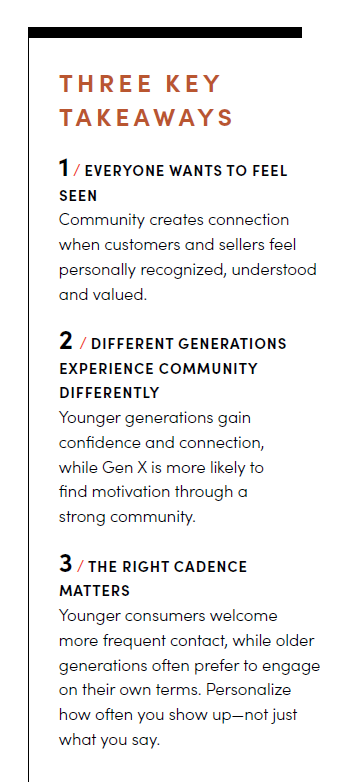
If the first study taught us that direct selling can’t talk to everyone the same way, this study goes a layer deeper. Everyone still wants the same underlying thing—to be seen, to matter, to feel like a real person is paying attention to them and not just their wallet. They just need it delivered completely differently depending on who they are.
As we share out more of these findings, the result will be a Community Playbook. Something that lays out how to build a community that makes people feel seen; how to engage with it at the cadence each generation wants; and how to leverage all of it—with both customers and sellers.
I believe that will be the one thing that can finally differentiate your company…for real, not just for rhetoric. I’ll be walking through pieces of this live on stage at DSU this fall. For now, the smallest version of the action item is this: look at how your company currently makes people feel noticed and put yourself in their individual shoes.
Ask yourselves—and then ask them—is this working? Do they feel seen? Cared for? Noticed? Important?
Because that feeling of belonging has always contributed meaningfully to growth and momentum in this channel. Consumers and sellers are looking for a brand that sees them. You can create the company—the community—that delivers on that promise.

With 20+ years of cross-functional experience in direct selling, HEATHER CHASTAIN brings a solid understanding of sales, marketing, technology, manufacturing, operations and C-Suite challenges as well as a strong collaborative and relational style of leadership to the table. Heather has held executive roles at Shaklee, Arbonne International, Celebrating Home and BeautiControl. Heather is the Founder & Chief Executive Officer of Bridgehead Collective.
From the October/November/December 2026 issue of Direct Selling News magazine.