
Listen to this story on this episode of The DSN Podcast. Even when your day is packed, we make it easy to stay informed, engaged and one step ahead.
Using online content to scale your business.
For a long time, I believed my role was to convince people.
I stood on stages and spoke to thousands—sometimes tens of thousands—about marketing, branding and content. I explained why showing up online mattered and why building a personal brand could change the trajectory of a business.
Over time, I realized something important: the people who were ready to act didn’t need convincing, and the people who weren’t ready wouldn’t be persuaded by more information. So, I stopped trying to convince. Now, I simply present my case.
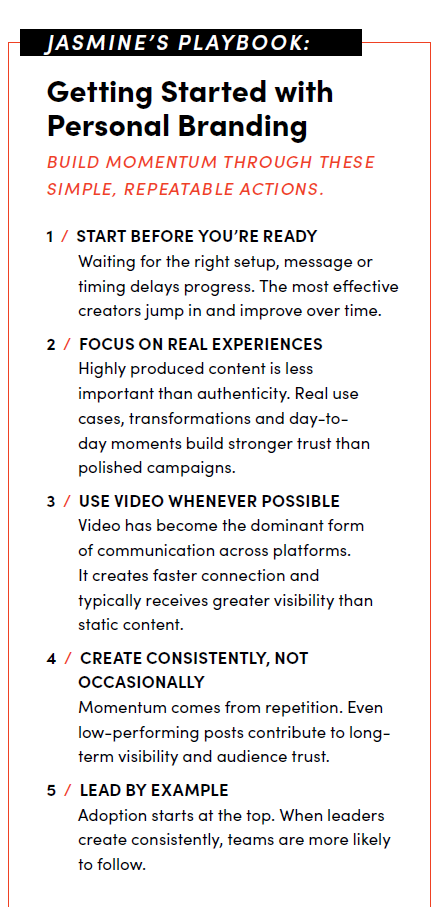
And that case, simply put, is this: building a personal brand is no longer optional for anyone who wants to scale in today’s environment. Personal brands are built digitally. And the leaders and companies that understand how to operate within that framework will move far faster than those who don’t. The question isn’t whether this shift is happening. The question is whether we are willing to lead into it.
Leadership Is Modeled, Not Mandated
One of the most consistent challenges I see in direct selling is a gap between expectation and behavior. Leaders encourage their teams to create content, to share their stories and to build visibility—but leaders are hesitant to do those things themselves.
That hesitation is understandable. Content creation takes time. It can feel uncomfortable. And early efforts often don’t produce immediate results. I’ve experienced that personally. I’ve spent time creating content that generated little engagement, and it is easy in those moments to question whether the effort is worthwhile.
But the issue isn’t whether or not every post performs. The issue is whether leaders are willing to model the behavior they want to see. People learn far more from observation than instruction. When a leader consistently shows up online—creating, experimenting and improving—it establishes credibility. It also changes how teams respond when they are asked to do the same.
Personal Branding as a Scalable Media Strategy
In a traditional business model, marketing is centralized. Messaging flows from the top down, and reach is limited by budget and distribution channels. In direct selling, that structure is fundamentally different. Every distributor has the potential to act as a media channel.
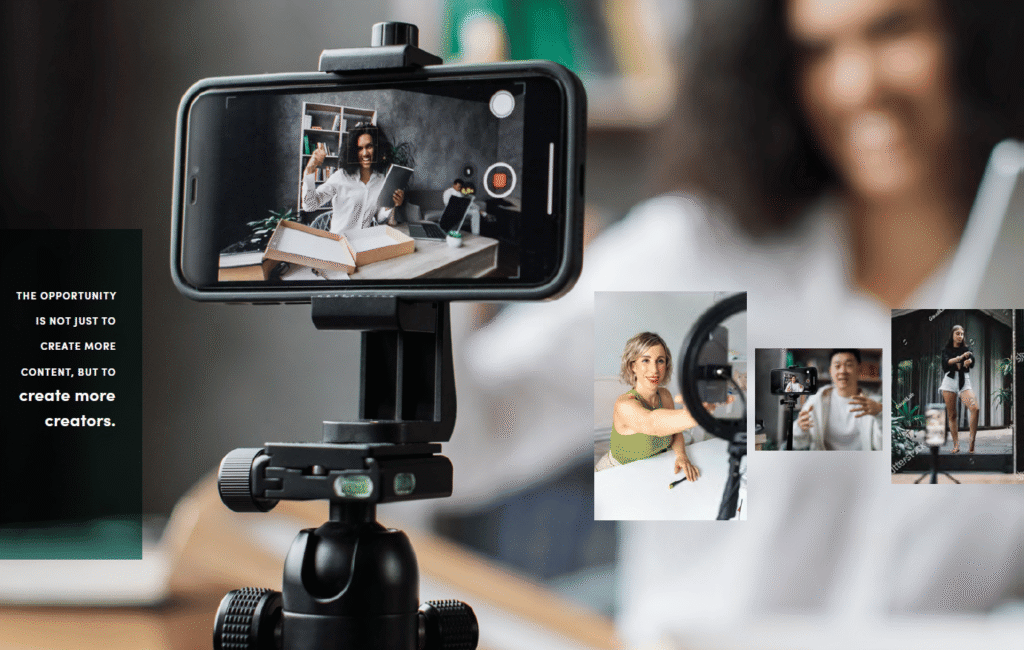
When individuals within your organization create content, they extend the reach of the brand exponentially. Instead of relying on a single voice, the company gains hundreds or thousands of points of visibility. This creates a distributed media network that is both scalable and adaptable.
However, most companies are not fully leveraging this opportunity. A small percentage of distributors typically generate most of the content. Expanding that base—even incrementally—can have a profound impact on overall reach and engagement.
The opportunity is not just to create more content, but to create more creators. Companies that understand this don’t just market better—they scale faster and more efficiently.
Social Proof Drives Conversion
Consumers do not make decisions based solely on product features or brand positioning. They make decisions based on belief—and belief is often built through other people’s experiences.
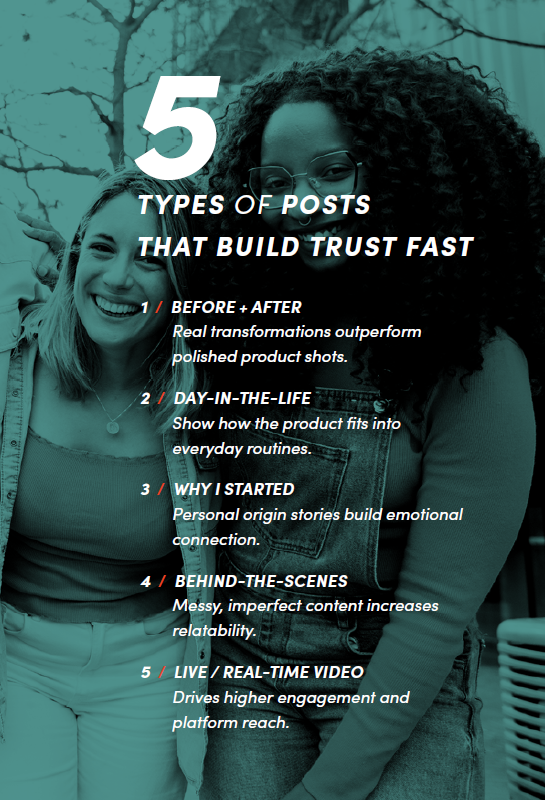
Highly produced marketing assets have value, but they are often less persuasive than authentic, user-driven content. A real person sharing a real result carries a level of credibility that traditional marketing can’t replicate.
The transformation associated with a product is not communicated through the product itself, but through the individual using it. That is what creates social proof.
For direct selling, this is particularly important. The model depends on relationships, and relationships are strengthened through visibility and authenticity. Encouraging individuals to share their experiences—consistently and realistically—builds a foundation of trust that supports long-term growth.
Content Creates Momentum
In every business I’ve built or advised, there are moments when growth slows or engagement plateaus. In those moments, content can act as a powerful catalyst. It reintroduces attention, sparks conversation and creates new entry points for customers and prospects.
This does not happen through isolated efforts. It requires consistency and alignment. When content is created strategically—focused on specific products, initiatives or outcomes—it can drive measurable movement. Momentum doesn’t happen by accident. It’s built through sustained visibility.
Overcoming the Barrier to Entry
While the strategic value of personal branding is clear, the execution is often where people hesitate. The barrier is rarely technical. It is emotional.
Creating content requires a willingness to be visible, and that visibility introduces risk. There is concern about how content will be received, whether it will meet expectations and whether it will reflect well on the individual or the brand.
This hesitation is natural, but it is also one of the primary reasons many people never get started or do not engage consistently.
The truth is that most people aren’t held back by a lack of strategy—they’re held back by a fear of being seen trying. One of the greatest advantages I’ve developed is simple: I’m willing to do what others won’t. I’m willing to show up before I feel ready, to post when it feels uncomfortable and to improve in public.
One of the most important shifts I made in my own approach was accepting that content does not need to be perfect to be effective. In fact, content that feels overly polished can sometimes create distance rather than connection. What resonates most is content that reflects real experiences and real progress.
Companies that want to increase participation must address this barrier directly. That means normalizing imperfect content, providing clear frameworks and reinforcing that consistency is more important than perfection.
Building in Public
A key component of personal branding is the willingness to build in public. Waiting for ideal conditions—perfect timing, perfect messaging, perfect production—delays progress. In reality, those conditions rarely exist.
When individuals document their journey as it unfolds, they create a narrative that others can follow. This builds relatability and strengthens connection. It also provides a record of growth, which reinforces credibility over time.
Encouraging this approach can significantly increase engagement. When people see others participating without needing to meet unrealistic standards, they are more likely to contribute themselves.
Adapting to a Video-First Environment
Another critical shift shaping personal branding is the move toward video. Across platforms, content consumption has evolved. Video is the dominant format for engagement. It allows for faster communication, stronger connection and more dynamic storytelling. As platforms prioritize video content, those who adopt it early gain increased visibility.
This does not require high production value. It requires clarity and consistency. Simple, direct communication often outperforms more complex formats because it’s both easier to consume and create.
For leaders, this shift requires more than awareness. It requires action. Teams need guidance on how to use video effectively, what types of content to prioritize and how to integrate it into their existing workflows. Understanding the change is not enough. It must be operationalized.
Consistency Over Immediate Results
One of the most common questions surrounding content creation is return on investment. It is reasonable to ask how time spent creating content translates into measurable business outcomes.
The reality is that personal branding operates on a longer timeline than traditional marketing tactics. Individual posts may not produce immediate results, but consistent effort builds an asset over time. And that asset is trust.
Over time, that trust compounds—making every future action more effective. From a strategic perspective, this makes personal branding a long-term investment rather than a short-term tactic. The return is not always immediate, but it doesn’t have to be.
A Strategic Decision

Building a personal brand ultimately comes down to a decision.
It is a decision to prioritize visibility, even when it is uncomfortable. It is a decision to lead by example, even when results are not immediate. And it is a decision to invest in a strategy that compounds over time rather than one that delivers only short-term gains.
It is also a decision about culture. Do you create an environment where people are encouraged to participate, experiment and improve? Or do you maintain a structure where content creation is limited to a small group?
The answer to that question will shape how effectively you can scale in a digital-first environment.
The Long Game
Personal branding is not about a single post, a single platform or a single campaign. It is about consistency over time.
It is about showing up when it’s inconvenient, continuing when results are not immediate and improving through repetition. It is about understanding that visibility leads to trust, and that trust—in turn—leads to growth.
The opportunity in front of us is massive. Access to platforms, tools and audiences has never been greater. But access alone does not create results. Action does.
What happens next is a choice. A choice to create. A choice to lead. And a choice to play (and win) the long game.

JASMINE STAR, Founder & CEO, Social Curator, is a world-class speaker, podcast host and entrepreneur dedicated to helping business owners grow. She has served more than 40,000 entrepreneurs through her membership platform, online courses and software subscription. Jasmine built a globally recognized brand from scratch, earning her consulting contracts with enterprise companies and leading to a series of seven-figure course launches.
From the July/August/September 2026 issue of Direct Selling News magazine.