


Is there an upside to the US Bureau of Labor Statistics data for direct selling?
When reflecting on recent conversations in local and national media relative to the accuracy of “job” reporting, it becomes rather obvious that the more important statistic may be related to the satisfaction of the people who continue to seek work, income stability along with a personal definition of success. Regardless of the number of jobs created or lost, are we happier overall? More confident in our ability to make the “Life/Work” equation better?
The emergence of artificial intelligence (AI) will enhance productivity and—according to most predictions—replace or displace many people working traditional jobs. The questions are many, and the number of traditional jobs should be expected to decrease when making comparisons to historical metrics. A conversation about the new opportunities and possibilities may be the more important conversation.
What matters most…the number of jobs created or the number of opportunities created for people from all walks of life regardless of age, past experience or inexperience?
The Bureau of Labor and Statisics (BLS) data must be viewed in detail. Reporting the number of people—new or existing—who are in W-2 status (traditional employees) is a much easier number to report vs. the number of new people entering independent contractor or 1099 status.
The gig economy has opened many new doors of opportunity and possibility. The gig economy is not an economy of new part time workers. The gig economy is actually at the foundation of a New Economy where more flexibility and freedom in how we can work and leverage underutilized assets is a possibility. The underutilized assets can be in the form of experience, skills, knowledge, passion and/or purpose. Age is not a factor or barrier.
All jobs require a certain skill set—often a level of experience—and certain age groups are always included or excluded. The preceding is not true in the New Economy whereas the gig economy is foundational. The job reports that we tend to hear about do not include the number of independent contractors and/or 1099 workers who have recently become engaged.
For those working remotely in a traditional job structure, there is more freedom and flexibility associated with how the work is performed. Regular connection with the company—and teams within the company—is required. However, much of the work is accomplished at times whereas the worker can also address other priorities such as family, additional income possibilities and study.
Based upon personal research and study, more workers will explore the possibility of being a solopreneur in some form. There is also a growing debate in the corporate sector as to the value of extending flexibility to workers or returning to the more comfortable and rigid format of traditional working hours of 9 to 5, five days per week. These debates are more likely to fuel the fires of entrepreneurship in their many new formats vs. settle the argument or justify any corporate position.
Flexibility and freedom in how work can be done is growing in popularity. The gig economy is proof of concept. The growth rate in gig work participation continues to be at an annual compound growth rate that is estimated to be around 16 percent through 2034 (Gig Economy Market Size & Share 2034).
Flexibility and freedom are expected to become more important in our plans for how we pursue the work/life relationship over the coming years. As people from all walks of life embrace, struggle with and adapt to change and their possible replacement or displacement due to advancements in technology, we are expected to continue to evolve in how we think, what we value, and ultimately…how we work.

The truth is that more can be accomplished with less. However, the value of human contribution has been fundamental to progress in societies and cultures since the beginning of recorded history. We should not expect this to change, however, there are ongoing changes in just about everything that we do.
This moment in time has been coming for several years. Fifteen to 20 years ago, it is doubtful that we would have thought of the attorney who never works in an office or the medical student who never practices within an office or hospital.
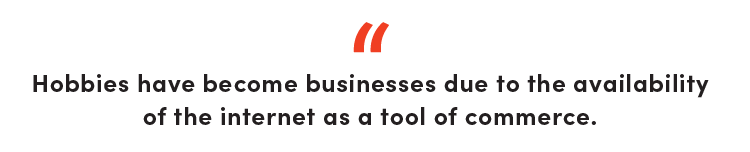
We knew of those who did babysitting or elderly care for what we termed “extra income.” And today, dog walking has become a profitable enterprise for a solopreneur/gig worker. A Task Rabbit can be hired to do almost anything that we would not want to do ourselves. Hobbies have become businesses due to the availability of the internet as a tool of commerce. Upwork is a proven concept and model that connects talent, skill and experience with another entity which needs the resource and neither needs to be in the same geographic area or time zone.
From the highly skilled to the unskilled, opportunities to more effectively leverage assets now exist and these opportunities are available to the masses, not simply a select few.
From this perspective, based upon personal reading, study and observation, the exploration of solopreneur opportunities is a wise investment of time. The opportunities and possibilities are unlimited, and new possibilities are being invented even as I write these words.
I believe direct selling opportunities are, perhaps, best positioned to be at the top of any list of possibilities to explore. There are some very specific reasons for this recommendation which are beyond the personal bias of being an advocate. Direct selling opportunities are:
- Easy to engage;
- Easy to align passion, purpose and personal values;
- Easy to share with others who become customers and advocates of the brand themselves.
I am not assuming that all direct selling companies have or will achieve clarity in their strategies to attract a sizable portion of the marketplace. This is that moment in time whereas companies embracing a direct selling channel of distribution can survive and thrive in the New Economy whereas flexibility and freedom in how work can be accomplished is no longer a “nice to have” but for many, a “must have!” We know that the ability to create multiple income streams is growing in popularity (60 percent of gig workers were found to be working multiple gigs – Fleming, Peterson, Ultimate Gig research 2023).
The direct selling model of engaging people from all walks of life to be the energy behind the distribution of products and services is certainly in a position to be recognized as the most relevant of opportunities and possibilities. Labels and definitions of what direct selling actually means will change. The changes—whatever they may be—provide opportunities to demonstrate a greater degree of relevance to marketplace behaviors and perceived needs.

JOHN T. FLEMING is the author of Ultimate Gig: Flexibility, Freedom & Rewards which provides an in-depth glimpse of the future of work and how the gig economy has fueled the growth and appeal of flexible work opportunities. John is principal of Ideas and Design Group, LLC and in both the DSA Hall of Fame and DSEF Circle of Honor. John is also a recipient of the DSN Bravo Lifetime Achievement Award.
An Online Exclusive from Direct Selling News magazine.


