Colombia and Peru enter a new chapter for direct selling.
As global direct selling companies map their next phase of Latin American growth, two Andean markets are stepping out of the shadow of Mexico and Brazil. Both Colombia and Peru closed out historic election cycles in 2026, installing new presidents and new expectations for business. More importantly, both posted direct selling results that outpaced their broader economies. And both are entering a rare moment where political change, economic momentum and entrepreneurial culture are converging at once.
A Region in Transition
On August 7, 2026, Abelardo de la Espriella was inaugurated as Colombia’s president, succeeding Gustavo Petro after one of the most polarized elections in the country’s recent history. A litigator with no prior elected experience, De la Espriella built his campaign around security, fiscal discipline and a pro-investment agenda.
On July 28, Keiko Fujimori was sworn in as Peru’s first elected female president on her fourth attempt at the office. Her win closes out one of the most volatile stretches in Peru’s modern political history—the country cycled through five presidents between 2020 and 2025 alone—and is widely read as a mandate for stability.
Leadership transitions of this scale are always worth watching closely. But they also tend to create openings: new administrations arrive eager to court investment, and distributor bases—inherently entrepreneurial—respond quickly to renewed optimism.
Colombia: A Mature, Regulated Market
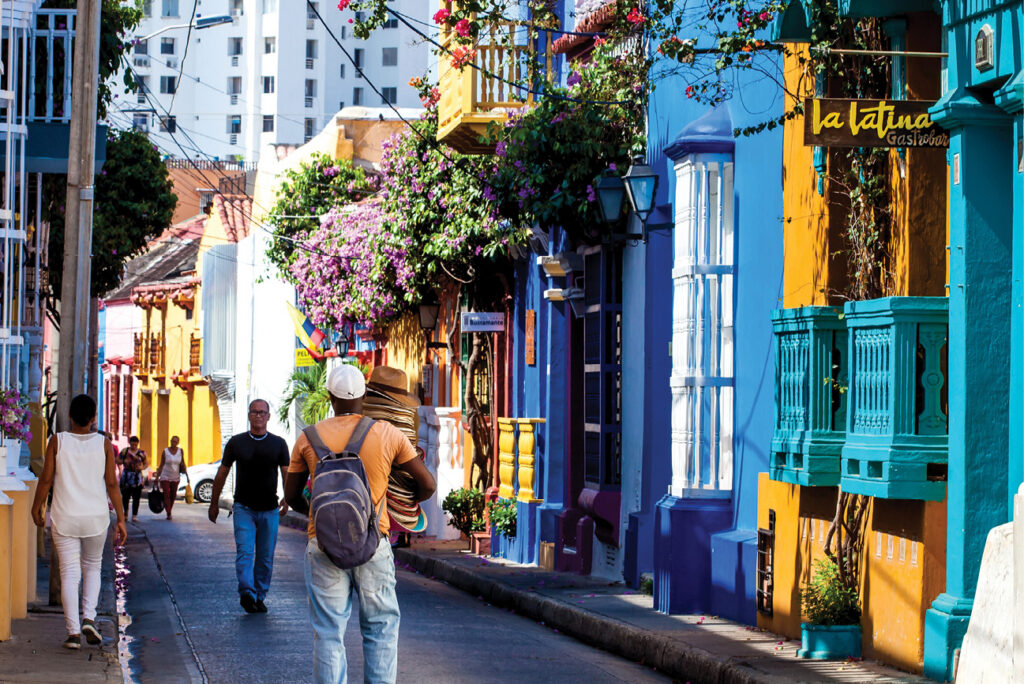
Colombia’s direct selling channel is one of the most established in Latin America and the best regulated.
According to Elizabeth Acuña Ayala, Executive Director of ACOVEDI (Asociación Colombiana de Venta Directa), Colombia is the only country in the region with dedicated legislation for the sector giving companies legal clarity that is rare in emerging markets.
ACOVEDI’s 26-plus member companies generate direct selling revenue estimated at more than $2.3B USD annually, placing Colombia among the world’s 15 largest direct selling markets. More than two million Colombians—roughly 80 percent women—work as independent sales representatives, joined by a growing wave of younger entrepreneurs selling through WhatsApp and other platforms. Cosmetics and personal care lead sales, followed by nutrition and home goods.
Peru: A Record-Breaking Year
Just to the south, Peru’s direct selling sector delivered one of its strongest years on record. According to the Cámara Peruana de Venta Directa (CAPEVEDI), the industry generated roughly $1.4B USD in 2025, up 8.6 percent year-over-year, which is 2.5 times faster than Peru’s overall GDP growth. As Luis Correa, CAPEVEDI President explained, “This outcome reflects our members’ strength, sector adaptability and thousands of entrepreneurs driving the economy from the communities.”
CAPEVEDI’s 18 member companies now support 559,737 active independent entrepreneurs, 64 percent of them between 18 and 44. Cosmetics account for roughly 62 percent of sales, with nutritional products ranking as the fastest growing category.
Shared Momentum, Different Trajectories
While the two countries are close geographically, their macroeconomic outlooks diverge. The International Monetary Fund (IMF) trimmed its 2026 growth forecast for Colombia to 2.3 percent, citing fiscal pressure and inflation, a signal De la Espriella’s government will need to move quickly to restore investor confidence.
Peru’s outlook is more constructive: the IMF raised its 2026 growth projection to 2.8 percent, while Peru’s Ministry of Economy and Finance projects 3.2 percent growth sustained through 2029, supported by mining investment and steadier institutions.
For direct selling companies, this is a reminder that Latin America is never one market. Colombia offers regulatory certainty and scale; Peru offers faster momentum and a younger, digitally native distributor base. Both offer something rare—new administrations promising to be more favorable to business.
Company incorporation and product registration in both Colombia and Peru move considerably slower than in the US, a byproduct of government bureaucracy and the absence of clear, harmonized legislation. Cosmetics registrations typically clear in one to two months, but nutritional and dietary supplement approvals routinely take one to two years.
Companies that plan a US-style launch timeline consistently underestimate this gap, and it is one of the most common reasons expansion plans stall.
What This Means for Direct Selling
Neither market rewards a copy-and-paste strategy. Colombia’s legal framework demands genuine compliance discipline but also rewards companies willing to invest for the long term with a predictable operating environment. Peru’s youthful, regionally dispersed distributor base rewards companies that lean into mobile-first, social-commerce models over legacy catalog approaches alone.
What unites them is culture. Like Mexico, both countries are built around family networks, word-of-mouth trust and an entrepreneurial instinct born partly of necessity. Direct selling did not need to be introduced to these markets. It has simply needed the right partners and a more stable political runway to accelerate.
That richness runs deep. Colombia’s Caribbean coast, Andean interior and Pacific region each carry their own traditions, dialects and consumer habits, just as Peru’s coastal capital, famous Machu Picchu and Amazon basin function almost as separate markets within one country.
Culture—not compensation plans or product catalogs—is the real starting point for any company entering Latin America. Leadership hires, messaging, incentives and even launch cities should be shaped around the specific communities a brand intends to serve rather than imported wholesale from headquarters. Companies that study that texture before they launch consistently outperform those that treat the region as one homogenous market.
A Strategic Imperative
Companies that have succeeded in Mexico did so by empowering local leadership and committing for the long term rather than simply testing the waters. The same discipline applies here. Both markets already have what direct selling needs: professional executives to run companies; trusted associations in ACOVEDI and CAPEVEDI upholding ethical standards; and governments signaling openness to investment after years of uncertainty.
The companies that move deliberately now—building compliant, culturally fluent, digitally enabled operations—will be best positioned as Colombia and Peru write their next chapter.
The Andean opportunity will not stay quiet for long. Make sure your company’s voice is heard.

ALEX HOFFMANN is a global direct selling executive with 33+ years of experience leading market entry, growth and turnaround strategy across LATAM, the Americas and Europe.
From the October/November/December 2026 issue of Direct Selling News magazine.